Public Law Challenges: Appealing public law decisions
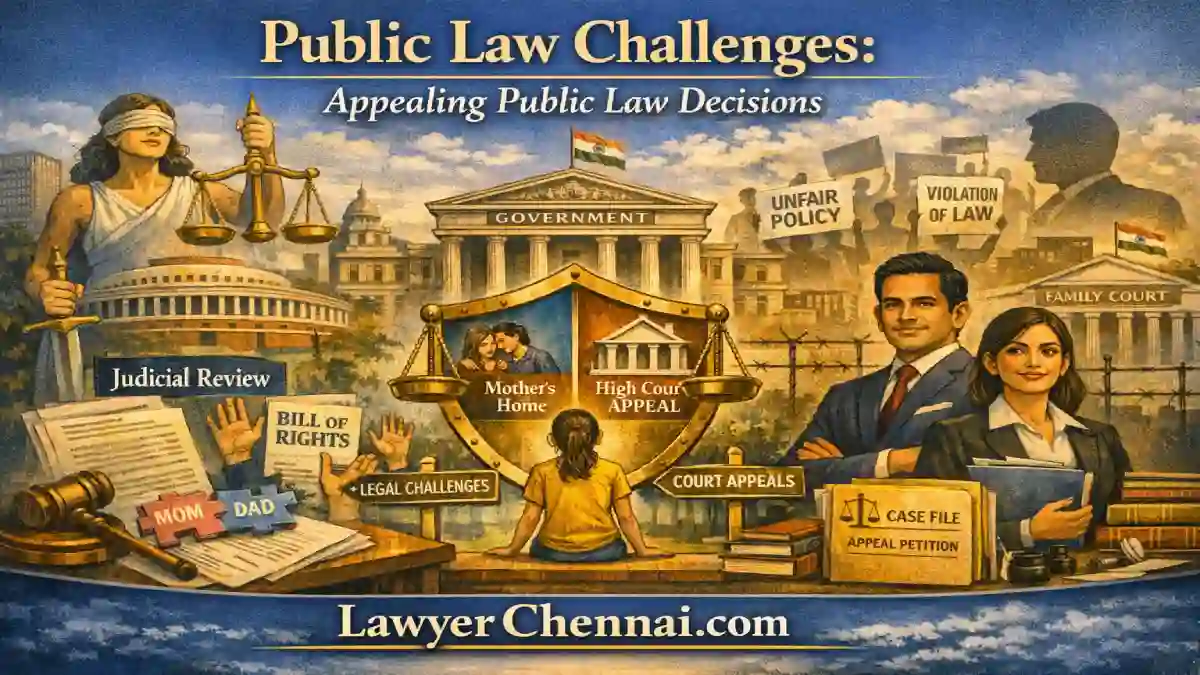
In a country governed by the rule of law, public authorities must act fairly, reasonably, and within their legal limits. However, in real life, decisions made by government bodies do not always meet these standards. Sometimes, such decisions affect individuals, businesses, or organizations in serious ways. Therefore, the law provides a mechanism to challenge these actions. This is where public law remedies and appeals come into play. At LawyerChennai.com – Best Lawyer Firm in Chennai India 24×7, we help clients question unfair decisions and seek justice through proper legal channels. In this article, we explain public law challenges, the process of appealing decisions, and how expert legal support can make a difference.
Public Law Challenges: Appealing Public Law Decisions – By LawyerChennai.com – Best Lawyer Firm in Chennai India 24×7
What is Public Law?
To begin with, public law deals with the relationship between individuals and the State. It governs how government authorities exercise their powers. This includes decisions made by departments, regulators, municipalities, and other public bodies.
For example, public law covers matters such as:
- Government permissions and licenses
- Administrative decisions
- Actions of public officials
- Policies affecting citizens
Importantly, public law ensures that authorities act within the framework of the Constitution of India. This means that every decision must respect fundamental rights and follow due process.
What is a Public Law Challenge?
A public law challenge arises when a person believes that a government decision is unfair, illegal, or unreasonable. In such cases, the affected party has the right to question the decision before a court.
These challenges often involve:
- Violation of natural justice
- Abuse of power
- Lack of proper reasoning
- Arbitrary or biased decisions
Therefore, public law challenges act as a safeguard against misuse of authority.
Understanding Appeals in Public Law
Now, it is important to understand what an appeal means in this context. An appeal is a legal process where a higher authority reviews a decision made by a lower authority or tribunal.
In public law matters, appeals can be filed:
- Before appellate tribunals
- Before High Courts
- Before the Supreme Court
Each forum has its own rules and procedures. However, the goal remains the same: to correct errors and ensure justice.
Judicial Review vs Appeal
At this stage, many people confuse appeals with judicial review. While both involve challenging decisions, they are different.
Judicial Review
Judicial review focuses on the decision-making process. Courts examine whether the authority acted legally and followed proper procedure.
Appeal
On the other hand, an appeal may involve reviewing both facts and law. The appellate body can re-examine the case in detail.
Thus, choosing the correct remedy is crucial for success.
Grounds for Challenging Public Law Decisions
Before filing an appeal, it is important to identify valid legal grounds. Courts generally accept the following grounds:
1. Illegality
The authority acted beyond its powers or misinterpreted the law.
2. Irrationality
The decision is unreasonable or lacks logic.
3. Procedural Impropriety
The authority failed to follow proper procedures or denied a fair hearing.
4. Violation of Fundamental Rights
The decision infringes rights guaranteed under the Constitution.
5. Mala Fide Intent
The decision was made in bad faith or with bias.
These grounds form the foundation of any strong public law challenge.
Common Situations Where Appeals Arise
Public law challenges can arise in many situations. Let us look at some common examples.
Licensing and Permits
Authorities may reject applications without proper reasons.
Tax and Regulatory Orders
Businesses may face unfair penalties or assessments.
Government Tenders
Companies may be unfairly disqualified from bidding processes.
Land and Property Issues
Government actions may affect ownership or usage rights.
Employment Matters
Public sector employees may challenge disciplinary actions.
Clearly, public law touches many aspects of daily life.
Step-by-Step Process of Filing an Appeal
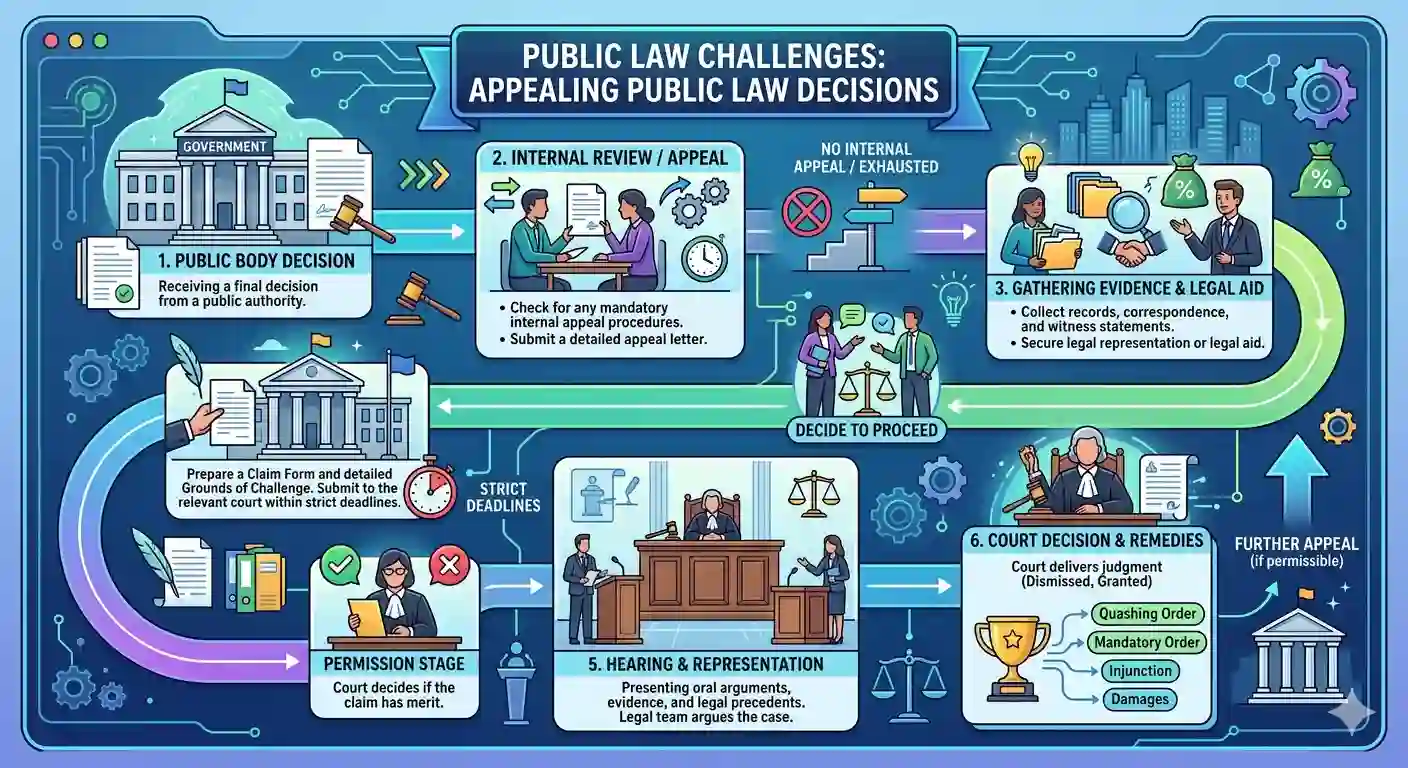
Although the legal process may seem complex, it becomes manageable with proper guidance. Here is a simplified overview.
Step 1: Review the Decision
First, analyze the order or decision carefully. Identify errors or violations.
Step 2: Collect Documents
Next, gather all relevant records, notices, and evidence.
Step 3: Choose the Right Forum
Depending on the case, decide whether to approach a tribunal or court.
Step 4: Draft the Petition
Prepare a detailed appeal stating facts, grounds, and relief sought.
Step 5: File Within Time Limits
Timeliness is critical. Delays can lead to dismissal.
Step 6: Attend Hearings
Present arguments and respond to questions during hearings.
Step 7: Await Judgment
Finally, the appellate authority delivers its decision.
With experienced legal support, each step becomes more effective.
Importance of Timely Action
In public law matters, delay can weaken your case. Most appeals must be filed within a specific time frame.
If you miss the deadline:
- Your case may be rejected
- You may lose the right to challenge the decision
Therefore, it is always advisable to act quickly and seek legal advice immediately.
Role of High Courts and Supreme Court
In India, High Courts and the Supreme Court play a vital role in public law.
High Courts
Under Article 226 of the Constitution, High Courts can issue writs to protect legal and fundamental rights.
Supreme Court
Under Article 32, the Supreme Court ensures enforcement of fundamental rights.
These courts act as guardians of justice, ensuring that authorities remain accountable.
Challenges Faced by Individuals and Businesses
Despite having legal remedies, people often face challenges such as:
- Lack of awareness about rights
- Complex legal procedures
- Difficulty in gathering evidence
- Fear of confronting authorities
However, with proper legal support, these challenges can be overcome.
How LawyerChennai.com Helps You
At LawyerChennai.com – Best Lawyer Firm in Chennai India 24×7, we provide complete assistance in public law matters.
Case Evaluation
We analyze your case and identify the strongest grounds for appeal.
Strategic Planning
We design a clear legal strategy tailored to your situation.
Drafting and Filing
We prepare precise petitions and ensure timely filing.
Court Representation
We represent you confidently before tribunals and courts.
Continuous Support
We keep you informed and guide you throughout the process.
As a result, you receive reliable and effective legal support.
Benefits of Professional Legal Assistance
Engaging experienced lawyers offers several advantages.
Expertise
Lawyers understand legal principles and procedures in depth.
Efficiency
They handle documentation and filings accurately.
Strong Representation
They present your case effectively in court.
Better Outcomes
With proper strategy, chances of success increase significantly.
Thus, professional legal help is essential in public law challenges.
Practical Tips for Handling Public Law Disputes
To strengthen your case, consider the following tips:
- Keep all official documents safely
- Respond to notices promptly
- Avoid unnecessary delays
- Maintain clear communication with authorities
- Seek legal advice at the earliest stage
These steps can make a significant difference.
Evolving Nature of Public Law in India
Public law in India continues to evolve. Courts are increasingly focusing on transparency, accountability, and fairness.
Moreover, digital governance has introduced new challenges and opportunities. Online systems require updated legal understanding.
Therefore, staying informed and prepared is more important than ever.
Frequently Asked Questions
A public law challenge arises when an individual or business questions a decision made by a government authority. This includes actions that are unfair, unreasonable, or beyond legal powers. Under the Constitution of India, citizens have the right to seek remedies when public authorities violate legal or fundamental rights.
An appeal involves re-examining both facts and legal aspects of a decision by a higher authority. In contrast, judicial review focuses on whether the decision-making process was lawful and fair. Courts in judicial review do not usually reassess facts but ensure that authorities followed proper procedures and legal principles.
Public law decisions can be challenged before appellate tribunals, High Courts, or the Supreme Court, depending on the case. High Courts have powers under Article 226 to issue writs, while the Supreme Court acts under Article 32 to protect fundamental rights. Choosing the correct forum is essential for an effective challenge.
Common grounds include illegality, irrationality, procedural impropriety, and violation of fundamental rights. If a decision is biased, lacks proper reasoning, or exceeds authority, it can be challenged. Strong documentation and clear legal arguments are crucial for success.
Time limits apply to most public law appeals, and delays can lead to dismissal. Acting quickly ensures that rights are preserved and evidence remains intact. Early legal advice also helps in selecting the right remedy and preparing a strong case for appeal.
Conclusion
In conclusion, public law challenges play a crucial role in maintaining fairness and accountability in governance. When authorities act beyond their powers or make unfair decisions, individuals and businesses have the right to appeal.
However, navigating this process requires knowledge, strategy, and timely action. That is why choosing the right legal partner is essential.
At LawyerChennai.com – Best Lawyer Firm in Chennai India 24×7, we are committed to protecting your rights and helping you achieve justice. Whether you are facing an unfair decision or planning to file an appeal, we are here to support you every step of the way.
Read More
- RTI & Grievance Redressal for CBIC Employees: DGHRD CBIC Service Law Guide 2026
- CBIC Civil List & Seniority Disputes 2026: Legal Remedies for IRS Officers
- Legal Support for Compassionate Job | Expert Guidance for Dependent Employment Rights
- 7th CPC Recruitment Rules Amendments CBIC 2026: Complete Legal Overview
- Pending CBIC Cadre Review 2026: How It Affects IRS Officers & Group B Posts
- Legislative Department – Ministry of Law & Justice