Legal administrators and office managers form the operational backbone of LawyerChennai.com. They manage people, systems, schedules, documents, and communication across all four branches. Their work keeps every department stable and ensures smooth coordination between Chennai and Delhi offices. Although their tasks happen behind the scenes, their impact is visible in every client interaction, case progression, and internal workflow.
They handle thousands of documents, manage time-bound filings, track deadlines, and support legal teams. Moreover, they ensure that clients receive timely responses, organized updates, and a professional experience. Consequently, their roles support the efficiency and reputation of the entire law firm.
The Central Role of Legal Administrators in Law Firm Operations
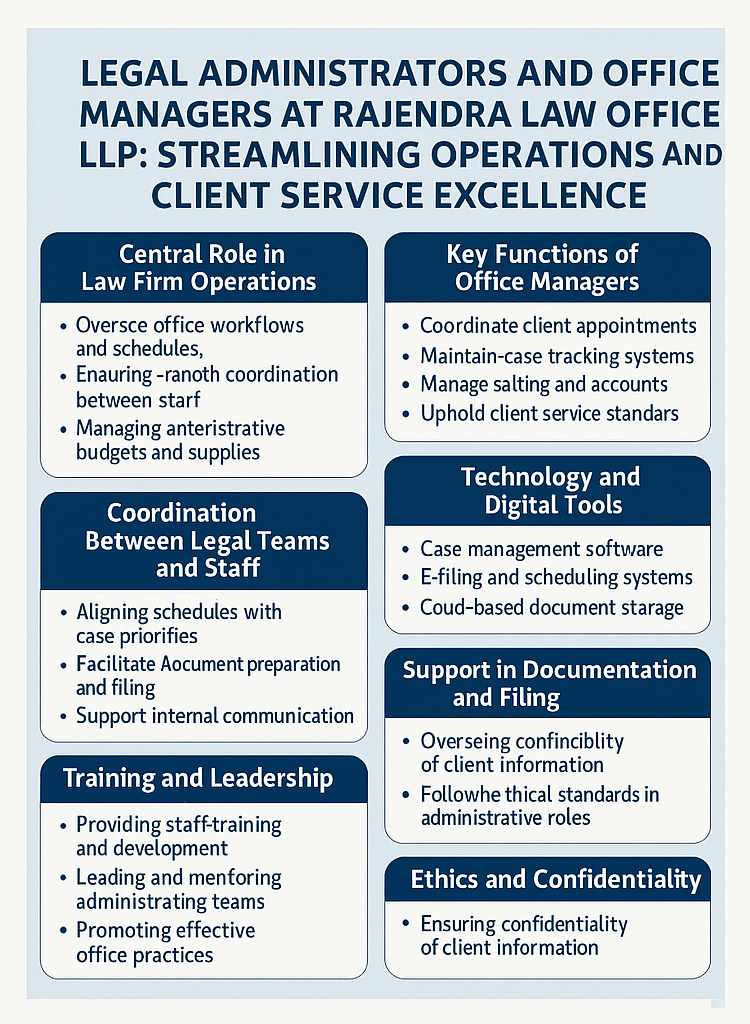
Legal administrators oversee daily administrative functions within the firm. They ensure that advocates, associates, clerks, and paralegals work in sync. Additionally, they implement office policies, digital tools, scheduling systems, and quality standards to support everyone. Their ability to multitask makes them essential to a fast-paced litigation environment.
They supervise internal workflows and prioritize tasks based on urgency. They also handle HR responsibilities and address operational issues instantly. Therefore, legal administrators help the firm maintain consistent professionalism even during demanding litigation periods.
Core Responsibilities of Legal Administrators
- Manage daily office schedules and task distribution.
- Supervise clerical teams and support staff.
- Maintain office infrastructure and digital systems.
- Ensure timely coordination between advocates and clients.
- Monitor inventory, supplies, and administrative budgets.
Why Their Role Matters
- They prevent workflow delays through meticulous planning.
- They strengthen communication across departments.
- They support advocates by handling administrative burdens.
Their efficiency ultimately empowers lawyers to focus on legal strategy and courtroom performance.
Office Managers as the Operational Nerve Center
Office managers handle business operations, client-facing processes, and logistical management. They serve as the bridge between legal processes and administrative functions. Furthermore, they execute firm-wide policies and maintain consistent service quality across all branches.
Their work influences the client experience directly. They manage visitor interactions, consultation bookings, meeting schedules, client follow-ups, and feedback systems. Eventually, their structured approach improves satisfaction, trust, and transparency.
Key Functions of Office Managers
- Coordinate client appointments and consultation schedules.
- Update case-tracking dashboards for team awareness.
- Monitor office expenses and accounts.
- Lead internal communication systems.
- Maintain workplace discipline and professionalism.
Impact on Daily Operations
- Reduces administrative clutter.
- Enhances client onboarding procedures.
- Ensures fast internal response times.
Thus, office managers maintain the stability required for effective legal practice.
Coordination Between Legal Teams and Administrative Staff
Legal administrators coordinate advocates, paralegals, clerks, and support staff to ensure timely case handling. They also monitor which team handles civil matters, criminal filings, property verification, corporate compliance, or family disputes. Their coordination reduces errors and speeds up case preparation.
They also manage digital tools that track cases across Chennai High Court, Delhi courts, DRT, RERA, consumer forums, and tribunals. As a result, the entire legal team receives real-time updates.
How Coordination Works
- Schedules are aligned with court dates and filing deadlines.
- Case bundles are prepared in advance through team coordination.
- Documents move efficiently from client desk to court filing.
- Advocates receive timely reminders for hearings.
Benefits of Strong Coordination
- Minimizes case delays.
- Prevents procedural lapses.
- Improves case preparation quality.
Therefore, administrative coordination supports both accuracy and speed.
Technology and Digital Transformation in Office Management
LawyerChennai.com integrates digital systems to modernize daily operations. Legal administrators implement these tools and train staff to use them efficiently. Digital transformation simplifies case tracking, client handling, and internal communication.
Moreover, technology allows seamless communication between Chennai and Delhi branches. Case documents, court orders, and client files remain accessible to authorized users instantly.
Digital Tools Utilized
- Case management software for internal tracking.
- E-filing portals for High Courts and tribunals.
- Online scheduling and CRM systems.
- Cloud-based document storage.
Advantages of Digitized Management
- Faster document retrieval.
- Reduced risk of misfiling.
- Enhanced accuracy across all departments.
- Immediate access to case history.
Thus, technology empowers office managers to maintain a smart, efficient, and reliable legal environment.
Client Service Excellence and Professional Interaction
Client satisfaction depends greatly on the administrative experience. Office managers ensure that every visitor experiences professionalism from the moment they contact the firm. They also streamline phone calls, emails, WhatsApp updates, and appointment confirmations.
Additionally, administrators maintain transparent communication systems. Clients receive timely reminders, status updates, and document requests without delay. Consequently, the firm maintains strong client relationships across civil, criminal, property, corporate, and family cases.
Client-Facing Duties
- Schedule consultations and follow-up meetings.
- Manage billing, receipts, and client accounts.
- Ensure polite and professional communication.
- Maintain confidentiality during interactions.
Enhancing Client Trust
- Provide clear instructions for documentation.
- Share timely case updates.
- Maintain secure handling of sensitive records.
Thus, administrators ensure every client feels respected, informed, and supported.
Support in Legal Documentation and Filing Processes
Office managers supervise clerks and paralegals during document preparation and filing. They ensure documents are complete, indexed, and submitted on time. Although advocates lead the legal strategy, administrators ensure that documentation moves without delay.
Their oversight prevents errors in suits, writ petitions, bail applications, property verifications, contracts, complaints, and corporate filings. Additionally, they track certified copy applications and registry requirements.
Documentation Tasks Overseen
- Checking annexures and affidavits.
- Coordinating notarization and stamping.
- Ensuring compliance with filing rules.
- Updating advocates about case status.
Why This Oversight Matters
- Reduces document rejections.
- Improves submission efficiency.
- Maintains credibility before courts.
Therefore, administrators support litigation by strengthening procedural accuracy.
Administrative Support in Legal Remedies
Legal administrators also assist in implementing legal remedies by monitoring deadlines and supporting procedural compliance. They coordinate filings for various legal issues, including:
Types of Legal Issues Supported
- Civil matters: injunctions, partition suits, and recovery cases.
- Criminal matters: bail, anticipatory bail, quash petitions.
- Property matters: patta corrections, encroachment suits, sale deed verification.
- Corporate matters: arbitration filings, NCLT disputes, partnership issues.
- Family matters: divorce filings and maintenance petitions.
Remedies Supported Through Administrative Oversight
- Filing necessary applications in time.
- Maintaining evidence bundles.
- Tracking limitation periods.
- Coordinating with registry counters and court staff.
Thus, administrators enhance the success rate of legal remedies by keeping processes organized and timely.
Training, Leadership, and Professional Development
Legal administrators receive ongoing training to support evolving legal procedures. They learn new technologies, filing formats, HR methods, and compliance standards. Additionally, they mentor junior staff, paralegals, and clerks, creating a strong support team in every branch.
Office managers also promote discipline, monitoring attendance, performance, and deadlines. Therefore, their leadership ensures continuous improvement in firm operations.
Training Modules
- Digital case management.
- Client service and communication.
- Court procedure awareness.
- Document handling and compliance.
Leadership Responsibilities
- Delegate tasks efficiently.
- Guide staff in dealing with high-pressure days.
- Maintain positive and organized work culture.
Hence, trained administrators help the firm stay ahead in both efficiency and professionalism.
Ethics, Confidentiality, and Trust
Ethics form the bedrock of all administrative roles. Administrators handle sensitive client documents, financial records, and confidential communication. Therefore, maintaining strict confidentiality is essential.
They follow firm policies that safeguard data and ensure ethical conduct during every interaction. Additionally, they maintain transparency in accounts and office procedures.
Ethical Standards Maintained
- Confidential handling of case documents.
- Honest financial record keeping.
- Fair treatment of clients and staff.
- Responsible access to sensitive files.
Importance of Ethical Administrative Conduct
- Builds lasting trust.
- Maintains the firm’s professional reputation.
- Ensures compliance with legal and regulatory norms.
Thus, ethics give administrative roles both power and responsibility.
FAQs on Legal Administrators and Office Managers at LawyerChennai.com
They manage schedules, staff, workflow, documents, and coordination to support smooth legal operations.
They streamline appointments, manage communication, and ensure clients receive timely updates.
Yes, they supervise documentation, ensure compliance, and support filing processes.
Yes, they use case management platforms, e-filing systems, and cloud-based storage.
They track deadlines, organize documents, and assist teams in implementing the right remedies.
Read More
- Mastering Legal Jargon in IPR Law Drafting: Expert Attorneys
- Real Estate Document Drafting: Exploring Expert Legal Terminology in the Language of Law
- Insider Trading Exposed: Legal Help for Investors & Businesses
- Court Marriage Registration in Chennai | Secure Your Future
- Digital India: MeitY, Government of India