CBIC Civil List & Seniority Disputes 2026: Legal Remedies for IRS Officers
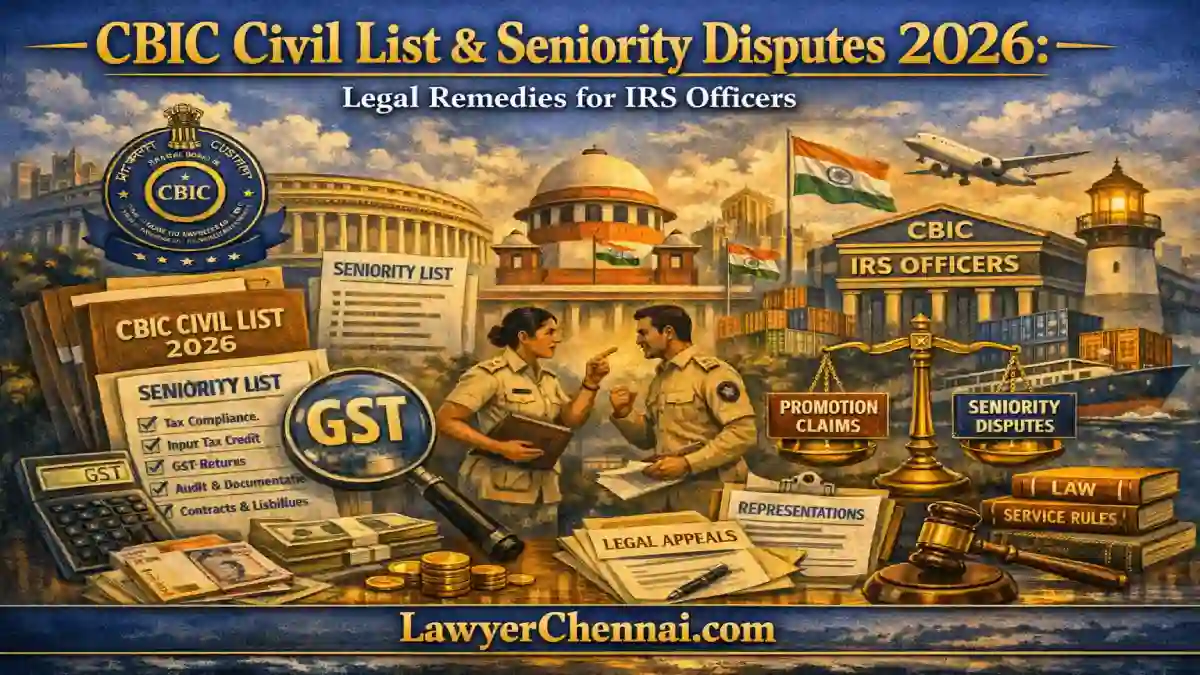
Seniority matters deeply in government service. It affects promotions, postings, prestige, and long-term career growth. For officers of the Indian Revenue Service (IRS), disputes around the Civil List and seniority have become increasingly common in recent years. As we move through 2026, these disputes continue to raise important legal questions. At LawyerChennai.com – Best Lawyer Firm in Chennai India 24×7, we regularly assist IRS officers in resolving such issues. Therefore, in this article, we explain the concept of the CBIC Civil List, the causes of disputes, and the legal remedies available—using simple words and a practical approach.
CBIC Civil List & Seniority Disputes 2026: Legal Remedies for IRS Officers – By LawyerChennai.com – Best Lawyer Firm in Chennai India 24×7
What is the CBIC Civil List?
The Civil List is an official document published by the Central Board of Indirect Taxes and Customs (CBIC). It contains details of IRS officers, including:
- Date of appointment
- Batch year
- Seniority position
- Present posting
In essence, it acts as a master record for determining hierarchy within the service. Consequently, any error or inconsistency in this list can directly affect an officer’s career.
Why Seniority Matters for IRS Officers
Seniority is not just a number. Instead, it determines:
- Eligibility for promotions
- Appointment to key positions
- Inter-se ranking among batchmates
- Access to leadership roles
Therefore, even a small shift in seniority can lead to significant professional consequences. Naturally, this makes disputes more sensitive and complex.
Common Causes of Seniority Disputes
Although the Civil List is intended to bring clarity, disputes still arise. Let us look at the most common reasons.
1. Delayed Appointments
Sometimes, officers from the same batch join at different times due to administrative delays. This creates confusion in fixing seniority.
2. Cadre Allocation Issues
Officers may challenge how they were allocated to zones or cadres, especially if it impacts their ranking.
3. Promotion Date Conflicts
Differences in promotion dates often lead to disagreements about who ranks higher.
4. Errors in Civil List Publication
Clerical or technical mistakes in the Civil List can result in incorrect seniority positions.
5. Court Orders and Policy Changes
Occasionally, judicial decisions or government policy revisions alter seniority rules, leading to fresh disputes.
Legal Framework Governing Seniority
Seniority disputes are governed by a combination of rules, circulars, and judicial precedents. Key frameworks include:
- Service Rules applicable to IRS officers
- CBIC circulars and administrative instructions
- Judgments of tribunals and courts
Importantly, principles like natural justice, fairness, and equality play a major role in resolving disputes.
Role of Administrative Authorities
Before approaching courts, officers usually engage with departmental authorities. These include:
- CBIC headquarters
- Cadre controlling authorities
- Departmental review committees
Officers can submit representations, request corrections, and seek clarifications. However, if the issue remains unresolved, legal remedies become necessary.
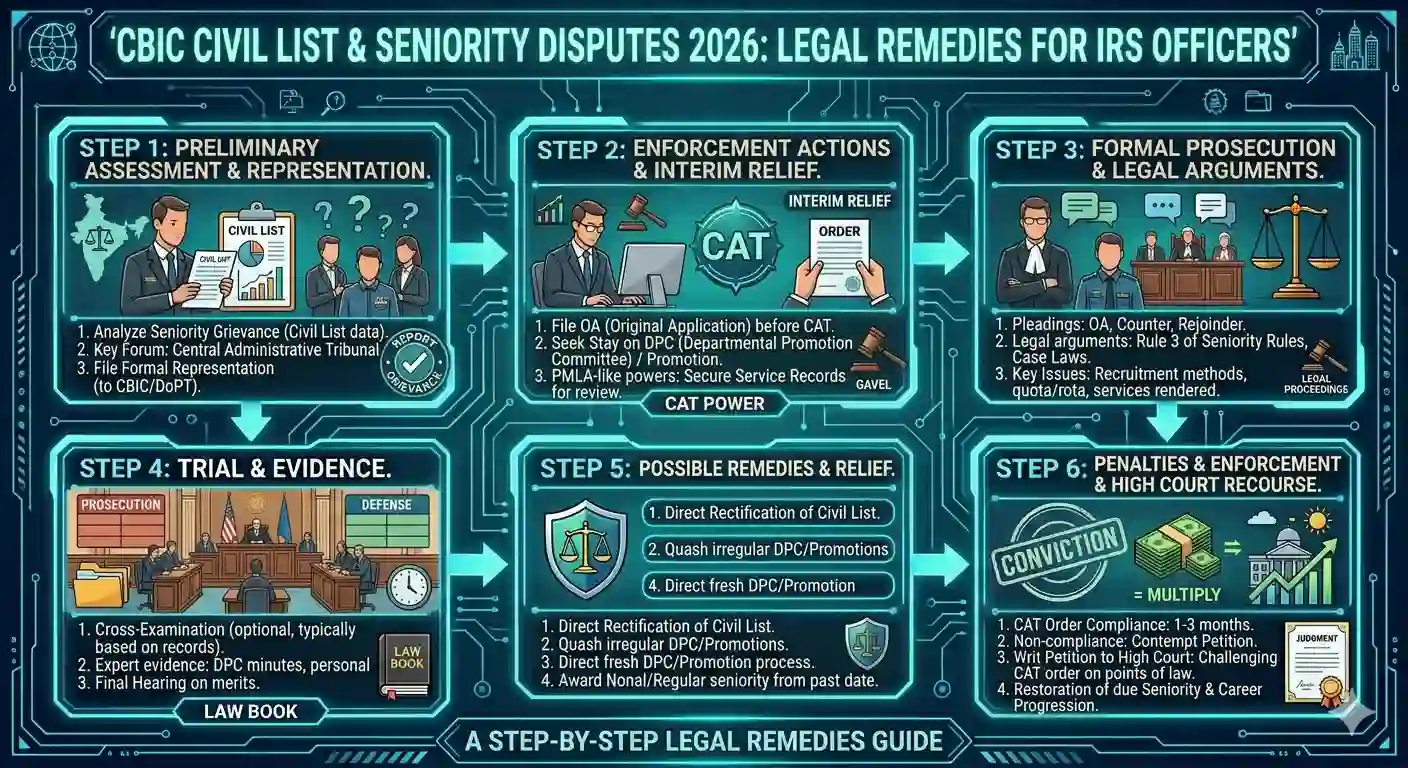
Legal Remedies Available to IRS Officers
When administrative remedies fail, officers can seek legal recourse. Let us explore the main options.
1. Filing a Representation
Initially, officers should submit a detailed representation to CBIC. This document must clearly state:
- The grievance
- Relevant facts and dates
- Supporting documents
A well-drafted representation often helps resolve issues without litigation.
2. Approach the Central Administrative Tribunal
If the issue persists, officers can approach the Central Administrative Tribunal (CAT). This is the primary forum for service-related disputes.
CAT has the power to:
- Review seniority lists
- Set aside incorrect decisions
- Direct authorities to revise records
Moreover, CAT proceedings are generally faster than traditional courts.
3. Writ Petition before High Court
If an officer is not satisfied with the CAT decision, they can file a writ petition before the High Court.
High Courts examine:
- Legal errors
- Violation of fundamental rights
- Procedural irregularities
This step adds another layer of judicial review.
4. Appeal to the Supreme Court
In rare and significant cases, officers may approach the Supreme Court of India. The Supreme Court provides final interpretation on legal issues.
Importance of Timely Action
Timing is crucial in seniority disputes. Courts often reject delayed claims due to the doctrine of laches (unreasonable delay).
Therefore, officers should:
- Act promptly after noticing discrepancies
- Maintain proper records
- Seek legal advice early
Quick action strengthens the case and improves chances of success.
Documentation and Evidence
Strong documentation is the backbone of any legal case. Officers should maintain:
- Appointment letters
- Promotion orders
- Civil List copies
- Correspondence with authorities
Additionally, keeping a timeline of events helps present the case clearly.
Impact of Court Decisions
Judicial decisions in seniority matters can have wide-reaching effects. For example:
- A single judgment may impact an entire batch
- Promotions may be revised retrospectively
- Financial benefits may be recalculated
Therefore, these cases are not just personal—they often affect multiple officers.
Challenges in Seniority Litigation
Despite available remedies, certain challenges exist:
- Complex service rules
- Lengthy legal procedures
- Conflicting judgments
- Administrative resistance
However, with proper legal strategy, these challenges can be managed effectively.
Preventive Measures for Officers
While disputes cannot always be avoided, officers can reduce risks by:
- Regularly checking Civil List updates
- Verifying personal records
- Responding quickly to discrepancies
- Staying informed about rule changes
Prevention, after all, is better than prolonged litigation.
Role of Expert Legal Assistance
Handling seniority disputes requires specialized knowledge of service law. At LawyerChennai.com – Best Lawyer Firm in Chennai India 24×7, we provide:
- Detailed case evaluation
- Drafting of representations and petitions
- Appearance before CAT and courts
- Strategic legal advice
Because each case is unique, we tailor our approach to achieve the best outcome.
Why Choose Professional Legal Support
You may wonder whether legal help is necessary. The answer is simple: seniority disputes are highly technical.
Without proper guidance:
- Important arguments may be missed
- Deadlines may be overlooked
- Documentation may be inadequate
Therefore, professional support significantly improves your chances of success.
Looking Ahead: Seniority Disputes in 2026
As administrative systems become more digital, transparency is improving. However, disputes continue due to legacy issues and policy changes.
Going forward, we expect:
- Increased reliance on digital records
- Faster grievance redressal mechanisms
- More clarity through judicial precedents
Still, vigilance remains essential for every officer.
Frequently Asked Questions
The CBIC Civil List, published by the Central Board of Indirect Taxes and Customs, is an official record of IRS officers showing their batch, date of appointment, and seniority ranking. It plays a crucial role in determining promotions, postings, and career progression. Therefore, any error in the Civil List can directly affect an officer’s professional growth and must be addressed promptly.
Seniority disputes usually arise due to delayed appointments, اختلاف in promotion dates, cadre allocation issues, or clerical mistakes in the Civil List. Additionally, changes in policies or court rulings can alter existing rankings, leading to disagreements among officers within the same batch or across batches.
Officers can first file a formal representation before the CBIC seeking correction. If unresolved, they may approach the Central Administrative Tribunal for adjudication. Further remedies include filing a writ petition before the High Court and, in exceptional cases, approaching the Supreme Court of India.
Yes, seniority disputes must be raised within a reasonable time. Courts and tribunals may reject delayed claims based on the principle of laches. Therefore, officers should act quickly after identifying discrepancies and maintain proper records to support their claims.
Officers should maintain accurate documentation such as appointment letters, promotion orders, and Civil List copies. Preparing a clear timeline of events and seeking timely legal advice can significantly improve the chances of success. A well-drafted representation and strong evidence are key to achieving a favorable outcome.
Conclusion
In conclusion, CBIC Civil List and seniority disputes are critical issues that directly impact the careers of IRS officers. While the system aims to ensure fairness, errors and disagreements do occur.
Fortunately, multiple legal remedies exist—from departmental representations to tribunal and court proceedings. However, success depends on timely action, proper documentation, and expert legal strategy.
At LawyerChennai.com – Best Lawyer Firm in Chennai India 24×7, we are committed to protecting the rights of officers and ensuring fair outcomes. If you are facing a seniority dispute, taking early and informed steps can make all the difference.
Read More
- Legal Support for Compassionate Job | Expert Guidance for Dependent Employment Rights
- 7th CPC Recruitment Rules Amendments CBIC 2026: Complete Legal Overview
- Pending CBIC Cadre Review 2026: How It Affects IRS Officers & Group B Posts
- Real Estate Lawyers in Chennai: Expert Property Legal Services
- CBIC Cadre Restructuring 2026 Latest Updates: Impact on Promotions & Legal Rights
- Central Board of Indirect Taxes and Customs