
Stay of Divorce Decree During Appeal – When Courts Grant Relief
Divorce cases are emotionally and legally complex. Even after a Family Court passes a divorce decree, the matter may not truly end. Very often, one spouse feels that the judgment is incorrect or unfair. Therefore, that spouse may file an appeal before a higher court. However, an important question arises at this stage: Can the divorce decree be stayed during the appeal? The answer is yes, but only in certain circumstances. Courts do grant stay of divorce decree, yet they do so carefully and based on legal principles. At LawyerChennai.com, we guide clients through this crucial phase with clarity and strategy.
Stay of Divorce Decree During Appeal – When Courts Grant Relief: LawyerChennai.com
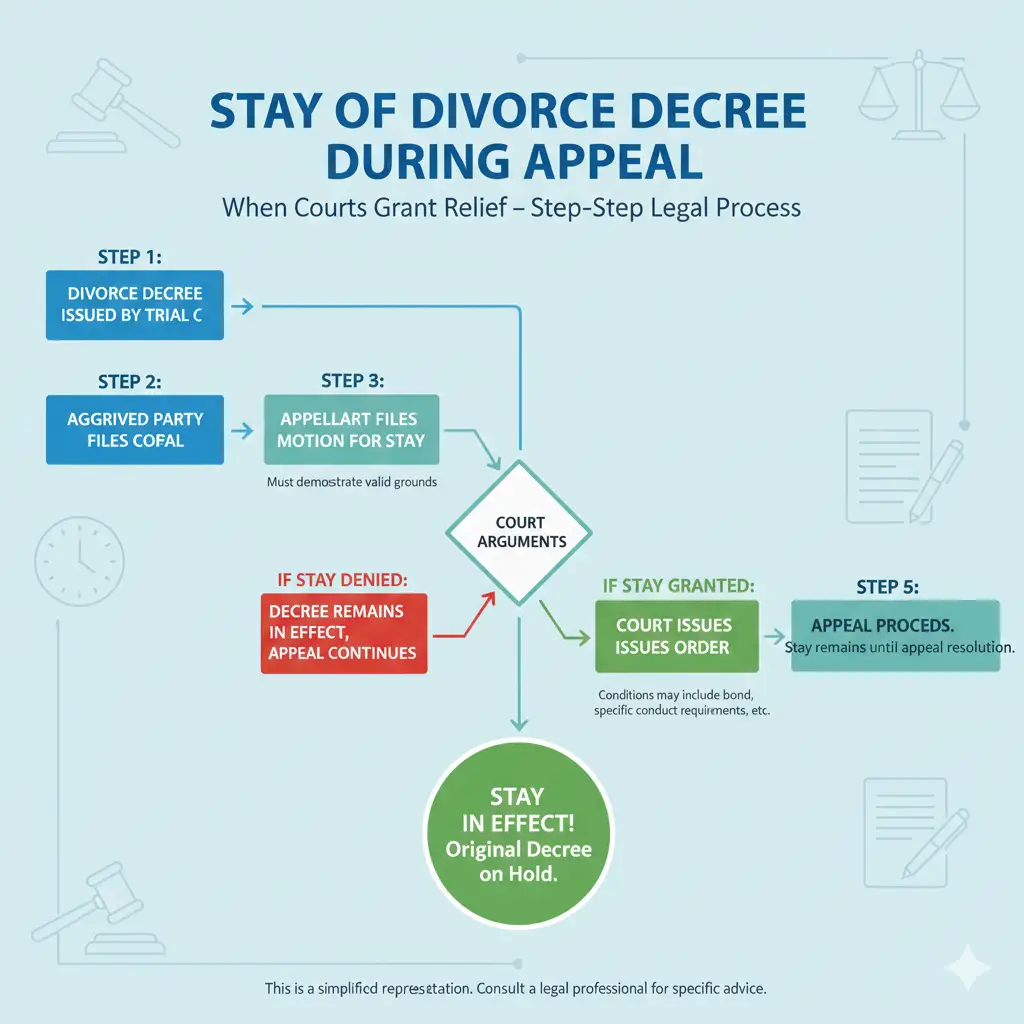
What Is a Divorce Decree?
A divorce decree is a formal order passed by a Family Court dissolving the marriage. Once the decree is granted, the marriage legally ends. However, the decree does not always become final immediately.
Under the Hindu Marriage Act, 1955 and other personal laws, the aggrieved spouse has a right to file an appeal within the prescribed limitation period. Therefore, until the appeal period expires or the appeal is decided, the matter may still remain legally sensitive.
What Does “Stay of Divorce Decree” Mean?
A stay means temporary suspension of the operation of the decree. In simple words, the higher court pauses the effect of the divorce judgment until the appeal is decided.
If a stay is granted:
- The parties cannot remarry.
- The legal consequences of divorce remain suspended.
- The status of marriage remains protected during appeal.
However, if no stay is granted, the decree remains operative even while the appeal is pending.
Legal Basis for Granting Stay
The power to grant stay during appeal comes from procedural law. Courts exercise this power under the Code of Civil Procedure, 1908, particularly Order XLI Rule 5, which allows appellate courts to stay execution of a decree.
Although divorce proceedings are governed by personal laws, procedural aspects such as stay are generally guided by civil procedure principles.
Therefore, the appellate court has discretion to grant or refuse stay based on facts and circumstances.
When Do Courts Grant Stay of Divorce Decree?
Courts do not grant stay automatically. Instead, they examine several important factors.
1. Strong Prima Facie Case
First and foremost, the appellant must show a strong prima facie case. This means the appeal should raise serious legal or factual errors in the Family Court judgment.
If the appeal appears weak or filed merely to delay proceedings, courts are unlikely to grant stay.
2. Irreparable Injury
Secondly, the appellant must show that irreparable injury will occur if the stay is not granted.
For example:
- The other spouse may remarry during the appeal.
- The marital status may change permanently.
Since remarriage creates irreversible consequences, courts often consider this a strong ground for stay.
3. Balance of Convenience
Courts also consider balance of convenience. They weigh which party will suffer more harm.
If granting stay does not seriously prejudice the respondent but refusing stay may cause permanent harm to the appellant, courts may lean toward granting relief.
4. Appeal Filed Within Limitation
Timeliness matters. If the appeal is filed within the limitation period, the court views the matter more favourably.
On the other hand, delay in filing appeal without sufficient cause may weaken the request for stay.
Special Importance of Remarriage Issue
One of the most important considerations in divorce appeals is remarriage.
Under Section 15 of the Hindu Marriage Act, 1955, remarriage is permitted only after:
- Expiry of appeal period, or
- Dismissal of appeal.
However, if no stay is obtained and the respondent remarries during appeal, complex legal complications may arise.
Therefore, appellate courts often grant interim stay to prevent remarriage until the appeal is heard.
Supreme Court’s View on Stay of Divorce Decree
The Supreme Court of India has clarified in various judgments that merely filing an appeal does not automatically stay a divorce decree. A specific stay order must be obtained.
Therefore, the appellant must file a separate stay petition along with the appeal.
Without such order, the decree remains legally effective.
Is Stay Automatic After Filing Appeal?
No, stay is not automatic. This is a common misconception.
Even after filing appeal:
- The decree remains operative.
- Parties are technically free to act upon it.
Hence, immediate legal action is necessary. Filing a stay application at the earliest protects the appellant’s rights.
What Happens If Stay Is Not Granted?
If stay is refused:
- The divorce decree continues to operate.
- The respondent may legally remarry after expiry of limitation period.
- The appellant’s legal remedies may become limited.
Although the appeal may still be decided on merits, practical consequences can be irreversible.
Therefore, seeking stay becomes strategically important.
Can Maintenance or Custody Orders Be Stayed?
Divorce decrees often include orders relating to:
- Maintenance
- Child custody
- Visitation rights
- Permanent alimony
The appellate court may grant partial stay. For example, it may stay only the dissolution of marriage but allow maintenance orders to continue.
Thus, relief can be tailored according to circumstances.
Factors Courts Carefully Examine
When deciding stay applications, courts usually examine:
- Whether the trial court judgment contains apparent legal errors
- Whether evidence was properly appreciated
- Whether natural justice principles were followed
- Whether there was procedural irregularity
Therefore, well-drafted grounds of appeal significantly increase the chances of stay.
Role of the High Court
Appeals against Family Court divorce decrees are usually filed before the concerned High Court.
The High Court examines:
- Trial court findings
- Evidence on record
- Legal interpretation
If satisfied that the case deserves deeper scrutiny, it may grant interim stay until final hearing.
Duration of Stay
Stay orders are generally temporary. They remain effective:
- Until final disposal of appeal, or
- Until further orders of the court.
In some cases, courts may grant short-term stay and then review the matter after hearing both parties.
Importance of Immediate Legal Advice
Timing is critical in divorce appeals. Delay in filing stay application may lead to serious complications.
At LawyerChennai.com, we act swiftly. We:
- Prepare appeal grounds carefully
- Draft detailed stay petitions
- Argue urgency before appellate courts
- Seek interim protection at the earliest
Strategic action often makes a significant difference.
Practical Example
Suppose a Family Court grants divorce on grounds of cruelty. The wife believes the findings are incorrect and files an appeal. She also fears that her husband may remarry soon.
In such a case, the High Court may grant stay to preserve the marital status until the appeal is decided. This ensures that no irreversible situation arises.
On the other hand, if the court finds no strong error in the judgment, it may refuse stay.
Does Stay Affect Property or Financial Rights?
Stay primarily suspends the dissolution of marriage. However, financial orders may still operate unless specifically stayed.
Therefore, it is important to seek clear and specific relief in the stay application.
Strategic Considerations Before Seeking Stay
Before filing stay application, one must consider:
- Strength of legal grounds
- Urgency of situation
- Likelihood of remarriage
- Emotional and financial impact
- Long-term litigation strategy
Every case is unique. Therefore, professional guidance is essential.
How LawyerChennai.com Can Help
At LawyerChennai.com, we understand that divorce litigation is not just about law; it is about life, dignity, and future stability.
We provide:
- Detailed case evaluation
- Strong drafting of appeals
- Immediate stay petitions
- Representation before High Courts
- Clear, practical legal advice
We work proactively and maintain transparent communication throughout the process.
Frequently Asked Questions
No, a divorce decree is not automatically stayed merely because an appeal is filed. The aggrieved spouse must file a separate stay petition before the appellate court. Under the Code of Civil Procedure, 1908, appellate courts have the power to stay execution of a decree, but they exercise this discretion carefully. Therefore, immediate legal action is necessary to prevent the decree from taking effect during the appeal.
Courts generally grant stay when the appellant shows a strong prima facie case, risk of irreparable injury, and balance of convenience in their favour. For example, if there is a possibility of remarriage during the appeal, courts may grant interim protection. The right to appeal under the Hindu Marriage Act, 1955 strengthens the request, but the court still evaluates the facts carefully.
Yes, if no stay order is obtained and the appeal period has expired or the law permits remarriage, the other spouse may legally remarry. However, remarriage during a pending appeal can create complicated legal consequences. Hence, obtaining a stay is often strategically important.
Not necessarily. The appellate court may grant partial stay. It can suspend only the dissolution of marriage while allowing maintenance or child custody orders to continue. Therefore, the relief must be clearly requested in the stay application.
A stay usually remains in force until the appeal is decided or until further orders of the court. The duration depends on the specific directions given by the appellate court.
Conclusion
Stay of divorce decree during appeal is a powerful but discretionary relief. Courts grant it when there is a strong prima facie case, risk of irreparable injury, and balance of convenience in favour of the appellant.
However, stay is never automatic. Immediate and strategic legal action is necessary to protect rights.
If you are aggrieved by a divorce decree and considering appeal, consult LawyerChennai.com without delay. With proper legal strategy and timely intervention, you can safeguard your interests and ensure that justice is not compromised during the appellate process.
Read More
- Second Marriage During Divorce Appeal – Legal Consequences Explained
- Can High Court Reappreciate Evidence in Divorce Appeals?
- Divorce Appeal vs Revision Petition: Correct Legal Remedy Explained
- Anton Piller Orders in India | Search & Seizure Remedies in IP Litigation
- John Doe Suit and Orders in India | Quia Timet & Dynamic Injunctions Explained
- Family Court – Department of Justice (Government Portal)