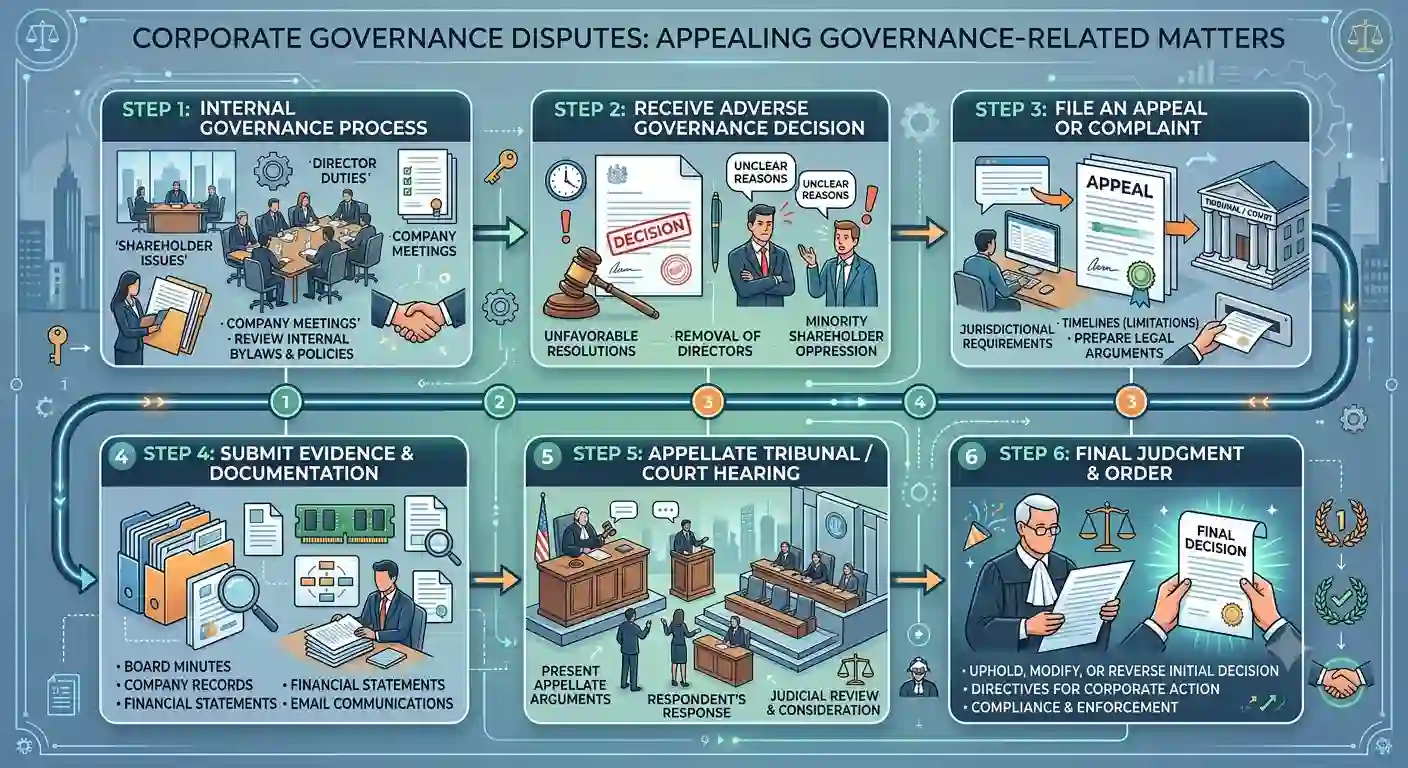
Corporate Governance Disputes: Appealing governance-related matters

Corporate Governance Disputes: Appealing Governance-Related Matters – LawyerChennai.com
Common Corporate Governance Disputes Affecting Businesses
Governance disputes often originate from competing business interests. Shareholders may challenge management decisions and board actions. Furthermore, directors frequently dispute authority and compliance obligations. Common governance disputes include:
- Oppression and mismanagement claims
- Shareholder disputes
- Director disqualification issues
- Breach of fiduciary duties
- Related-party transaction disputes
- Board resolution challenges
- Minority shareholder complaints
- Corporate fraud allegations
Such disputes can disrupt business continuity significantly. Therefore, companies should address concerns before escalation. Early legal review often prevents costly litigation. Effective governance structures reduce operational risks and strengthen stakeholder confidence. Consequently, organizations maintain regulatory compliance and sustainable corporate growth.
Shareholder Rights and Governance Challenges
Shareholders possess important statutory and contractual rights. Governance failures frequently impact minority shareholder interests adversely. Therefore, legal remedies exist against oppressive conduct and unfair practices. Key shareholder concerns include:
| Governance Issue | Impact |
|---|---|
| Oppression | Minority prejudice |
| Mismanagement | Business instability |
| Voting Disputes | Governance deadlock |
| Information Denial | Transparency concerns |
| Dividend Conflicts | Financial disputes |
Legal representation helps enforce shareholder protections effectively. Moreover, stakeholders may seek corrective orders from competent forums. Strategic action safeguards investments and corporate accountability. Consequently, shareholders gain stronger protection against unlawful governance practices.
Appeals Before NCLAT and Higher Judicial Forums
Corporate governance disputes often involve appellate proceedings. Aggrieved parties may challenge adverse orders before appropriate forums. The National Company Law Appellate Tribunal hears several governance appeals. Furthermore, certain matters may reach constitutional courts. Important forums include:
- National Company Law Tribunal
- National Company Law Appellate Tribunal
- High Courts
- Supreme Court of India
- Regulatory authorities
Forum selection depends upon statutory provisions and dispute nature. Therefore, legal assessment remains essential before filing appeals. Timely filings preserve valuable appellate rights. Effective advocacy increases prospects of favorable outcomes significantly.
Oppression and Mismanagement Proceedings
Oppression and mismanagement claims remain common governance disputes. Majority stakeholders sometimes act against minority interests improperly. Additionally, management decisions may harm company welfare. Common allegations include:
- Abuse of voting power
- Exclusion from management
- Diversion of assets
- Financial irregularities
- Unfair corporate conduct
Affected parties may seek corrective judicial intervention. Therefore, evidence collection becomes critical during proceedings. Legal teams evaluate records, resolutions, and corporate communications carefully. Strong documentation supports effective representation and favorable relief.
Legal Remedies in Governance Disputes
Corporate law provides several remedies against governance violations. Tribunals may issue corrective and protective orders. Furthermore, courts can address serious breaches affecting stakeholders. Available remedies include:
| Remedy | Purpose |
|---|---|
| Injunctions | Prevent harmful actions |
| Management Changes | Correct governance failures |
| Shareholder Protection | Preserve rights |
| Investigation Orders | Examine misconduct |
| Compensation Claims | Recover losses |
| Regulatory Action | Ensure compliance |
Appropriate remedies depend upon dispute facts and objectives. Consequently, legal strategy should align with business interests and statutory rights. Professional representation improves procedural compliance and remedy selection.
Regulatory Compliance and Corporate Governance Enforcement
Regulatory compliance forms a cornerstone of effective governance. Companies must follow statutory obligations consistently. Moreover, non-compliance may trigger investigations and enforcement actions. Relevant authorities include:
- Ministry of Corporate Affairs
- Registrar of Companies
- SEBI
- Serious Fraud Investigation Office
- National Company Law Tribunal
Governance audits often identify compliance gaps early. Therefore, organizations should maintain transparent reporting practices. Strong internal controls reduce litigation and enforcement risks. Consequently, businesses strengthen credibility among investors, regulators, and stakeholders. Effective governance supports long-term organizational success and resilience.
CPC, BNS, BNSS and BSA in Governance Litigation
Governance disputes occasionally involve civil and criminal dimensions. Civil proceedings generally follow the Code of Civil Procedure, 1908. Fraudulent corporate conduct may attract provisions under the Bharatiya Nyaya Sanhita, 2023. Investigations follow the Bharatiya Nagarik Suraksha Sanhita, 2023. Digital evidence receives recognition under the Bharatiya Sakshya Adhiniyam, 2023. Important issues include:
- Corporate fraud
- Misappropriation allegations
- Forged corporate records
- Digital evidence disputes
- Financial misconduct claims
Legal analysis determines suitable remedies and proceedings. Therefore, businesses require coordinated litigation strategies. Proper evidence management strengthens enforcement and defense efforts.
Corporate Fraud Investigations and Police Complaints
Serious governance violations may trigger criminal investigations. Fraud, forgery, and financial misconduct often require law enforcement involvement. Moreover, Economic Offences Wings and specialized agencies may investigate complex matters. Common allegations include:
- Corporate fraud
- Accounting manipulation
- Forged resolutions
- Asset diversion
- Insider misconduct
Nearby police stations may receive complaints involving criminal violations. Regulatory authorities may also conduct parallel investigations. Consequently, companies should preserve records and cooperate lawfully. Early legal assistance protects organizational interests during investigations.
Legal Support for Governance Appeals and Disputes
Corporate governance litigation requires strategic legal planning. Businesses must address procedural, regulatory, and commercial considerations carefully. LawyerChennai.com – Best Lawyer Firm in Chennai India 24×7 provides comprehensive governance dispute support. Services include:
- Governance audits
- Shareholder dispute resolution
- NCLT representation
- NCLAT appeals
- Regulatory compliance advice
- Corporate investigations support
Our legal team develops tailored solutions for complex disputes. Furthermore, we assist directors, shareholders, companies, NGOs, and NRIs. Strategic representation protects business continuity and stakeholder interests. Consequently, clients receive practical legal solutions aligned with corporate objectives.
Effective Appeals Protect Corporate Rights and Business Stability
Corporate governance disputes can affect reputation, profitability, and investor confidence. However, effective legal strategies often resolve conflicts efficiently. LawyerChennai.com – Best Lawyer Firm in Chennai India 24×7 delivers dedicated support for governance litigation and appeals. Our team handles shareholder conflicts, oppression claims, regulatory proceedings, and appellate matters. Moreover, we represent clients before NCLT, NCLAT, courts, and regulatory authorities. Strong advocacy protects rights while supporting corporate stability. Timely legal intervention reduces risks and preserves business value. Consequently, organizations can navigate governance challenges confidently while maintaining compliance and operational success.
Frequently Asked Questions
Q1. What constitutes a corporate governance dispute?
Governance disputes involve shareholder conflicts, management misconduct, fiduciary breaches, oppression, mismanagement, and compliance failures.
Q2. Which forum hears governance-related company disputes?
NCLT commonly hears governance disputes, while NCLAT handles appeals against qualifying tribunal orders.
Q3. Can minority shareholders challenge unfair company actions?
Yes. Minority shareholders may seek remedies against oppression, mismanagement, and prejudicial corporate conduct.
Q4. What remedies are available in governance disputes?
Remedies include injunctions, investigations, management changes, compensation, compliance orders, and shareholder protections.
Q5. Can governance violations result in criminal proceedings?
Yes. Fraud, forgery, misappropriation, and financial misconduct may trigger criminal investigations and prosecution.
Q6. Why should companies seek legal assistance early?
Early legal intervention preserves evidence, protects rights, reduces risks, and improves dispute resolution outcomes.
Read More
- Legal Heirship Disputes: Appealing disputes over heirship
- Public Health Law Appeals: Handling health law-related appeals
- Consumer Protection Appeals: Challenging consumer protection cases
- Disciplinary Action Appeals: Appealing disciplinary actions
- Government Contract Disputes: Handling disputes over government contracts
- Ministry of Corporate Affairs (MCA)