How to Remove a Cell Phone Tower from a Damaged Building: 9 Legal Remedies in Chennai
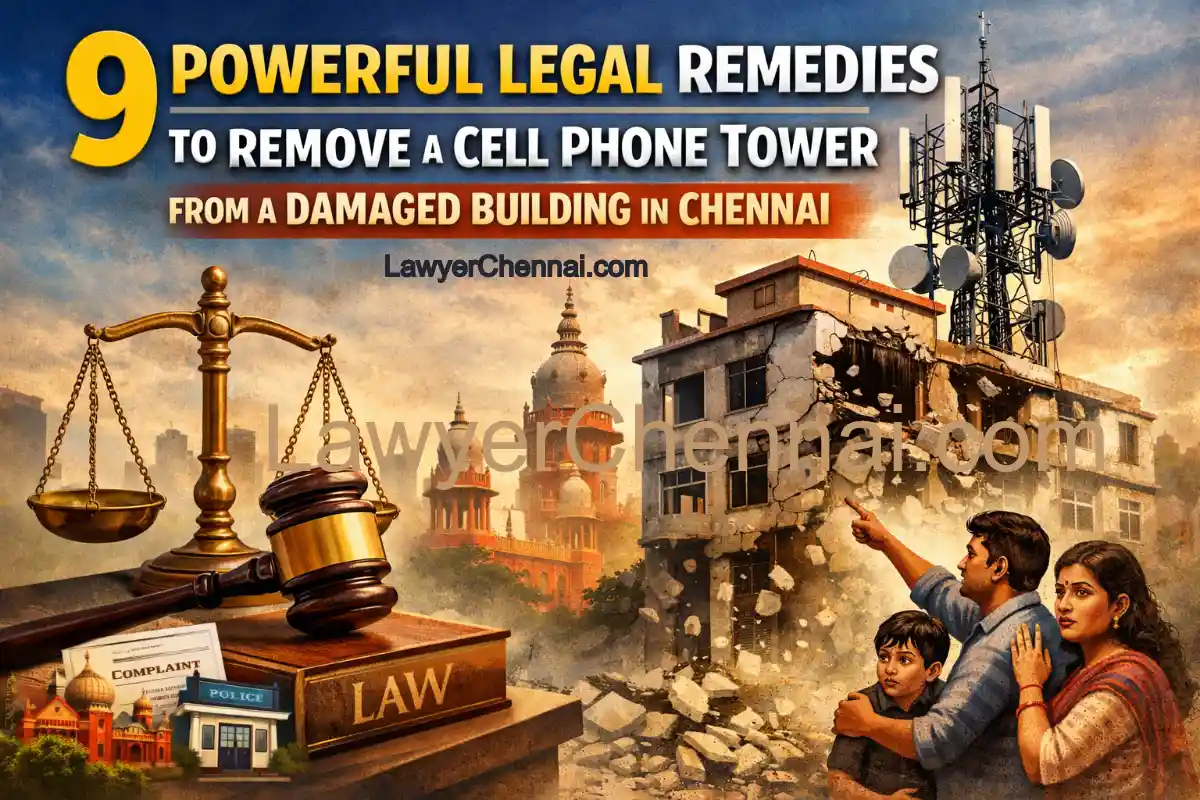
Many residential buildings in Chennai host telecom towers for rental income and network coverage benefits. However, serious disputes arise when structural damage appears after tower installation. Property owners often face cracks, vibration damage, and safety concerns in aging structures. Therefore, residents increasingly search for legal remedies to remove hazardous telecom towers. Indian law permits Cell Phone Tower Removal from Damaged Buildings when installations violate safety norms or building regulations. Municipal laws, telecom regulations, and civil remedies provide structured relief. Furthermore, courts treat structural safety as a priority over commercial tower agreements.
Residents can approach authorities such as Greater Chennai Corporation, telecom regulators, and civil courts. Affected occupants may also file complaints before police authorities if negligence creates public danger. Structural engineers frequently confirm damage caused by excessive rooftop loading. Consequently, legal intervention becomes essential to protect residents and nearby properties. Chennai courts regularly hear disputes involving tower removal, lease cancellation, and building safety enforcement. Property owners therefore require professional legal guidance to navigate telecom contracts, municipal regulations, and court procedures effectively.
Cell Phone Tower Removal from Our Damaged Building: Legal Rights, Safety Risks, and Remedies in Chennai
Understanding Telecom Tower Installation Agreements in Residential Buildings
Telecom companies usually install rooftop towers through lease or license agreements with building owners or associations. These agreements provide monthly rent while granting access for tower maintenance. However, many contracts overlook long-term structural safety responsibilities. Therefore disputes arise when damage appears after installation. Residents often discover structural cracks, water leakage, or vibration disturbances months later. Telecom companies generally rely on technical compliance certificates during installation. Yet those certificates may not reflect actual building conditions. Older buildings face greater structural stress from heavy telecom equipment. Consequently, residents question the legality of such installations. Indian contract law allows termination when safety risks appear. Courts consider negligence, nuisance, and structural damage during such disputes. Therefore a well-drafted legal notice becomes the first corrective step. Advocates frequently analyze telecom agreements before initiating proceedings. Chennai residents should also verify whether building associations approved tower installation. Unauthorized agreements sometimes violate apartment ownership laws and municipal regulations. Therefore understanding contractual obligations becomes crucial before pursuing legal remedies for tower removal.
- Telecom companies generally sign rooftop lease agreements with property owners.
- Monthly rental income ranges between ₹20,000 and ₹80,000 depending on location.
- Maintenance teams frequently access rooftops for equipment servicing.
- Structural damage disputes arise when buildings lack engineering assessment.
- Apartment residents sometimes challenge installations through association resolutions.
Major Legal Issues Arising from Cell Phone Towers on Residential Buildings
Cell phone tower disputes usually involve multiple legal issues affecting residents, owners, and telecom operators. Structural safety remains the most critical concern in damaged buildings. Engineers often report cracks in load-bearing walls or beams after tower installation. Consequently, residents fear collapse during heavy rainfall or seismic vibration. Another issue involves electromagnetic radiation concerns among occupants. Though scientific debate continues, courts occasionally examine health complaints from residents. Noise pollution from generators and equipment cooling fans also triggers disputes. Furthermore, tower installation may violate municipal zoning rules or building height restrictions. Apartment associations frequently challenge installations without community consent. Such conflicts raise issues under apartment ownership laws and municipal safety regulations. Telecom operators may also breach contractual clauses regarding structural inspection. Therefore residents possess strong legal grounds to seek tower removal. Advocates normally evaluate structural reports, municipal permissions, and contract clauses. This evaluation helps determine appropriate forums such as civil courts, municipal authorities, or regulatory bodies.
| Legal Issue | Description | Authority Concerned |
|---|---|---|
| Structural damage | Cracks, load stress, or foundation instability | Greater Chennai Corporation |
| Unauthorized installation | Tower installed without residents’ approval | Municipal authority |
| Noise pollution | Generator noise affecting residents | Pollution Control Board |
| Contract breach | Violation of lease or safety clauses | Civil Court |
| Public safety risk | Danger to surrounding residents | Police and Disaster authorities |
How Structural Damage Occurs from Telecom Towers
Telecom towers exert significant weight on rooftop structures that were originally designed for lighter loads. Engineers often calculate tower weight between two and four tons including equipment. Therefore weak or aging buildings struggle to support additional load. Structural cracks may appear around columns or beams shortly after installation. Furthermore continuous vibration from tower equipment worsens structural fatigue. Chennai experiences heavy monsoon rains that weaken old concrete structures. Consequently tower installations accelerate deterioration in older residential buildings. Water seepage near tower foundations also damages roofing layers and reinforcement bars. Structural engineers usually recommend periodic inspection after installation. However telecom companies sometimes skip such inspections. Therefore residents observe progressive structural deterioration over time. Legal disputes arise when companies deny responsibility for building damage. Courts frequently rely on expert structural reports during such cases. Property owners should immediately document damage through photographs and engineering reports. Early documentation strengthens legal claims for tower removal and compensation.
- Excess rooftop load beyond original design capacity
- Continuous vibration from telecom equipment
- Water leakage around installation bolts
- Weak reinforcement in older buildings
- Lack of periodic structural inspections
Applicable Laws Governing Telecom Towers in India
Several Indian laws regulate telecom tower installation, structural safety, and property rights. Municipal building rules form the primary regulatory framework for rooftop installations. Greater Chennai Corporation issues permissions for telecom towers within city limits. Telecom companies must also follow guidelines issued by the Department of Telecommunications. Safety certifications from structural engineers remain mandatory before installation. However residents can challenge towers that violate safety standards. Civil remedies under the Civil Procedure Code allow property owners to seek injunctions. Additionally nuisance and negligence claims may arise under tort principles. Criminal liability may arise when dangerous structures threaten public safety. The Bharatiya Nyaya Sanhita contains provisions addressing acts endangering life or property. Police authorities may register complaints when structural danger appears imminent. Courts also rely on evidence rules under the Bharatiya Sakshya Adhiniyam during disputes. Therefore legal remedies exist across civil, municipal, and criminal frameworks. Skilled advocates normally combine these remedies to secure quick tower removal orders.
| Law | Purpose | Relevance |
|---|---|---|
| Civil Procedure Code | Civil suits and injunctions | Tower removal litigation |
| Bharatiya Nyaya Sanhita | Criminal offences | Danger to life or property |
| Bharatiya Nagarik Suraksha Sanhita | Criminal procedure | Police complaints and investigation |
| Bharatiya Sakshya Adhiniyam | Evidence law | Structural expert reports |
| Municipal Building Rules | Construction regulation | Tower installation approval |
Government Authorities Involved in Telecom Tower Disputes
Multiple government authorities supervise telecom infrastructure and building safety in Chennai. Therefore residents must approach correct authorities during tower removal disputes. Greater Chennai Corporation oversees building safety and municipal compliance. Officials can inspect structures and issue demolition or removal notices. The Department of Telecommunications regulates telecom network infrastructure across India. Telecom operators must comply with licensing and safety guidelines issued by this department. Pollution Control Board authorities address complaints regarding noise or generator emissions. Police stations intervene when public safety risks arise due to structural collapse threats. Disaster management authorities may also examine dangerous structures in densely populated areas. Furthermore civil courts handle disputes related to contracts and property rights. Residents sometimes file public interest litigation before the Madras High Court. Such petitions address larger safety concerns affecting surrounding neighborhoods. Therefore coordinated legal strategy often involves multiple authorities simultaneously. Experienced advocates guide residents through each regulatory forum effectively.
- Greater Chennai Corporation – Building safety enforcement
- Department of Telecommunications – Telecom infrastructure regulation
- Tamil Nadu Pollution Control Board – Noise and environmental complaints
- Local police stations – Public safety and criminal negligence
- Madras High Court – Constitutional and public safety remedies
Legal Procedures to Initiate Cell Phone Tower Removal from a Damaged Building
Residents must follow clear legal procedures before removing a telecom tower from a structurally damaged building. A systematic approach prevents contractual disputes and strengthens legal claims before authorities. Therefore property owners should first document structural damage using certified engineering reports. Engineers normally inspect load bearing columns, slabs, and rooftop reinforcement. The report must confirm that the tower load exceeds safe structural capacity. Next, residents should collect copies of telecom installation agreements and municipal permissions. These documents reveal whether telecom operators followed required regulatory procedures. Subsequently advocates usually draft a detailed legal notice to the telecom company. The notice demands tower removal within a specific timeframe due to safety risks. Many disputes resolve at this preliminary stage because telecom companies avoid liability. However unresolved cases proceed before municipal authorities or civil courts. Courts generally consider structural reports, building permissions, and contractual obligations. Therefore residents must maintain organized documentation before initiating litigation.
- Obtain certified structural safety inspection report.
- Collect telecom tower lease or license agreement.
- Verify Greater Chennai Corporation approval documents.
- Send legal notice demanding tower removal.
- Approach municipal authority or civil court if disputes continue.
A carefully structured legal strategy often accelerates tower removal from damaged residential buildings. Initially advocates review telecom agreements and structural reports to assess liability risks. They then determine whether contractual termination clauses permit removal. Many agreements include clauses requiring structural safety compliance during installation. Therefore breach of such clauses strengthens residents’ legal position. Furthermore advocates frequently consult structural engineers to produce detailed technical affidavits. These affidavits help courts understand building safety risks clearly. Municipal authorities also rely on such expert reports before issuing enforcement notices. In addition residents may file complaints with telecom regulatory bodies. Regulatory intervention sometimes compels telecom companies to relocate towers voluntarily. However persistent disputes require filing civil suits seeking mandatory injunction orders. Courts may grant interim injunctions preventing further tower operation during litigation. Such interim orders protect residents from further structural damage while legal proceedings continue.
Approaching Greater Chennai Corporation for Structural Safety Complaints
Greater Chennai Corporation plays a central role in regulating building safety and rooftop installations. Therefore residents should submit formal complaints when telecom towers damage residential structures. Municipal engineers normally inspect buildings after receiving structural safety complaints. Inspection teams evaluate load capacity, roof condition, and reinforcement strength. If inspectors confirm structural risk, the corporation may issue removal notices. Such notices require telecom companies to dismantle towers within specified timelines. Residents should include engineering reports and photographs when filing complaints. These documents assist municipal officers during technical evaluation. Furthermore complaints should mention property tax details and building identification numbers. Accurate documentation prevents administrative delays during inspection procedures. Municipal authorities may also impose penalties on telecom operators violating building safety norms. However enforcement sometimes requires follow-up representations from residents. Therefore legal counsel often assists residents while interacting with municipal departments.
- Submit written complaint to Greater Chennai Corporation.
- Attach structural engineer certification report.
- Include photographs showing visible building damage.
- Mention building address and property tax identification.
- Request inspection and removal order for unsafe tower installation.
Municipal action frequently becomes the fastest administrative remedy for telecom tower removal. Therefore residents should actively monitor inspection outcomes after submitting complaints. Municipal engineers usually inspect rooftops and structural elements during site visits. They also verify whether telecom operators obtained mandatory installation approvals. Unauthorized towers face immediate regulatory scrutiny under municipal building laws. In many cases municipal authorities issue stop-usage notices pending structural evaluation. Such notices temporarily suspend telecom tower operation until safety verification concludes. Residents should maintain communication with local ward offices throughout the process. Regular follow-up letters often accelerate enforcement action. Additionally residents may file Right to Information applications to track complaint progress. Transparent administrative records strengthen future legal proceedings if disputes escalate. Consequently municipal complaint procedures form an important first step before approaching civil courts.
Civil Court Remedies for Telecom Tower Removal in Chennai
Civil courts provide strong legal remedies when telecom companies refuse to remove dangerous towers. Property owners can file civil suits seeking mandatory injunction orders. Such suits request courts to direct telecom operators to dismantle towers immediately. The Civil Procedure Code governs these proceedings before civil courts. Plaintiffs must submit structural reports, building documents, and telecom agreements. Courts examine whether tower installation violated safety standards or contractual obligations. Additionally plaintiffs may claim compensation for building damage and repair expenses. Courts often grant interim injunctions when structural collapse risk appears imminent. Interim orders may restrain telecom companies from operating equipment temporarily. Such orders protect residents during lengthy litigation procedures. Chennai residents usually file suits before City Civil Courts or District Courts depending on property value. Advocates also request court-appointed engineering experts to examine building safety during trial proceedings.
- Mandatory injunction seeking removal of telecom tower.
- Permanent injunction preventing future installation.
- Compensation claim for structural damage.
- Interim injunction preventing tower operation.
- Court-appointed structural expert evaluation.
| Legal Remedy | Relevant Law | Forum |
|---|---|---|
| Mandatory injunction | Civil Procedure Code | City Civil Court Chennai |
| Compensation claim | Law of Torts | District Court |
| Interim injunction | Order XXXIX CPC | Civil Court |
| Public safety petition | Constitutional remedies | Madras High Court |
| Regulatory complaint | Telecom guidelines | Department of Telecommunications |
Civil litigation requires careful preparation because telecom companies usually defend tower installations aggressively. Their legal teams often rely on compliance certificates and contractual permissions. Therefore plaintiffs must present strong technical evidence regarding structural damage. Structural engineering reports become crucial pieces of evidence during trial. Courts frequently examine whether damage appeared after tower installation. Photographic evidence and maintenance records help demonstrate progressive deterioration. Additionally residents should present witness testimony from occupants observing structural cracks. Such testimony strengthens claims regarding safety risks and nuisance. Courts also evaluate whether telecom operators ignored resident complaints earlier. Evidence of ignored complaints sometimes supports negligence claims against operators. Consequently a well-prepared civil suit significantly increases chances of successful tower removal orders.
Police Complaints and Criminal Liability for Dangerous Tower Installations
In extreme situations telecom tower installations may create criminal liability due to public safety risks. Structural collapse risk in residential buildings may endanger occupants and nearby residents. Therefore affected individuals may file police complaints against negligent telecom operators. The Bharatiya Nyaya Sanhita contains provisions addressing negligent acts endangering human life. If tower installations threaten structural stability, police authorities may investigate negligence claims. Investigations usually involve structural engineers and municipal safety officers. Evidence collected during investigation may include structural reports and installation documents. Police may register cases when companies ignore safety warnings from residents. Additionally criminal complaints sometimes pressure telecom operators to remove towers quickly. Local police stations such as Selaiyur Police Station, Tambaram Police Station, and Velachery Police Station handle such complaints. Residents should submit written complaints describing structural risks clearly. Legal counsel often assists residents while drafting complaints and presenting evidence.
- File written complaint describing structural danger.
- Attach engineering reports confirming safety risk.
- Include photographs of cracks and building damage.
- Mention telecom company details and installation date.
- Request police investigation for negligence causing danger.
Criminal complaints should remain a carefully considered legal option rather than an immediate reaction. However serious structural threats justify police intervention to prevent accidents. Authorities often coordinate with municipal departments during such investigations. Police may issue warnings or summon telecom company representatives. Investigations also examine whether installation approvals were obtained legally. If violations appear, authorities may direct immediate tower removal. Criminal proceedings sometimes run parallel with civil litigation. This parallel approach strengthens pressure on telecom companies to comply with safety norms. Nevertheless residents should always consult experienced advocates before initiating criminal complaints. Strategic legal guidance ensures proper documentation and prevents procedural complications. Consequently criminal law provisions can support civil remedies when tower installations threaten public safety seriously.
Madras High Court Writ Remedies for Telecom Tower Removal
Residents sometimes face administrative inaction despite repeated complaints regarding dangerous telecom towers. Therefore constitutional remedies before the Madras High Court become an effective legal option. Article 226 of the Constitution empowers High Courts to issue writs against government authorities. Petitioners usually challenge municipal inaction when authorities fail to enforce building safety rules. Advocates prepare writ petitions supported by structural engineering reports and complaint records. Courts then examine whether public safety risks require immediate intervention. Judges frequently issue directions to municipal authorities for urgent inspection. Consequently officials must submit status reports regarding tower installation legality. Courts may also order temporary suspension of tower operations during investigation. Such interim orders protect residents from further structural damage. High Court proceedings often progress faster than conventional civil litigation. Therefore residents choose writ petitions when administrative delays threaten building safety. Legal professionals usually combine municipal complaints with writ remedies to accelerate tower removal.
- File writ petition under Article 226 before Madras High Court.
- Attach structural engineering report showing safety risk.
- Include copies of complaints submitted to municipal authorities.
- Request court direction for tower removal inspection.
- Seek interim suspension of telecom tower operations.
High Court proceedings require precise legal drafting and strong supporting evidence. Therefore advocates carefully structure petitions highlighting constitutional rights and safety concerns. Petitioners often argue that unsafe telecom towers violate the right to life. Structural collapse risk directly threatens residential occupants and neighboring properties. Courts frequently treat such issues as matters of urgent public safety. Consequently judicial scrutiny becomes strict when structural evidence appears credible. Telecom companies usually defend their installations by producing compliance certificates. However courts also examine whether authorities properly inspected the building before granting permission. If officials failed to verify structural safety, courts may direct corrective action. Judicial directions sometimes include removal orders or fresh structural evaluation. Therefore writ petitions serve as powerful remedies when administrative authorities fail to respond effectively.
Apartment Association Rights and Consent Issues in Tower Installations
Many telecom tower disputes arise within apartment complexes where multiple residents share common property. Rooftops in such buildings usually belong to all apartment owners collectively. Therefore telecom tower installations require consent from the apartment association. Unauthorized agreements signed by individual owners often trigger legal disputes. Apartment laws emphasize collective ownership of common areas including rooftops. Consequently residents may challenge telecom tower installations lacking association approval. Associations usually pass formal resolutions regarding rooftop usage. These resolutions determine whether telecom companies may install communication infrastructure. Courts frequently examine association resolutions during tower removal disputes. Lack of proper approval weakens telecom operators’ legal position significantly. Therefore residents should review association records before initiating litigation. Apartment associations may also issue legal notices to telecom operators demanding tower removal. Collective action by residents often strengthens legal claims regarding structural safety concerns.
- Rooftops are normally classified as common property in apartment buildings.
- Association consent usually becomes mandatory for telecom tower installation.
- Unauthorized agreements may violate apartment ownership laws.
- Residents may pass resolutions demanding tower removal.
- Associations often file civil suits or legal notices collectively.
Apartment association disputes frequently involve contractual conflicts between owners and telecom companies. Individual owners sometimes sign tower agreements for personal financial gain. However such agreements may disregard collective property rights. Residents therefore challenge installations through association meetings and legal notices. Courts often examine building bye-laws governing rooftop usage. If agreements violate bye-laws, courts may declare them unenforceable. Structural damage complaints further strengthen association claims during litigation. Judges also consider safety risks affecting elderly residents and children. Consequently courts sometimes order immediate removal of dangerous towers. Associations should maintain detailed meeting minutes and resolution records. These documents become crucial evidence during court proceedings. Proper documentation therefore significantly improves chances of successful tower removal.
Claiming Compensation for Structural Damage Caused by Telecom Towers
Structural damage from telecom towers often leads to expensive building repairs. Therefore affected property owners may claim compensation through civil litigation. Compensation claims usually arise under negligence principles and contract breaches. Plaintiffs must prove that tower installation caused measurable structural damage. Structural engineering reports provide technical evidence supporting such claims. Repair estimates from construction experts also assist courts in calculating compensation. Courts frequently award damages covering repair costs and structural strengthening. In severe cases residents may claim relocation expenses due to unsafe buildings. Legal claims sometimes include compensation for mental distress and inconvenience. Telecom companies generally contest such claims using compliance certificates. However courts evaluate whether those certificates considered building age and design capacity. If negligence appears evident, courts may award substantial damages. Therefore compensation claims often accompany tower removal suits before civil courts.
- Cost of repairing cracks and structural damage.
- Reinforcement and strengthening of damaged columns.
- Temporary relocation expenses for residents.
- Compensation for nuisance and inconvenience.
- Professional engineering assessment costs.
| Type of Damage | Evidence Required | Possible Compensation |
|---|---|---|
| Structural cracks | Engineering inspection report | Repair and reinforcement cost |
| Roof leakage | Photographs and contractor estimate | Waterproofing repair expenses |
| Foundation stress | Structural stability report | Strengthening and reconstruction cost |
| Resident relocation | Temporary housing records | Accommodation reimbursement |
| Mental distress | Resident testimony | Compensation for inconvenience |
Compensation litigation requires strong technical evidence and organized documentation. Therefore property owners should preserve repair bills and engineering reports carefully. Photographic evidence documenting structural cracks becomes extremely valuable during trials. Courts often examine whether damage appeared after tower installation. Maintenance records may also reveal progressive deterioration linked to rooftop load stress. Witness testimony from residents supports claims regarding building vibration or noise disturbances. Advocates frequently request court-appointed experts to verify damage extent. Such expert evaluation strengthens judicial confidence regarding compensation claims. Telecom companies may attempt settlement during litigation to avoid prolonged disputes. Settlement negotiations sometimes result in voluntary tower removal and repair compensation. Therefore compensation claims often encourage telecom operators to resolve disputes quickly.
Environmental and Radiation Concerns Associated with Telecom Towers
Telecom towers occasionally raise environmental and radiation concerns among residential communities. Scientific debates continue regarding long term exposure to electromagnetic radiation. However courts mainly evaluate compliance with government safety guidelines. Telecom companies must follow emission limits prescribed by regulatory authorities. Residents may request radiation compliance reports from telecom operators. If companies fail to provide such documentation, regulatory complaints become possible. Environmental authorities also examine generator noise and fuel emissions. Noise from backup generators frequently disturbs residents during power outages. Pollution Control Board regulations therefore govern noise limits for such equipment. Complaints regarding excessive noise may trigger inspection by environmental authorities. Although radiation fears remain debated, environmental nuisance claims often succeed in courts. Therefore residents sometimes combine environmental complaints with structural safety arguments. This combined approach strengthens legal efforts seeking telecom tower removal.
- Electromagnetic radiation exposure concerns.
- Generator noise pollution affecting residents.
- Fuel emissions from telecom equipment generators.
- Environmental compliance certificates verification.
- Inspection by Pollution Control Board authorities.
Environmental complaints require proper documentation and technical verification. Residents should maintain records of noise disturbance and equipment operation timings. Video recordings often help demonstrate generator noise during late hours. Pollution Control Board inspectors may measure sound levels near residential units. If readings exceed permissible limits, authorities may issue compliance notices. Telecom operators must then modify equipment or relocate installations. Environmental compliance therefore becomes another legal pathway for residents. Advocates frequently integrate environmental evidence with structural damage claims. Courts then evaluate overall impact of tower installation on residential safety. Consequently environmental issues sometimes strengthen broader legal strategies seeking tower removal from damaged buildings.
Step by Step Legal Strategy for Removing Telecom Towers from Unsafe Buildings
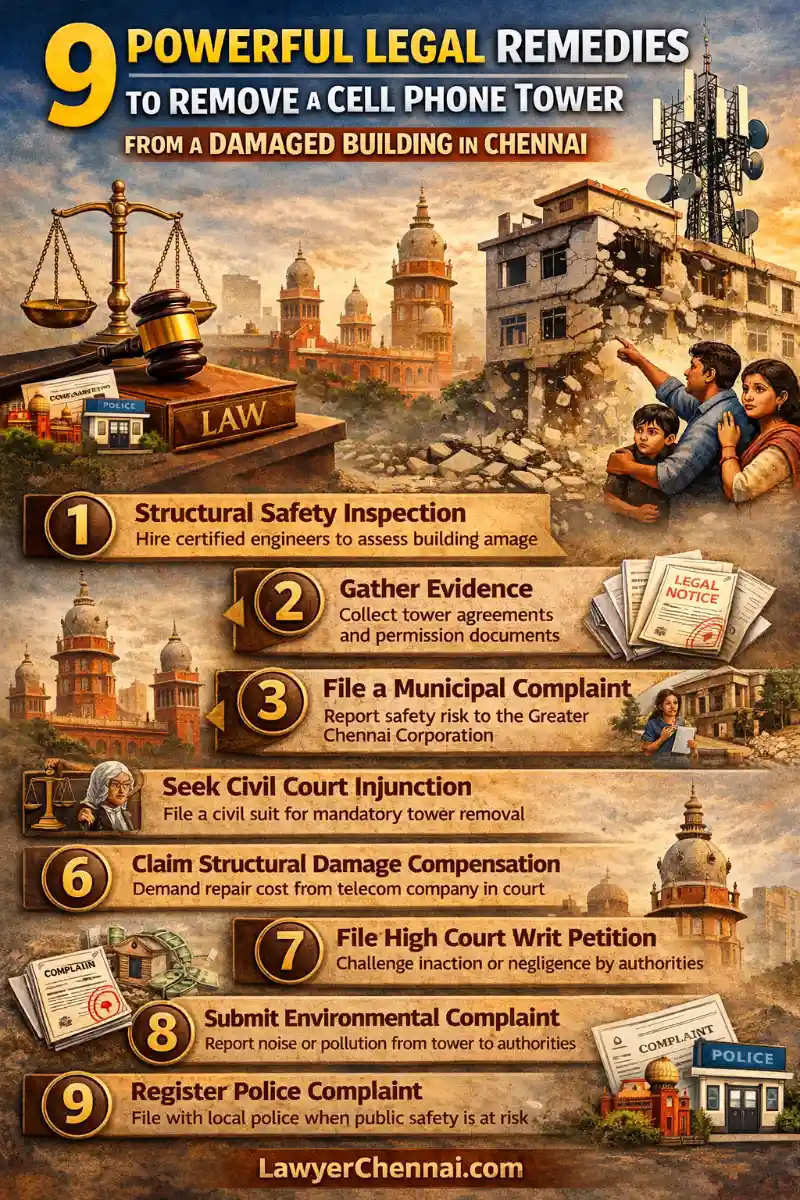
Residents facing structural damage from telecom towers should follow a systematic legal strategy. A structured approach improves success during administrative and judicial proceedings. Therefore property owners must begin with structural inspection by certified engineers. Engineers evaluate load stress, cracks, and foundation safety of the building. The inspection report becomes essential evidence during legal proceedings. Next residents should gather tower installation agreements and municipal approvals. These documents reveal whether telecom companies followed regulatory procedures. Subsequently advocates may issue legal notices demanding tower removal within specific timelines. Many telecom operators prefer settlement after receiving legally structured notices. However unresolved disputes require complaints before municipal authorities. Greater Chennai Corporation usually conducts inspections after receiving structural safety complaints. Authorities may issue compliance notices directing telecom companies to remove unsafe towers. Residents should monitor enforcement progress through written follow ups. Consequently a well organized legal strategy significantly increases chances of successful tower removal.
- Conduct structural safety inspection through qualified engineers.
- Collect telecom installation agreements and permission records.
- Send legal notice demanding tower removal.
- File complaint before Greater Chennai Corporation.
- Initiate civil litigation if telecom companies refuse compliance.
Legal strategy must also consider multiple forums capable of resolving telecom tower disputes. Administrative complaints often provide quicker initial remedies than court proceedings. Therefore residents usually approach municipal authorities first. If enforcement delays occur, legal notices strengthen accountability of officials. Advocates then evaluate options before civil courts or High Court. Civil suits allow residents to seek mandatory injunction orders removing telecom towers. High Court writ petitions become necessary when authorities fail to enforce building safety laws. Police complaints may also arise when structural damage creates immediate danger. Residents should maintain organized documentation during each stage of the dispute. Engineering reports, complaint copies, and correspondence records become valuable evidence. Courts frequently rely on such documentation during judicial review. Consequently thorough documentation strengthens legal remedies available to affected property owners.
Jurisdiction, Forums, and Authorities Handling Telecom Tower Disputes
Telecom tower removal disputes involve several authorities depending on the nature of legal issues. Structural safety complaints usually fall within municipal jurisdiction. Greater Chennai Corporation supervises building regulations and rooftop installations. Residents may submit complaints through ward offices or online grievance systems. Environmental issues related to generator noise fall under Pollution Control Board authority. Regulatory telecom compliance issues may be reported to the Department of Telecommunications. Civil disputes regarding contracts and damages belong before civil courts. Chennai residents normally approach the City Civil Court for property disputes. District courts also handle civil litigation involving structural damage claims. Writ petitions regarding administrative inaction are filed before the Madras High Court. Police stations intervene when tower installations threaten public safety. Selaiyur Police Station, Tambaram Police Station, and Velachery Police Station commonly handle such complaints. Therefore selecting correct jurisdiction becomes crucial for effective legal action.
| Issue Type | Authority | Forum |
|---|---|---|
| Structural safety violation | Greater Chennai Corporation | Municipal authority |
| Noise pollution complaint | Tamil Nadu Pollution Control Board | Environmental authority |
| Contract dispute | Civil judiciary | City Civil Court Chennai |
| Administrative inaction | Government authorities | Madras High Court writ jurisdiction |
| Public safety risk | Police authorities | Local police stations |
Selecting the appropriate forum depends on the legal issue involved in the dispute. Structural damage claims generally require civil litigation supported by engineering evidence. Municipal enforcement proceedings focus on regulatory compliance and building safety inspections. Environmental complaints address generator noise and pollution concerns. Writ petitions become necessary when authorities ignore resident complaints. Police intervention occurs when tower installations threaten immediate public safety. Therefore legal advisors carefully analyze jurisdiction before initiating proceedings. Experienced advocates often pursue multiple remedies simultaneously. This combined approach ensures faster resolution of telecom tower disputes. Strategic coordination between municipal authorities and courts improves enforcement outcomes. Consequently residents benefit from professional legal guidance when navigating jurisdictional complexities.
Complete Legal Remedy Checklist for Affected Property Owners
Property owners dealing with telecom tower damage must evaluate all available legal remedies carefully. Each remedy addresses specific aspects of structural safety and contractual liability. Therefore residents should develop a comprehensive legal action plan. Initial remedies usually involve administrative complaints and legal notices. These steps sometimes resolve disputes without prolonged litigation. However serious structural damage often requires judicial intervention. Civil suits allow residents to seek injunctions and compensation simultaneously. High Court petitions ensure accountability when authorities ignore safety complaints. Environmental complaints address noise and pollution issues caused by telecom equipment. Criminal complaints may arise when negligent installations threaten public safety. Residents should consult experienced advocates before initiating complex legal proceedings. Professional guidance ensures compliance with procedural requirements under Indian laws. Consequently a well structured remedy plan protects property rights and residential safety effectively.
- Issue legal notice demanding removal of telecom tower.
- Submit complaint before Greater Chennai Corporation.
- File civil suit seeking mandatory injunction.
- Claim compensation for structural damage.
- Submit environmental complaint for generator noise.
- File writ petition before Madras High Court.
- Register police complaint for public safety risk.
Legal remedies become stronger when supported by credible technical evidence. Therefore residents should obtain detailed structural inspection reports from qualified engineers. Documentation of building damage must remain consistent and well organized. Courts frequently rely on photographs and expert testimony during tower disputes. Residents should also maintain records of complaints submitted to authorities. Written communication strengthens legal claims regarding administrative negligence. Advocates often compile these records while preparing court pleadings. Courts may then issue interim orders protecting residents during litigation. Interim injunctions sometimes suspend tower operations until safety evaluation concludes. Consequently evidence based litigation significantly improves chances of tower removal and compensation.
Conclusion: Protecting Residential Safety and Property Rights
Telecom towers provide essential communication infrastructure across urban areas. However installations must never compromise structural safety of residential buildings. Aging structures in Chennai often struggle to support heavy telecom equipment loads. Therefore residents must remain vigilant regarding rooftop installations within their buildings. Early identification of structural damage prevents serious safety risks. Legal remedies under municipal regulations, civil law, and constitutional provisions protect residents effectively. Authorities possess powers to remove dangerous telecom towers from unsafe buildings. Courts frequently support residents when credible structural evidence appears before them. Property owners should always seek professional engineering evaluation after noticing building cracks. Legal consultation helps determine the most appropriate forum for dispute resolution. Therefore coordinated action between residents, engineers, and advocates ensures effective protection of residential safety. Ultimately timely legal intervention prevents structural accidents and safeguards property rights.
Read More
- Legal Advice for Japanese Businesses and Residents in Chennai
- Removal of Directors: Expert Guide to forced exit of Directors
- Police harassment in Chennai: Expert Criminal Lawyers Help
- G20 Digital Innovation & Online Safety: Expert Lawyers
- Director Disqualification And Removal Of Disqualification: The Best Legal Advice
- Find Civil Lawyers in Chennai
- Draft Sale Deed: What Is the Fee for Drafting and Registering It in the Sub-Registrar Office?
Frequently Asked Questions
Residents may seek removal if towers damage structural safety or violate municipal building rules.
Greater Chennai Corporation handles structural safety complaints regarding rooftop telecom installations.
Yes. Rooftops are common property, therefore association consent usually becomes mandatory.
Yes. Certified engineering reports showing safety risk strengthen legal claims before courts.
Civil courts may issue mandatory injunction orders directing telecom operators to dismantle towers.
Residents may claim repair costs and damages through civil litigation.
City Civil Court Chennai handles most property disputes involving telecom tower installations.
Yes. Police complaints may arise when installations threaten public safety.
Yes. Writ petitions may be filed when authorities fail to act on safety complaints.
Yes. Municipal building regulations require approval before rooftop telecom installations.