Financial Regulation Appeals: Appealing financial regulation decisions

Appealing financial regulation decisions – Financial regulation appeals allow individuals, companies, investors, and institutions to challenge unfavorable decisions issued by regulatory authorities. These appeals address legal issues involving financial penalties, compliance failures, licensing disputes, taxation matters, banking regulations, and securities violations. Moreover, financial regulation lawyers in Chennai assist clients before specialised tribunals, appellate authorities, High Courts, and the Supreme Court of India. Therefore, proper legal representation helps protect financial rights and business interests. Common appeal matters include RBI directions, SEBI orders, GST disputes, Income Tax assessments, insolvency decisions, and corporate compliance actions. Additionally, lawyers analyse evidence under the Bharatiya Sakshya Adhiniyam, 2023 and follow procedural requirements under the Code of Civil Procedure. Hence, timely legal support improves chances of obtaining favourable appellate outcomes.
Financial Regulation Appeals: Appealing Financial Regulation Decisions – LawyerChennai.com
Importance of Challenging Unfavourable Financial Decisions
Financial decisions from regulatory bodies can significantly affect businesses, professionals, and investors. However, every affected party has legal remedies through appeal mechanisms created under Indian financial laws. Furthermore, regulatory authorities must follow principles of natural justice before issuing adverse orders. Financial regulation appeal lawyers examine whether authorities exceeded jurisdiction, ignored evidence, or violated statutory procedures. Additionally, appeals may involve:
- Regulatory penalties and enforcement actions.
- Banking licence cancellations.
- Securities market restrictions.
- Corporate compliance disputes.
- Tax assessment challenges.
Therefore, legal experts evaluate available forums, limitation periods, and procedural requirements. Moreover, appeals require accurate documentation, legal arguments, and supporting evidence. Consequently, professional assistance helps clients approach appropriate forums, including tribunals, appellate authorities, and constitutional courts. Thus, financial regulation appeals provide essential protection against incorrect regulatory decisions.
Legal Framework Governing Financial Regulation Appeals
Laws Applicable to Financial Regulation Appeals
Indian financial regulation appeals operate under multiple statutes, rules, and regulations. Moreover, lawyers must understand sector-specific laws affecting banks, companies, investors, and financial institutions. The applicable legal framework includes:
| Law | Purpose |
|---|---|
| Securities Laws | Regulate investment markets and SEBI actions |
| Banking Regulations | Govern RBI directions and banking disputes |
| Companies Act | Controls corporate regulatory compliance |
| Income Tax Laws | Address tax assessment appeals |
| GST Laws | Govern indirect tax disputes |
Additionally, the CPC supports civil procedural principles during certain proceedings. Furthermore, the Bharatiya Nyaya Sanhita and Bharatiya Nagarik Suraksha Sanhita may apply when financial matters involve criminal allegations. Therefore, experienced lawyers identify relevant provisions before filing appeals. Consequently, proper legal interpretation strengthens appellate submissions.
Role of Regulatory Authorities and Government Departments
Financial regulation decisions originate from various government departments and regulatory bodies. Therefore, understanding authority functions becomes essential before selecting an appeal strategy. Major institutions include the Reserve Bank of India, Securities and Exchange Board of India, Ministry of Corporate Affairs, Income Tax Department, GST authorities, and insolvency regulators. Additionally, these authorities issue orders affecting financial activities, compliance obligations, and business operations. However, affected parties can challenge unlawful decisions through prescribed remedies. Furthermore, lawyers communicate with departments, review notices, and prepare responses. Hence, legal support assists clients throughout regulatory proceedings. Moreover, Chennai-based advocates represent clients before appropriate forums, including NCLT, NCLAT, SAT, DRT, High Courts, and other appellate bodies.
Jurisdiction and Appropriate Appeal Forums
Choosing the correct appellate forum determines the success of financial regulation challenges. Moreover, each financial dispute follows specific jurisdictional rules. Common forums include:
- Securities Appellate Tribunal for SEBI-related appeals.
- National Company Law Tribunal for corporate disputes.
- National Company Law Appellate Tribunal for corporate appeals.
- Debt Recovery Tribunal for banking recovery matters.
- High Courts for constitutional and statutory challenges.
Additionally, the Supreme Court hears appeals involving substantial legal questions. Therefore, lawyers examine the nature of the order before filing proceedings. Furthermore, jurisdiction mistakes may delay remedies and increase legal expenses. Consequently, professional legal advice ensures appeals reach the correct authority. Thus, understanding forum requirements remains essential for effective financial regulation litigation.
Grounds for Filing Financial Regulation Appeals
Challenging Regulatory Errors and Unfair Orders
Financial regulation appeals often arise when authorities make incorrect legal or factual conclusions. Moreover, regulatory decisions may contain errors affecting individual rights and business operations. Lawyers examine several grounds, including:
- Violation of natural justice principles.
- Failure to consider important evidence.
- Incorrect interpretation of financial laws.
- Excessive penalties without justification.
- Decisions beyond statutory powers.
Additionally, appellate lawyers review hearing records, notices, investigation reports, and final orders. Therefore, detailed analysis helps identify strong legal grounds. Furthermore, appeals require clear explanations showing how regulatory actions caused prejudice. Consequently, proper drafting improves the effectiveness of appellate petitions. Thus, legal professionals help clients challenge unreasonable financial decisions through suitable remedies.
Remedies Available Against Financial Regulation Decisions
Financial regulation disputes offer several legal remedies depending on the authority involved. Moreover, lawyers select remedies after analysing facts, laws, and procedural history. Available remedies include:
- Filing statutory appeals before tribunals.
- Seeking review or reconsideration from authorities.
- Requesting interim protection against penalties.
- Filing writ petitions before High Courts.
- Approaching the Supreme Court through appeals.
Additionally, courts may grant stays, set aside orders, or remand matters for fresh consideration. Therefore, quick legal action remains important after receiving adverse decisions. Furthermore, limitation periods differ across financial statutes. Consequently, delayed appeals may create unnecessary complications. Hence, financial regulation lawyers provide immediate assistance for preserving legal rights.
Evidence Requirements in Financial Regulation Appeals
Strong evidence forms the foundation of successful financial regulation appeals. Moreover, appellate authorities examine documents, records, and legal submissions before deciding matters. Essential evidence includes:
- Regulatory notices and official communications.
- Financial statements and transaction records.
- Compliance reports and audit documents.
- Expert opinions and supporting affidavits.
- Previous correspondence with authorities.
Additionally, lawyers verify documents under applicable evidence laws. Therefore, proper documentation strengthens arguments before tribunals and courts. Furthermore, digital records require careful handling because electronic evidence rules apply. Consequently, businesses should preserve financial documents throughout regulatory proceedings. Thus, professional legal guidance helps present complete and convincing appellate submissions.
Financial Regulation Appeal Process and Legal Representation
Steps Involved in Filing Financial Appeals
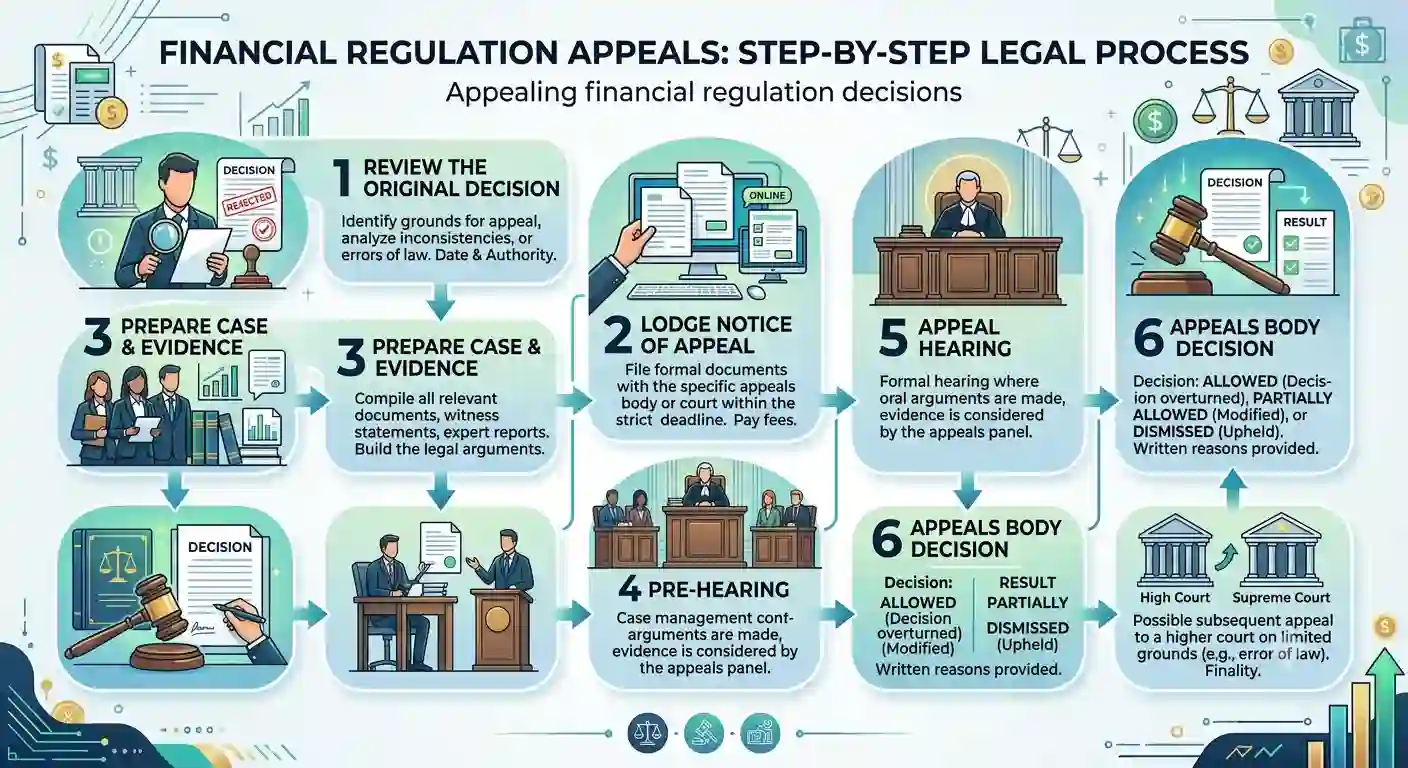
Financial regulation appeals require systematic preparation, accurate documentation, and strategic legal planning. Moreover, every appeal follows statutory procedures prescribed by concerned laws and authorities. The primary steps include:
- Reviewing the regulatory order and identifying legal errors.
- Collecting financial documents and supporting evidence.
- Selecting the correct appellate forum.
- Preparing appeal grounds and legal submissions.
- Filing applications within prescribed limitation periods.
Additionally, lawyers evaluate interim relief options when immediate protection becomes necessary. Therefore, timely filing helps prevent enforcement actions and financial losses. Furthermore, advocates represent clients during hearings, arguments, and compliance proceedings. Consequently, professional representation improves understanding of complex financial regulations. Hence, businesses and individuals benefit from experienced financial regulation appeal lawyers in Chennai.
Role of Financial Regulation Lawyers in Chennai
Financial regulation lawyers provide comprehensive assistance during disputes involving government authorities, regulators, and financial institutions. Moreover, they analyse legal notices, investigation reports, and appellate orders. Their services include:
- Regulatory compliance reviews.
- Appeal drafting and filing.
- Tribunal representation.
- Negotiation with authorities.
- Court litigation support.
Additionally, lawyers assist clients before forums such as NCLT, NCLAT, SAT, DRT, High Courts, and the Supreme Court. Therefore, specialised knowledge becomes essential for complex financial disputes. Furthermore, legal professionals monitor changing regulations and judicial decisions. Consequently, clients receive updated strategies based on current laws. Hence, choosing a qualified Chennai financial regulation lawyer supports effective dispute resolution.
Common Financial Regulation Appeal Issues
Financial regulation appeals involve various disputes affecting individuals, companies, investors, and institutions. Moreover, regulatory decisions may create significant financial consequences. Common issues include:
- SEBI enforcement orders and securities disputes.
- RBI banking restrictions and compliance matters.
- GST demand notices and tax appeals.
- Income Tax assessment challenges.
- Corporate law violations and penalties.
- Insolvency resolution disputes.
Additionally, financial institutions may face regulatory investigations involving compliance failures. Therefore, legal advice helps identify appropriate remedies. Furthermore, companies require representation during complex regulatory proceedings. Consequently, professional guidance protects commercial interests. Thus, financial regulation appeal lawyers provide solutions for diverse financial legal challenges.
Regulatory Tribunals and Court Proceedings
Appeals Before Securities Appellate Tribunal
The Securities Appellate Tribunal handles appeals against several SEBI decisions and market-related regulatory orders. Moreover, investors, companies, and intermediaries can approach this specialised forum. Lawyers prepare detailed submissions explaining factual and legal issues. Additionally, advocates analyse SEBI investigation findings, penalty orders, and compliance requirements. Therefore, proper representation helps present strong arguments before the tribunal. Furthermore, appeals require compliance with procedural rules and limitation requirements. Consequently, experienced lawyers reduce procedural difficulties during proceedings. Thus, SAT appeals provide an effective remedy against unreasonable securities regulatory actions.
National Company Law Tribunal and Appeals
The National Company Law Tribunal handles corporate disputes involving insolvency, mergers, oppression, mismanagement, and company law matters. Moreover, financial regulation appeals frequently involve corporate decisions affecting stakeholders. Lawyers represent companies, creditors, shareholders, and directors before NCLT. Additionally, appeals from NCLT orders proceed before NCLAT according to applicable provisions. Therefore, understanding insolvency laws and corporate regulations remains important. Furthermore, advocates prepare petitions, objections, and appellate arguments. Consequently, legal assistance supports efficient resolution of company-related disputes. Hence, NCLT and NCLAT representation forms an important part of financial regulation litigation.
Banking and Debt Recovery Appeals
Banking disputes often involve regulatory decisions, loan recovery actions, and financial institution claims. Moreover, borrowers and lenders require legal representation before specialised forums. Debt Recovery Tribunals address several banking disputes under applicable laws. Lawyers assist with:
- Challenging recovery proceedings.
- Filing appeals against tribunal orders.
- Seeking interim protection.
- Negotiating settlement solutions.
Additionally, advocates examine loan documents, notices, and financial records. Therefore, accurate legal analysis helps develop effective defence strategies. Furthermore, banking regulations frequently change through RBI notifications. Consequently, lawyers must remain updated with current requirements. Thus, professional legal support protects financial rights during banking appeals.
Financial Regulation Litigation Support Services
High Court Remedies Against Regulatory Orders
High Courts provide constitutional remedies against certain financial regulatory decisions. Moreover, affected parties may approach High Courts through writ petitions under constitutional provisions. Lawyers examine whether authorities violated fundamental legal principles. Additionally, writ proceedings may challenge:
- Lack of jurisdiction.
- Procedural irregularities.
- Arbitrary administrative actions.
- Violation of natural justice.
Therefore, High Court litigation requires strong legal grounds and proper documentation. Furthermore, courts may grant interim relief depending on circumstances. Consequently, timely representation becomes essential for protecting financial interests. Hence, experienced advocates help clients pursue appropriate constitutional remedies.
Supreme Court Appeals in Financial Matters
The Supreme Court hears important financial regulation appeals involving substantial questions of law. Moreover, matters may reach the Supreme Court through statutory appeals or special leave petitions. Lawyers prepare comprehensive arguments based on legislation, precedents, and constitutional principles. Additionally, financial disputes before the Supreme Court require extensive legal research. Therefore, specialised appellate representation becomes necessary. Furthermore, Supreme Court decisions influence future regulatory interpretations. Consequently, expert legal assistance helps clients present persuasive arguments. Thus, Supreme Court advocacy remains a significant remedy in complex financial regulation disputes.
Criminal Proceedings Related to Financial Regulations
Some financial regulation matters involve allegations of fraud, cheating, money laundering, or criminal misconduct. Moreover, such cases may involve police investigations and criminal courts. Lawyers assist clients during investigation, bail proceedings, and trial defence. Additionally, the Bharatiya Nagarik Suraksha Sanhita provides updated criminal procedure rules. Therefore, legal professionals coordinate regulatory and criminal defence strategies. Furthermore, advocates may approach nearby police stations, investigation authorities, and courts when required. Consequently, integrated legal assistance protects clients facing multiple proceedings. Hence, financial regulation lawyers provide support for both civil and criminal aspects.
Strategic Legal Solutions for Financial Regulation Appeals
Compliance Advisory and Preventive Legal Support
Financial regulation lawyers provide preventive assistance to avoid future disputes with regulatory authorities. Moreover, businesses require continuous monitoring of changing financial laws and compliance obligations. Legal advisors review internal systems, agreements, records, and reporting procedures. Additionally, preventive support includes:
- Regulatory compliance audits.
- Risk assessment services.
- Policy preparation.
- Contract reviews.
- Internal investigation assistance.
Therefore, proactive legal planning reduces exposure to penalties and enforcement actions. Furthermore, companies receive guidance regarding RBI, SEBI, GST, MCA, and Income Tax requirements. Consequently, businesses can maintain transparent financial operations. Hence, preventive legal support remains valuable for companies, investors, and financial institutions seeking long-term regulatory protection.
Importance of Legal Notices and Responses
Legal notices play an important role before initiating financial regulation appeals. Moreover, authorities often issue notices seeking explanations, documents, or compliance responses. Lawyers prepare detailed replies addressing allegations and legal concerns. Additionally, effective responses may resolve disputes before formal appeals begin. Therefore, legal professionals analyse notices carefully before preparing submissions. Furthermore, timely replies protect clients from adverse assumptions. Consequently, proper legal communication strengthens future appellate proceedings. Hence, financial regulation lawyers help clients respond strategically to regulatory notices and departmental communications.
Technology and Digital Evidence in Financial Appeals
Modern financial disputes increasingly involve electronic records, online transactions, and digital communications. Moreover, regulatory authorities frequently rely on digital evidence during investigations. Lawyers examine electronic documents according to the Bharatiya Sakshya Adhiniyam, 2023 requirements. Additionally, digital evidence may include:
- Emails and online records.
- Digital transaction histories.
- Electronic agreements.
- Audit software reports.
- Database information.
Therefore, proper preservation of electronic evidence becomes essential. Furthermore, lawyers verify authenticity before submitting records before tribunals and courts. Consequently, digital evidence management improves appellate arguments. Hence, technology-focused legal support assists clients facing modern financial regulation disputes.
Choosing the Right Financial Regulation Appeal Lawyer
Qualities of Experienced Financial Lawyers
Selecting an experienced financial regulation lawyer significantly affects appeal outcomes. Moreover, financial disputes involve complex statutes, regulatory procedures, and specialised forums. A capable lawyer should understand:
- Banking and securities regulations.
- Corporate and insolvency laws.
- Tax dispute procedures.
- Tribunal practices.
- Constitutional remedies.
Additionally, lawyers should possess strong drafting and courtroom advocacy skills. Therefore, clients must evaluate experience before engaging legal services. Furthermore, Chennai lawyers familiar with local courts and tribunals provide practical advantages. Consequently, professional expertise helps clients navigate complicated financial litigation. Hence, selecting suitable legal representation remains essential for successful appeals.
Financial Regulation Appeal Services for Businesses
Businesses face multiple regulatory obligations throughout their operations. Moreover, non-compliance may result in penalties, restrictions, and financial losses. Legal services help companies manage regulatory disputes effectively. Assistance includes:
- Appeal filing before authorities.
- Representation before tribunals.
- Regulatory negotiations.
- Compliance planning.
- Litigation management.
Additionally, companies receive support during investigations and enforcement actions. Therefore, professional advice protects business reputation and financial stability. Furthermore, lawyers coordinate with accountants, auditors, and corporate professionals. Consequently, businesses achieve better outcomes through integrated legal strategies. Hence, financial regulation appeal services provide essential protection for modern enterprises.
Support for Individuals and Investors
Individuals and investors may face financial disputes involving securities, taxation, banking, or investment regulations. Moreover, personal financial interests require effective legal protection. Lawyers assist investors with appeals against unfair regulatory decisions. Additionally, support includes:
- Reviewing investment-related disputes.
- Challenging penalty orders.
- Protecting investor rights.
- Seeking compensation remedies.
Therefore, individuals should seek timely legal advice after receiving adverse orders. Furthermore, delays may reduce available legal options. Consequently, professional representation helps investors understand their rights. Hence, financial regulation lawyers provide accessible solutions for individual financial disputes.
Future Trends in Financial Regulation Appeals
Impact of Changing Financial Laws
Indian financial regulations continue evolving through legislative reforms and judicial decisions. Moreover, recent changes under BNS, BNSS, and BSA influence financial litigation strategies. Lawyers must understand updated legal procedures and compliance requirements. Additionally, regulatory bodies frequently introduce digital compliance systems. Therefore, financial appeal practices require continuous legal updates. Furthermore, courts increasingly examine transparency and fairness in administrative decisions. Consequently, modern legal strategies focus on technology, evidence, and procedural accuracy. Hence, updated legal knowledge remains crucial for effective financial regulation appeals.
Importance of Alternative Dispute Resolution
Alternative dispute resolution methods provide efficient solutions for certain financial disputes. Moreover, mediation and settlement discussions can reduce lengthy litigation. Lawyers evaluate whether negotiation or formal appeals provide better outcomes. Additionally, alternative solutions may include:
- Mediation proceedings.
- Settlement agreements.
- Conciliation discussions.
- Regulatory negotiations.
Therefore, dispute resolution strategies depend on financial circumstances. Furthermore, successful settlements can preserve business relationships. Consequently, clients save time and resources through suitable alternatives. Hence, lawyers recommend appropriate remedies after analysing dispute complexity.
Complete Legal Assistance from LawyerChennai.com
LawyerChennai.com provides legal assistance for financial regulation appeals involving individuals, businesses, investors, and institutions. Moreover, experienced advocates handle regulatory disputes before tribunals, courts, and government authorities. The firm assists with SEBI appeals, RBI disputes, GST litigation, corporate matters, and financial compliance issues. Additionally, lawyers provide:
- Legal consultation.
- Appeal drafting.
- Tribunal representation.
- Court proceedings.
- Regulatory advisory.
Therefore, clients receive comprehensive support throughout financial disputes. Furthermore, professional representation helps protect legal rights and commercial interests. Consequently, obtaining timely assistance improves decision-making during regulatory challenges. Hence, LawyerChennai.com serves clients requiring financial regulation appeal solutions across Chennai and India.
Frequently Asked Questions on Financial Regulation Appeals
What is a financial regulation appeal?
A financial regulation appeal challenges an adverse decision issued by regulatory authorities. It allows affected parties to seek review, correction, or cancellation through legal forums.
Which authorities handle financial regulation appeals in India?
Financial appeals may involve SAT, NCLT, NCLAT, DRT, High Courts, Supreme Court, RBI, SEBI, GST authorities, and Income Tax departments.
Can businesses challenge regulatory penalties?
Yes, businesses can challenge penalties through statutory appeals, writ petitions, and tribunal proceedings. Lawyers evaluate suitable remedies based on applicable financial laws.
What documents are needed for financial appeals?
Important documents include regulatory orders, notices, financial records, compliance reports, agreements, evidence documents, and previous communications with authorities.
Can investors appeal against SEBI decisions?
Yes, investors and market participants can approach the Securities Appellate Tribunal against eligible SEBI orders according to applicable regulations.
Why hire a financial regulation appeal lawyer in Chennai?
A Chennai financial regulation lawyer understands local forums, national laws, tribunal procedures, and court remedies. Legal assistance improves appeal preparation and representation.
Read More
- Public Administrative Law Appeals: Handling administrative law cases
- Civil Liability Appeals: Challenging civil liability judgments
- Urban Planning Disputes: Appealing urban planning decisions
- Rural Land Disputes: Handling disputes in rural land matters
- Real Estate Ownership Disputes: Appealing property ownership issues
- Reserve Bank of India