Civil Liability Appeals: Challenging civil liability judgments
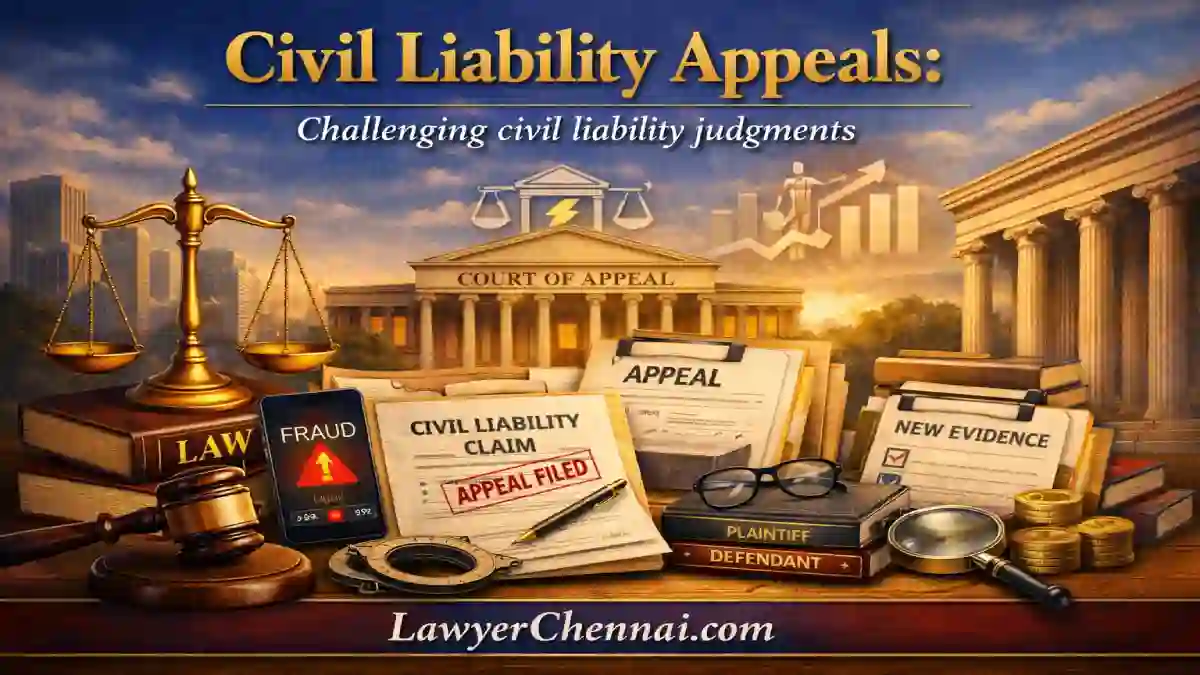
Challenging civil liability judgments – Civil liability appeals provide parties an opportunity to challenge incorrect judgments before competent appellate courts. Moreover, appellate review strengthens fairness, consistency, and judicial accountability. The Code of Civil Procedure, 1908 governs most civil appeals, while special statutes may prescribe separate appellate procedures. High Courts and the Supreme Court also interpret important legal principles affecting civil liability. Consequently, timely appeals protect valuable legal rights and financial interests. Civil liability disputes commonly involve contracts, property, recovery suits, consumer matters, commercial transactions, family property, insurance, negligence, partnership disputes, employment issues, and compensation claims. Relevant forums include District Courts, Commercial Courts, Consumer Commissions, Appellate Tribunals, High Courts, and the Supreme Court. Professional legal representation improves drafting quality, procedural compliance, and appellate strategy while reducing unnecessary delays. Early legal advice also identifies strong grounds supporting reversal, modification, or remand of challenged judgments.
Civil Liability Appeals: Challenging Civil Liability Judgments – LawyerChennai.com
Grounds for Challenging Civil Liability Judgments
Appellate courts examine legal and factual errors appearing in challenged judgments. Furthermore, successful appeals require well-supported grounds and complete records. Common grounds include:
- Incorrect legal interpretation.
- Procedural irregularities.
- Improper evidence appreciation.
- Jurisdictional errors.
- Violation of natural justice.
- Wrong compensation assessment.
- Misapplication of statutory provisions.
- Perverse factual findings.
The following table highlights common appeal situations:
| Civil Issue | Appellate Forum | Possible Relief |
|---|---|---|
| Contract dispute | District Court | Judgment modification |
| Property dispute | High Court | Decree reversal |
| Consumer dispute | Consumer Commission | Compensation review |
| Commercial dispute | Commercial Appellate Court | Fresh consideration |
| Insurance claim | Appellate Court | Enhanced compensation |
Every appeal should include certified copies, supporting documents, relevant pleadings, evidence, and applicable legal provisions. Strong preparation significantly improves appellate success while protecting procedural rights.
Legal Framework Governing Civil Appeals
Civil appeals follow structured statutory procedures under applicable laws. Moreover, advocates should evaluate limitation periods before filing appeals. Important legal provisions include:
- Code of Civil Procedure, 1908.
- Limitation Act, 1963.
- Commercial Courts Act, 2015.
- Consumer protection legislation.
- Specific Relief Act, 1963.
- Relevant special statutes.
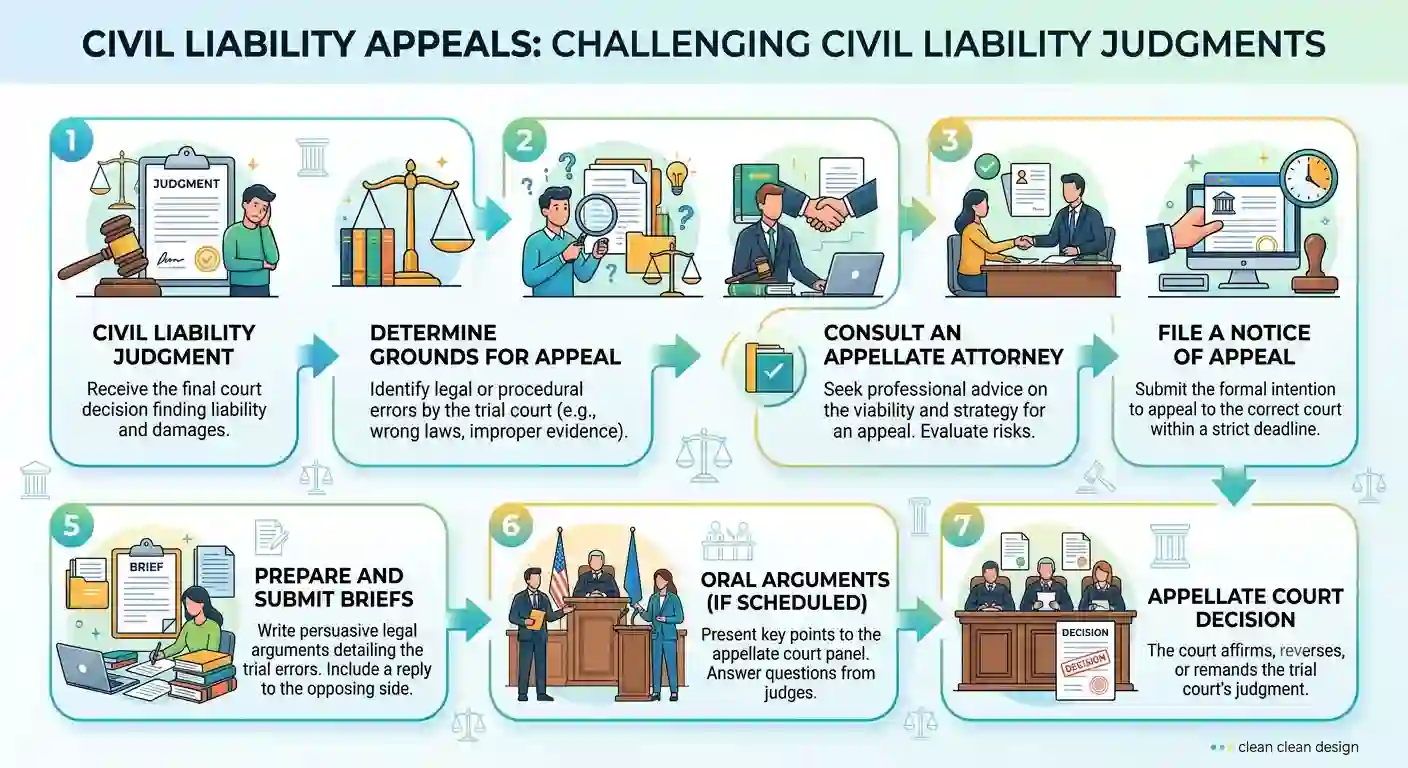
Appellate courts review pleadings, documentary evidence, witness testimony, legal findings, and judicial reasoning. Additionally, appellate judges may affirm, modify, remand, or set aside challenged decrees according to law. Although civil appeals primarily proceed under the CPC, allegations involving fraud, forgery, or fabricated evidence may also require consideration of the Bharatiya Nyaya Sanhita, 2023, Bharatiya Nagarik Suraksha Sanhita, 2023, and Bharatiya Sakshya Adhiniyam, 2023 before appropriate criminal forums. LawyerChennai.com – Best Lawyer Firm in Chennai India 24×7 provides strategic appellate representation across diverse civil disputes.
Appellate Procedure, Jurisdiction, and Legal Remedies
Filing Civil Liability Appeals Before Competent Courts
Civil liability appeals require careful procedural compliance and persuasive legal drafting. Moreover, timely filing prevents dismissal on limitation grounds. Appellants should obtain certified copies of judgments, decrees, pleadings, evidence, and relevant exhibits before preparing appeal papers. Advocates examine substantial legal errors, procedural defects, jurisdictional questions, and judicial findings before identifying appeal grounds. Consequently, strong documentation supports effective appellate arguments. Depending upon the dispute, appeals may lie before District Courts, Commercial Appellate Courts, Consumer Commissions, High Courts, or the Supreme Court. Interim stay petitions often protect parties against decree execution during appeal. Professional representation also ensures compliance with court rules, limitation requirements, court fees, and procedural formalities. Strategic appellate advocacy significantly improves prospects of obtaining reversal, modification, remand, or other appropriate judicial relief.
Jurisdiction, Forums, and Government Authorities
Proper forum selection determines appellate maintainability and judicial competence. Therefore, parties should identify the correct appellate authority before filing proceedings. Common forums include:
- District Court.
- Commercial Appellate Court.
- State Consumer Disputes Redressal Commission.
- National Consumer Disputes Redressal Commission.
- High Court.
- Supreme Court.
- Revenue Appellate Authority.
- Statutory Appellate Tribunal.
- Arbitration Appellate Forum where applicable.
- Executing Court.
Government departments may become relevant in land acquisition, revenue, taxation, municipal, registration, or public authority disputes. Consequently, jurisdiction depends upon the subject matter, statutory provisions, pecuniary limits, territorial jurisdiction, and appellate hierarchy. Experienced advocates evaluate every procedural requirement before initiating appellate litigation.
Evidence Review and Appellate Remedies
Successful civil appeals depend upon careful analysis of records and legal principles. Furthermore, appellate courts generally review the existing record while considering permissible additional evidence under applicable law. Essential documents include:
- Certified judgment.
- Certified decree.
- Pleadings.
- Documentary evidence.
- Witness depositions.
- Exhibits.
- Written arguments.
- Relevant statutory provisions.
- Judicial precedents.
- Limitation documents.
The following table summarizes common appellate remedies:
| Legal Issue | Appellate Forum | Available Remedy |
|---|---|---|
| Incorrect decree | Appellate Court | Reversal |
| Excessive damages | High Court | Modification |
| Procedural irregularity | Appellate Court | Remand |
| Jurisdiction error | Higher Court | Setting aside |
| Consumer liability | Consumer Commission | Compensation review |
Professional legal assistance strengthens appellate advocacy through detailed legal research, procedural compliance, persuasive drafting, and effective courtroom representation before appellate courts and tribunals.
Why LawyerChennai.com – Best Lawyer Firm in Chennai India 24×7 Is Your Trusted Appellate Counsel
Comprehensive Legal Support for Civil Liability Appeals
LawyerChennai.com – Best Lawyer Firm in Chennai India 24×7 provides dedicated appellate representation across diverse civil liability disputes. Moreover, experienced advocates evaluate judgments, decrees, evidence, and procedural compliance before recommending appellate remedies. The firm handles contract disputes, property litigation, commercial claims, consumer matters, insurance disputes, recovery suits, partnership conflicts, employment claims, family property disputes, negligence actions, and compensation appeals. Lawyers prepare appeal memoranda, stay petitions, cross-objections, review applications, and related proceedings. Additionally, the team represents clients before District Courts, Commercial Appellate Courts, Consumer Commissions, High Courts, the Supreme Court, and statutory tribunals. Professional legal strategy identifies substantial questions of law, jurisdictional defects, procedural irregularities, and evidentiary errors. Early consultation strengthens appellate preparation, protects limitation periods, and improves prospects for reversal, modification, remand, or other appropriate judicial relief while safeguarding valuable legal and commercial interests.
Practical Checklist Before Filing a Civil Liability Appeal
Successful appeals begin with careful preparation and complete documentation. Furthermore, prompt action prevents avoidable procedural complications and limitation issues. Follow this practical checklist:
- Obtain certified copies promptly.
- Verify limitation periods.
- Preserve documentary evidence.
- Review witness testimony.
- Identify legal errors.
- Examine jurisdiction carefully.
- Prepare stay applications.
- Collect relevant precedents.
- Consult appellate advocates.
- Monitor court deadlines.
Appellants should avoid filing appeals without evaluating legal merits and available remedies. Consequently, experienced advocates can prepare persuasive grounds supported by statutes and judicial precedents. Proper planning also reduces unnecessary litigation costs while improving judicial efficiency. Strategic representation ensures compliance with the Code of Civil Procedure, applicable special statutes, and appellate court practices throughout every stage of proceedings.
Frequently Asked Questions
Q1. What is a civil liability appeal?
Answer: A civil liability appeal challenges a judgment or decree before a higher court seeking reversal, modification, remand, or other lawful appellate relief.
Q2. Which law governs civil appeals in India?
Answer: Most civil appeals proceed under the Code of Civil Procedure, 1908, along with applicable special statutes governing particular disputes.
Q3. Can execution of a decree stop during an appeal?
Answer: Yes. Courts may grant a stay of execution after considering legal grounds, balance of convenience, and statutory requirements.
Q4. Can new evidence be produced in an appeal?
Answer: Additional evidence may be permitted only in limited circumstances allowed under applicable procedural law and judicial discretion.
Q5. What happens if the appeal succeeds?
Answer: The appellate court may affirm, modify, reverse, or remand the judgment according to the evidence, law, and procedural requirements.
Q6. How can LawyerChennai.com assist with civil liability appeals?
Answer: The firm provides appellate drafting, stay petitions, legal research, courtroom advocacy, strategic advice, and representation before appellate courts and tribunals.
Read More
- Urban Planning Disputes: Appealing urban planning decisions
- Rural Land Disputes: Handling disputes in rural land matters
- Real Estate Ownership Disputes: Appealing property ownership issues
- Writs for Compensation: Seeking compensation through writs
- Corporate Governance Disputes: Appealing governance-related matters
- Department of Justice, Ministry of Law & Justice