Disciplinary Action Appeals: Appealing disciplinary actions
Disciplinary Action Appeals – Disciplinary proceedings can affect employment, reputation, promotions, and professional opportunities. Therefore, affected individuals should understand available appeal rights immediately. Employers, government departments, educational institutions, regulatory authorities, and professional bodies frequently impose disciplinary penalties. Common actions include suspension, demotion, dismissal, salary reduction, black listing, and adverse service entries. Appeal mechanisms help correct procedural errors and unfair decisions. Relevant authorities vary according to employment category and governing regulations. Furthermore, disciplinary appeals often involve service rules, employment contracts, administrative regulations, and constitutional protections. Courts examine fairness, evidence, and procedural compliance carefully. Common legal issues include natural justice violations, biased inquiries, disproportionate penalties, and lack of evidence. Relevant forums include departmental appellate authorities, service tribunals, labour courts, High Courts, and administrative bodies. Consequently, timely legal guidance significantly improves prospects for obtaining effective relief and restoring professional rights.
Disciplinary Action Appeals: Appealing Disciplinary Actions – LawyerChennai.com
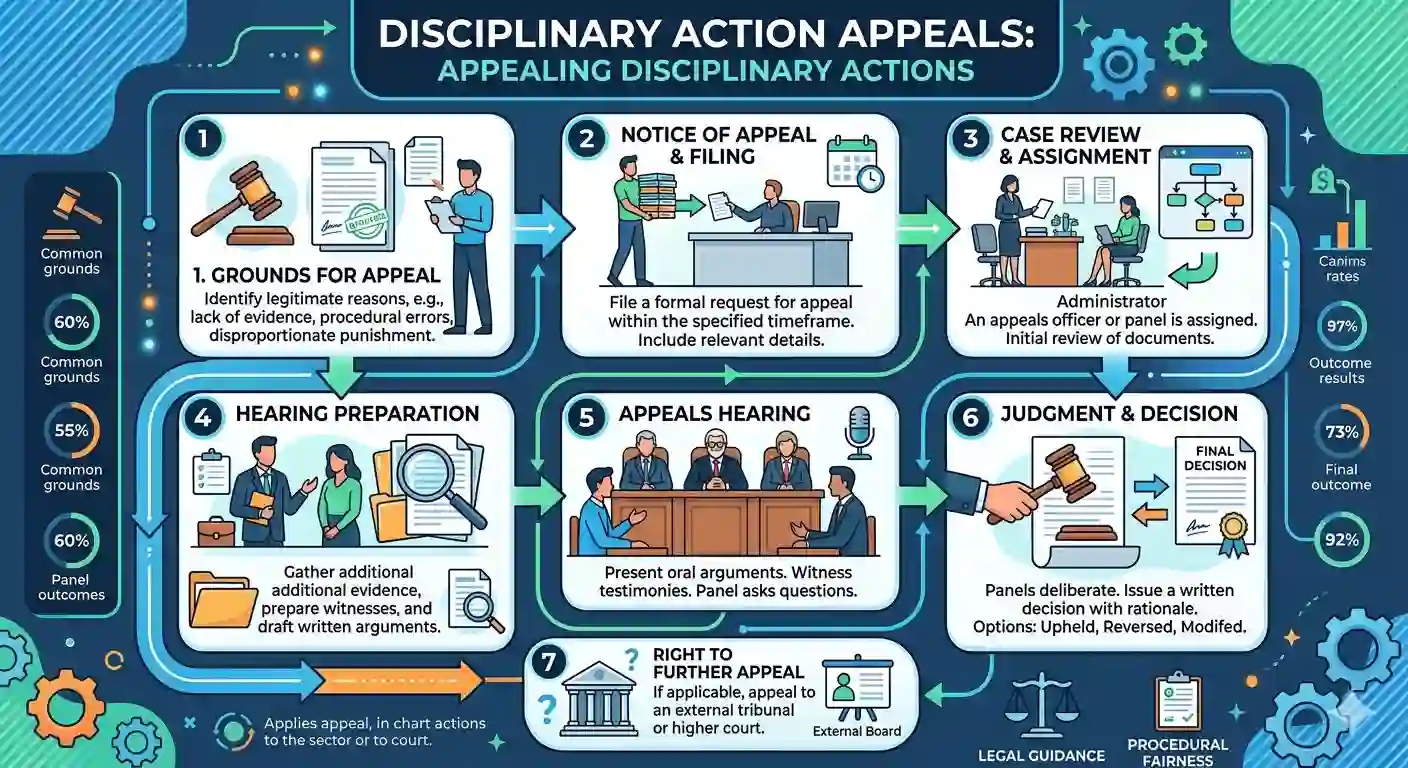
Common Grounds for Filing an Appeal
Appeals succeed when supported by strong factual and legal grounds. Therefore, employees and professionals should review disciplinary records carefully. Appellate authorities examine procedural fairness and evidence quality. Common grounds include:
- Violation of natural justice.
- Lack of evidence.
- Biased inquiry proceedings.
- Excessive punishment.
- Procedural irregularities.
- Jurisdictional errors.
Additionally, authorities assess whether inquiry officers acted fairly throughout proceedings. Legal representation helps identify weaknesses within disciplinary findings. Furthermore, documentary evidence often strengthens appellate arguments considerably. Properly drafted appeals improve decision-maker understanding significantly. Courts frequently intervene when disciplinary authorities exceed lawful powers. Consequently, strategic case preparation enhances opportunities for reinstatement, penalty reduction, or complete exoneration.
Types of Disciplinary Actions
Organizations impose different disciplinary measures depending upon alleged misconduct. Therefore, understanding penalty categories becomes essential before filing appeals. Common disciplinary actions include:
| Disciplinary Action | Possible Impact |
|---|---|
| Warning | Adverse record |
| Suspension | Loss of duties |
| Demotion | Reduced status |
| Salary Cut | Financial loss |
| Dismissal | Employment termination |
Additionally, professional bodies may suspend licenses or memberships. Government departments often follow detailed service regulations. Furthermore, educational institutions may impose disciplinary sanctions affecting academic progress. Legal remedies vary according to penalty severity. Lawyers assess proportionality before challenging disciplinary decisions. Consequently, affected persons gain clarity regarding available appellate options and legal strategies.
Departmental Inquiries and Procedural Fairness
Fair inquiry procedures form the foundation of lawful disciplinary action. Therefore, authorities must follow established service rules and regulations. Employees deserve notice of allegations and adequate opportunities for defense. Inquiry officers should remain impartial throughout proceedings. Additionally, witnesses and documents require proper consideration. Common procedural requirements include:
• Charge memorandum
• Written explanation
• Inquiry hearings
• Evidence review
• Reasoned findings
Courts examine compliance with natural justice principles carefully. Furthermore, procedural violations frequently become successful appeal grounds. Lawyers review inquiry records and hearing documents systematically. Proper scrutiny identifies defects affecting disciplinary outcomes. Consequently, affected individuals strengthen challenges against unlawful or unfair disciplinary measures.
Evidence and Documentation in Appeals
Evidence plays a decisive role during disciplinary appeals. Therefore, appellants should preserve records from the beginning. Relevant documents commonly include inquiry reports, charge sheets, witness statements, and official communications. Appellate authorities assess whether evidence supports findings adequately. Furthermore, electronic records receive consideration under the Bharatiya Sakshya Adhiniyam, 2023. Strong documentation improves credibility significantly. Important records include:
| Document | Purpose |
|---|---|
| Charge Sheet | Review allegations |
| Inquiry Report | Examine findings |
| Reply Statement | Defense position |
| Service Records | Employment history |
| Witness Statements | Verify facts |
Additionally, lawyers analyze evidentiary weaknesses carefully. Proper evidence presentation often influences final decisions. Consequently, organized documentation strengthens appellate arguments and legal remedies.
Service Rules and Employment Regulations
Service rules govern disciplinary proceedings across many sectors. Therefore, appellants must understand applicable regulations before challenging penalties. Government employees often fall under statutory service frameworks. Private employees may rely upon employment contracts and labour laws. Additionally, professional organizations maintain disciplinary codes and ethical standards. Relevant authorities examine compliance with governing rules carefully. Furthermore, appellate bodies assess whether decision-makers exceeded jurisdiction. Lawyers evaluate applicable regulations and procedural requirements comprehensively. Proper interpretation often reveals legal defects within disciplinary actions. Consequently, appellants improve prospects for obtaining favorable outcomes through well-supported appeals.
Remedies Available Through Appeals
Appeals provide several remedies against unjust disciplinary actions. Therefore, affected individuals should evaluate all available options. Appellate authorities may modify, reduce, or overturn penalties. Common remedies include:
• Reinstatement
• Penalty reduction
• Back wages
• Service benefits restoration
• Record correction
Additionally, authorities may order fresh inquiries where fairness concerns arise. Courts sometimes grant interim protection during pending proceedings. Furthermore, compensation may become available under specific circumstances. Lawyers develop strategies based upon facts and governing regulations. Effective advocacy improves chances of obtaining meaningful relief. Consequently, appellants protect professional interests while challenging unlawful disciplinary measures.
Forums and Authorities for Disciplinary Appeals
Different authorities hear disciplinary appeals depending upon employment category. Therefore, jurisdiction analysis remains essential before filing. Relevant forums include departmental appellate authorities, Labour Courts, Industrial Tribunals, Central Administrative Tribunal, State Administrative Tribunals, and High Courts. Additionally, educational institutions often maintain internal appeal mechanisms. Professional councils may also establish disciplinary review bodies. Lawyers determine appropriate forums according to applicable laws and regulations. Furthermore, procedural compliance prevents avoidable delays. Strategic forum selection often influences case management and outcomes. Consequently, appellants pursue remedies through legally competent authorities while protecting procedural rights effectively.
Role of Administrative Tribunals and Courts
Administrative tribunals resolve many service-related disputes efficiently. Therefore, government employees frequently approach such forums after exhausting departmental remedies. Tribunals review legality, fairness, and procedural compliance. High Courts exercise supervisory jurisdiction through writ proceedings where appropriate. Additionally, Labour Courts and Industrial Tribunals address employment disputes involving workmen. Common legal issues include dismissal, suspension, promotion denial, and disciplinary penalties. Furthermore, tribunals assess evidence and applicable service regulations carefully. Lawyers prepare pleadings and supporting documents strategically. Proper representation improves prospects for successful challenges. Consequently, affected individuals gain access to structured legal remedies against adverse disciplinary decisions.
Impact of BNS, BNSS and BSA
Certain disciplinary proceedings involve allegations linked to criminal conduct. Therefore, parallel criminal investigations sometimes occur. The Bharatiya Nyaya Sanhita, 2023 governs criminal offences where relevant. Investigation procedures operate under the Bharatiya Nagarik Suraksha Sanhita, 2023. Evidence assessment follows the Bharatiya Sakshya Adhiniyam, 2023. Additionally, nearby police stations may investigate cognizable allegations. Departmental inquiries generally remain separate from criminal trials. Furthermore, authorities apply different standards of proof in each proceeding. Lawyers coordinate defense strategies carefully across forums. Proper legal planning prevents inconsistent positions and procedural risks. Consequently, individuals protect rights effectively during concurrent disciplinary and criminal matters.
Common Mistakes During Appeals
Many appeals fail because appellants overlook critical requirements. Therefore, careful preparation remains essential. Frequent mistakes include:
- Missing deadlines.
- Weak legal grounds.
- Incomplete documentation.
- Ignoring procedural rules.
- Poor evidence presentation.
Additionally, emotional arguments often weaken legal submissions. Appellate authorities expect factual and structured representations. Furthermore, unsupported allegations rarely succeed. Lawyers identify weaknesses before filing appeals. Proper drafting improves clarity and legal effectiveness. Consequently, appellants maximize opportunities for obtaining meaningful relief through professional case management.
Legal Support from LawyerChennai.com
LawyerChennai.com – Best Lawyer Firm in Chennai India 24×7 provides comprehensive support for disciplinary appeal matters. Our legal team assists employees, professionals, students, and government servants facing adverse actions. Services include inquiry review, appeal drafting, tribunal representation, writ petitions, and strategic legal advice. Furthermore, we appear before Labour Courts, Administrative Tribunals, High Courts, and regulatory authorities. Every case receives detailed analysis and practical guidance. Strong documentation improves appeal outcomes significantly. Therefore, clients receive focused legal support throughout proceedings. Effective advocacy protects careers, reputations, and future opportunities. Consequently, individuals challenge unfair disciplinary actions confidently while pursuing lawful remedies.
FAQs
What is a disciplinary action appeal?
A disciplinary action appeal challenges penalties such as suspension, dismissal, demotion, or adverse findings before competent authorities.
Can I appeal a dismissal order?
Yes. Most service rules and employment frameworks provide appeal mechanisms against dismissal orders.
What documents help during an appeal?
Charge sheets, inquiry reports, service records, witness statements, and supporting communications strengthen appeals.
Can courts review disciplinary decisions?
Yes. Tribunals and courts review legality, procedural fairness, evidence, and proportionality of penalties.
Does a criminal case affect disciplinary proceedings?
Both proceedings may continue simultaneously because they follow different legal standards and objectives.
Why should I hire a lawyer for disciplinary appeals?
Legal representation improves drafting, evidence assessment, procedural compliance, and overall appellate strategy.
Read More
- Government Contract Disputes: Handling disputes over government contracts
- Appeals in Employment Termination: Challenging wrongful terminations
- Charity Dispute Appeals: Appealing charity-related disputes
- Regulatory Fines Appeals: Challenging fines imposed by regulators
- Tax Evasion Appeals: Handling appeals in tax evasion cases
- Central Administrative Tribunal (CAT)