Regulatory Fines Appeals: Challenging fines imposed by regulators
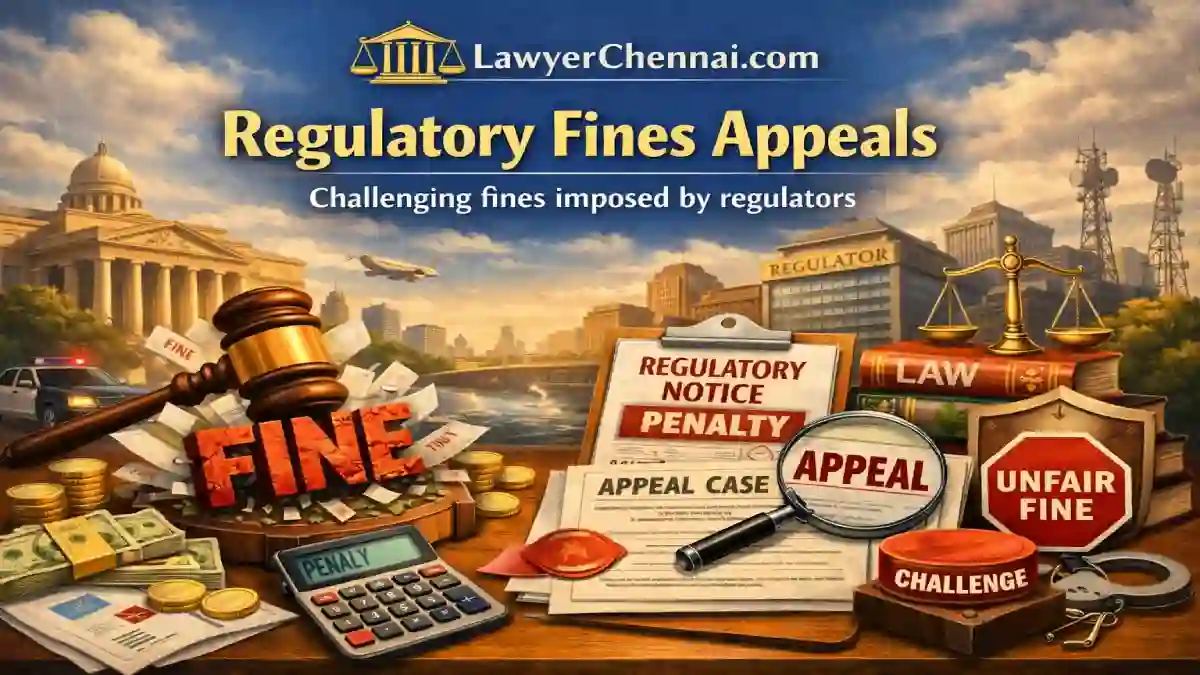
Regulatory Fines Appeals – Regulatory authorities impose fines to enforce statutory compliance and deter violations. Businesses, professionals, NGOs, and individuals frequently face penalties from government departments and regulators. Common authorities include tax departments, environmental agencies, consumer regulators, financial regulators, and municipal authorities. Therefore, recipients should immediately assess the legality of penalty orders. LawyerChennai.com – Best Lawyer Firm in Chennai India 24×7 assists clients in challenging excessive or unlawful fines. Regulators must follow statutory procedures before imposing penalties. Moreover, affected parties possess appeal rights under applicable laws. Common issues include: • Natural justice violations • Excessive penalties • Incorrect findings • Procedural irregularities • Jurisdictional errors.
Regulatory Fines Appeals: Challenging Fines Imposed by Regulators – LawyerChennai.com
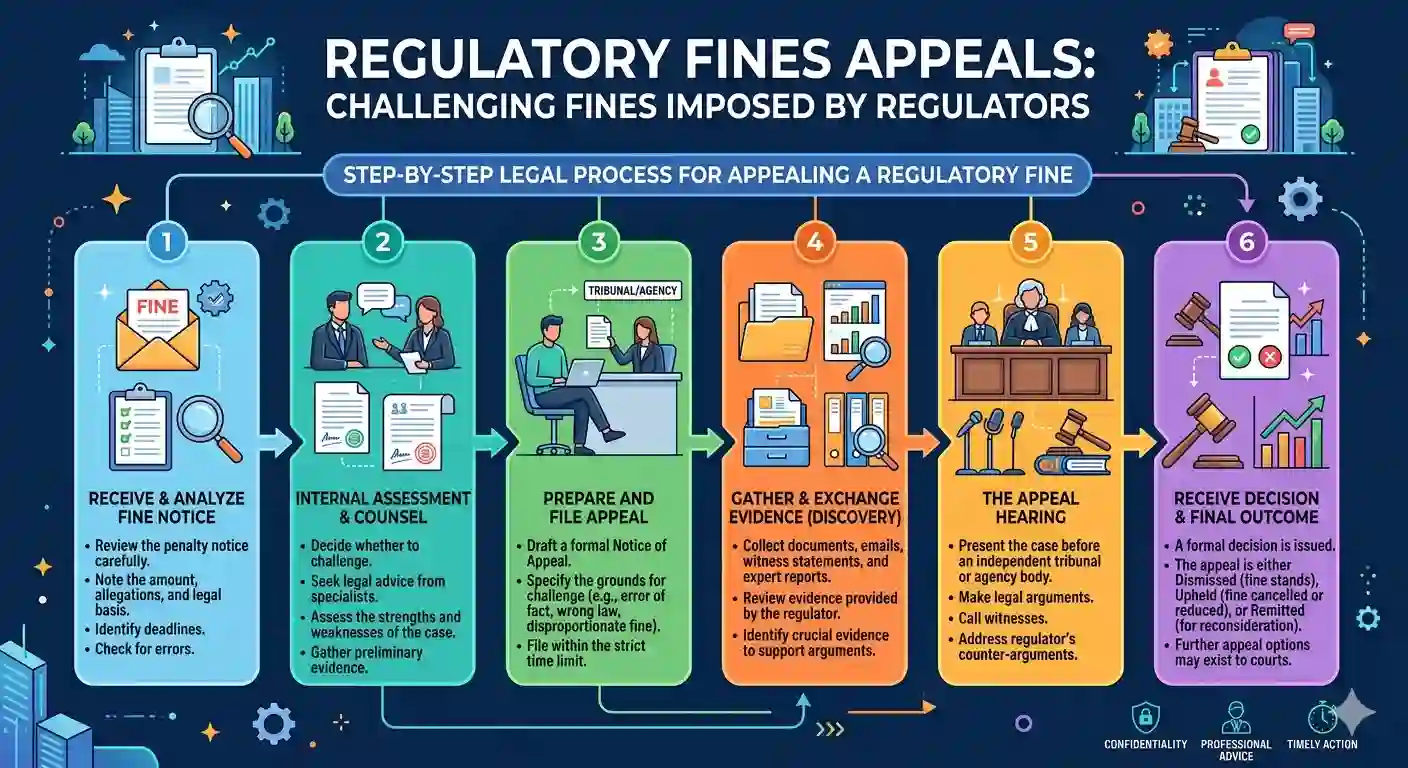
The following forums commonly hear appeals:
| Forum | Function |
|---|---|
| Appellate Authority | First Appeal |
| Tribunal | Specialized Review |
| High Court | Judicial Review |
| Supreme Court | Final Appeal |
Timely legal action often preserves valuable statutory remedies.
Regulatory Authorities Commonly Imposing Penalties
Different regulators possess authority to investigate and impose monetary sanctions. Consequently, compliance obligations vary across sectors and jurisdictions. LawyerChennai.com advises clients facing enforcement actions from multiple authorities. Common regulators include: 1. GST authorities. 2. Income Tax authorities. 3. SEBI. 4. RBI-related regulators. 5. Pollution Control Boards. 6. Consumer regulators. Regulatory orders often affect licenses, finances, and business reputation. Moreover, some penalties trigger parallel investigations and recovery proceedings. Legal review therefore becomes essential immediately after receiving notices or orders. Businesses should preserve records, correspondence, and compliance documentation. Strong preparation improves appeal prospects and reduces future enforcement risks. Early intervention frequently prevents escalation and unnecessary litigation costs.
Grounds for Challenging Regulatory Fines
Successful appeals generally rely upon legal, factual, and procedural grounds. Authorities must justify findings with evidence and statutory authority. Therefore, appellate forums scrutinize the reasoning behind penalty orders. LawyerChennai.com develops tailored appeal strategies based on case-specific facts. Common grounds include: • Lack of jurisdiction • Procedural violations • Evidence deficiencies • Excessive penalties • Incorrect interpretation. Courts and tribunals frequently examine compliance with natural justice principles. Moreover, authorities must provide meaningful opportunities for representation. Failure to follow statutory procedures often weakens enforcement actions. Proper legal analysis identifies defects and strengthens appeal arguments. Comprehensive documentation significantly improves the likelihood of favorable outcomes before appellate forums.
Appeal Procedures Before Authorities and Tribunals
Filing Appeals Against Regulatory Orders
Appeal procedures differ according to governing statutes and regulatory frameworks. Consequently, parties must comply with limitation periods and procedural requirements. LawyerChennai.com assists clients with drafting and filing appeals promptly. Essential requirements commonly include: • Appeal memorandum • Certified order copy • Supporting documents • Statutory deposits • Authorization records. Missing deadlines may jeopardize valuable legal rights. Therefore, immediate legal consultation remains advisable. Appellate authorities generally review facts, law, and procedural compliance. Moreover, interim relief applications may suspend recovery actions. Proper drafting strengthens legal arguments and highlights critical issues. Strategic preparation often improves chances of obtaining favorable orders and reducing penalties.
Documentary Evidence and Appeal Preparation
Strong evidence remains crucial during regulatory appeal proceedings. Appellate forums examine records supporting both liability and defence positions. LawyerChennai.com carefully evaluates documentation before initiating challenges. Important evidence may include:
| Document | Purpose |
|---|---|
| Notices | Procedural Review |
| Orders | Challenge Basis |
| Contracts | Factual Support |
| Compliance Records | Defence Evidence |
| Correspondence | Clarification |
Furthermore, electronic records frequently influence appellate outcomes. Parties should preserve emails, digital submissions, and regulatory communications. Well-organized evidence improves credibility before tribunals and courts. Effective case preparation therefore enhances prospects of success. Professional legal representation helps identify evidentiary strengths and weaknesses.
Interim Relief and Stay Applications
Recovery proceedings often begin soon after penalty orders. Therefore, affected parties may require immediate interim protection. LawyerChennai.com regularly files stay applications before appropriate forums. Common relief requests include: 1. Recovery stay. 2. Penalty suspension. 3. Coercive action restraint. 4. License protection. 5. Status quo orders. Appellate authorities assess urgency and potential prejudice carefully. Moreover, strong prima facie cases improve prospects for interim relief. Prompt applications often prevent significant financial and operational disruptions. Legal counsel should evaluate available remedies immediately after adverse orders. Effective interim strategies frequently protect business continuity during appeal proceedings.
Tribunal and Court Remedies
Appeals Before Specialized Tribunals
Many regulatory statutes establish specialized tribunals for dispute resolution. Consequently, parties benefit from expert adjudication and sector-specific knowledge. LawyerChennai.com represents clients before various tribunals nationwide. Common forums include: • Tax tribunals • Securities tribunals • Consumer commissions • Environmental tribunals • Administrative tribunals. Tribunal proceedings often involve detailed factual and legal analysis. Moreover, appellate members frequently possess technical expertise. Comprehensive preparation remains essential. Strategic advocacy assists parties in challenging findings, reducing penalties, and securing favorable outcomes. Proper legal guidance strengthens procedural compliance and improves appeal efficiency.
High Court Writ Jurisdiction and Judicial Review
High Courts exercise constitutional powers against arbitrary administrative actions. Therefore, parties may invoke writ jurisdiction in suitable circumstances. LawyerChennai.com advises clients regarding constitutional remedies and judicial review. Important grounds include:
| Ground | Relevance |
|---|---|
| Natural Justice Violation | High |
| Jurisdictional Error | High |
| Arbitrary Action | Significant |
| Procedural Illegality | Significant |
High Courts examine legality rather than routine factual disputes. Moreover, writ remedies provide protection against unlawful regulatory conduct. Strong pleadings and supporting evidence remain essential. Effective legal representation improves prospects for favorable judicial intervention. Timely action therefore remains critical.
Impact of BNS, BNSS, BSA and Related Proceedings
Regulatory Investigations and Criminal Exposure
Certain regulatory violations may trigger criminal investigations alongside civil penalties. Consequently, individuals and companies may face broader legal risks. LawyerChennai.com provides integrated defence strategies covering regulatory and criminal matters. Relevant laws include BNS, BNSS, and BSA. Common concerns include: • Fraud allegations • Misrepresentation claims • Record tampering • Compliance breaches • Financial offences. Nearby police stations, economic offences units, or specialized agencies may initiate investigations. Therefore, legal counsel should assess both civil and criminal exposure. Coordinated defence strategies often minimize risks. Early intervention protects procedural rights and strengthens overall legal positioning.
Civil Remedies and CPC-Based Proceedings
Regulatory disputes sometimes generate related civil litigation. Businesses may seek injunctions, declarations, or recovery remedies where appropriate. LawyerChennai.com advises clients regarding CPC-based proceedings and commercial litigation. Available remedies include: • Declaratory relief • Injunction orders • Recovery actions • Contract enforcement • Damages claims. Courts assess facts independently from regulatory findings. Moreover, civil proceedings may complement statutory appeals strategically. Comprehensive legal planning helps clients pursue multiple remedies efficiently. Proper forum selection often influences litigation outcomes significantly. Coordinated representation therefore remains valuable.
Why Choose LawyerChennai.com – Best Lawyer Firm in Chennai India 24×7
Comprehensive Regulatory Appeals and Litigation Support
Regulatory fines can affect finances, operations, licensing, and reputation. Therefore, immediate legal guidance becomes essential after receiving adverse orders. LawyerChennai.com – Best Lawyer Firm in Chennai India 24×7 provides comprehensive regulatory defence services. Legal support includes: • Appeal drafting • Tribunal representation • High Court litigation • Interim relief applications • Compliance advisory services. Experienced lawyers analyze facts, identify procedural defects, and develop effective strategies. Clients receive assistance before authorities, tribunals, commissions, High Courts, and the Supreme Court. Moreover, the firm handles matters involving tax, consumer, environmental, financial, and administrative regulators. Strategic representation frequently reduces penalties and protects long-term interests. Effective advocacy therefore strengthens compliance and dispute resolution outcomes.
Frequently Asked Questions
FAQ 1: Can every regulatory fine be appealed?
Most statutes provide appeal mechanisms. Timely filing and procedural compliance remain essential for maintaining appeal rights.
FAQ 2: How quickly should an appeal be filed?
Limitation periods vary. Immediate legal consultation helps prevent delays and protects statutory remedies.
FAQ 3: Can recovery proceedings continue during appeals?
Yes. Therefore, parties often seek stay orders or interim relief from appellate authorities.
FAQ 4: Can High Courts review regulatory penalty orders?
Yes. High Courts may exercise writ jurisdiction where legal or procedural violations exist.
FAQ 5: Do regulatory penalties create criminal liability?
Some violations may trigger criminal investigations under BNS, BNSS, and related statutes.
FAQ 6: What documents strengthen a regulatory appeal?
Orders, notices, compliance records, contracts, correspondence, and electronic evidence often support appeals.
Read More
- Tax Evasion Appeals: Handling appeals in tax evasion cases
- International Trade Disputes: Appealing trade-related disputes
- Civil Rights Litigation: Handling appeals in civil rights cases
- Legal Aid Appeals: Appealing decisions on legal aid
- Appeals in Real Estate Development: Challenging development-related issues
- Income Tax Department