
Transfer of Ownership Through Settlement Deed in Chennai – Property Registration, Stamp Duty, Legal Remedies & Property Lawyer Guide

Transfer of ownership through settlement deed remains one of the most reliable methods for family property transfer in Chennai and across India. This guide explains settlement deed registration, stamp duty in Tamil Nadu, patta transfer, property mutation, and Sub-Registrar procedures. Property owners often use settlement deeds to transfer houses, flats, land, or ancestral property to children, spouse, or relatives without monetary consideration. The article covers legal provisions under the Transfer of Property Act, Registration Act, Civil Procedure Code (CPC), Bharatiya Nyaya Sanhita (BNS), Bharatiya Nagarik Suraksha Sanhita (BNSS), and Bharatiya Sakshya Adhiniyam (BSA). Learn about property disputes, cancellation of settlement deeds, forged document complaints, civil suits, injunction remedies, and criminal action through nearby police stations and courts in Chennai. It also explains the roles of Sub-Registrar Offices, Tahsildar offices, Revenue Department, and municipal authorities. Property lawyers in Chennai assist with title verification, drafting settlement deeds, registration compliance, and litigation before District Courts, tribunals, and the Madras High Court.
Transfer of Ownership Through Settlement Deed for Property in Chennai and India
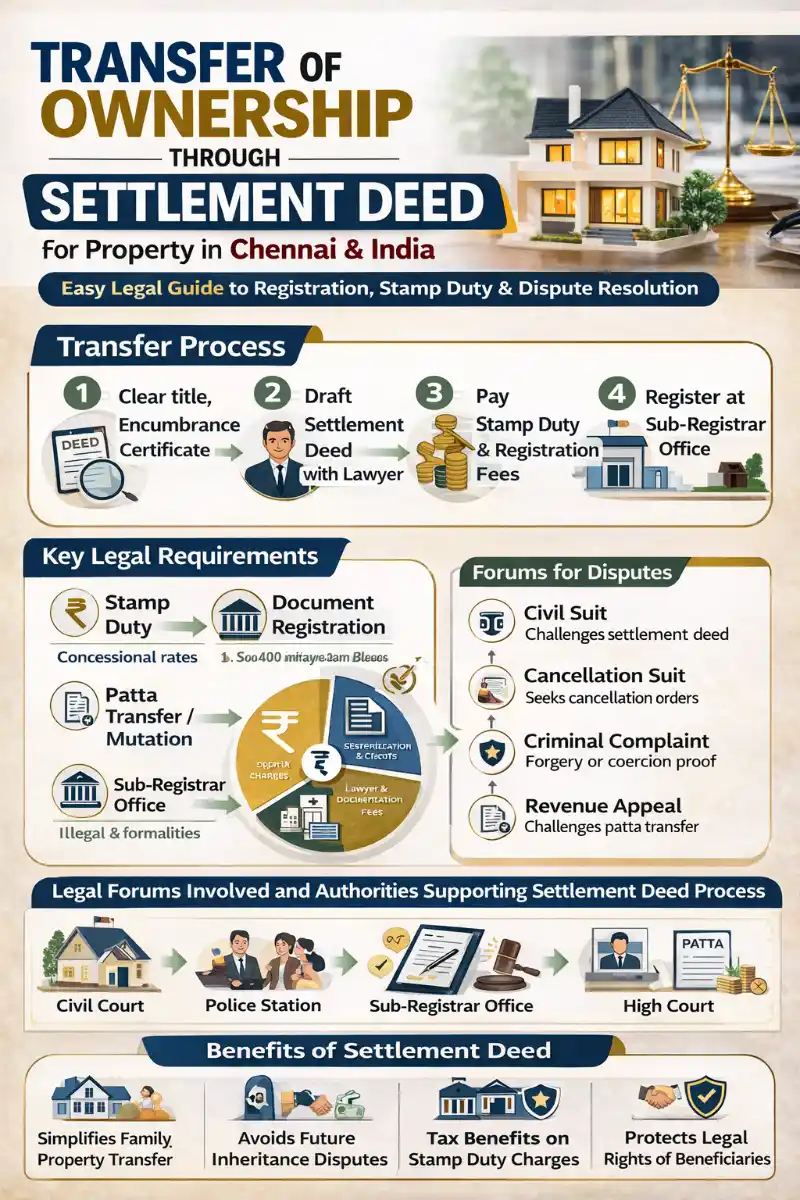
Property transfer through a settlement deed remains a popular method for family property distribution in India. Many property owners in Chennai choose this method to avoid disputes and probate complications later. A settlement deed legally transfers ownership from the settlor to the beneficiary during the settlor’s lifetime. This document must follow the Transfer of Property Act and the Indian Registration Act requirements. Registration occurs before the Sub-Registrar Office under the Tamil Nadu Registration Department. Property lawyers in Chennai regularly assist clients with drafting settlement deeds for houses, flats, and land. However, several legal conditions must be satisfied before executing such deeds. Proper stamp duty payment and document registration remain mandatory legal requirements. Failure to register the document may invalidate ownership transfer in many situations. Therefore property owners should always seek legal advice before executing settlement deeds. Key legal aspects include:
- Clear property title verification
- Encumbrance certificate examination
- Compliance with state stamp duty laws
- Proper beneficiary identification
| Authority | Role |
|---|---|
| Sub Registrar Office | Document registration |
| Revenue Department | Patta mutation |
| Local Municipality | Property tax records |
Legal Meaning and Scope of Settlement Deed in Property Transfer
A settlement deed is a legal document used to transfer property ownership voluntarily. The property owner executes the deed without expecting monetary consideration. Family members often become beneficiaries under such settlement arrangements. However legal compliance becomes essential for validity and enforceability. Indian courts recognize settlement deeds executed under the Transfer of Property Act provisions. Registration must occur under the Registration Act before the jurisdictional Sub-Registrar. The settlor must possess clear title and legal authority over the property. Therefore property disputes may arise when title verification is ignored. Legal scrutiny before registration reduces litigation risks significantly. Furthermore settlement deeds usually involve residential properties and ancestral properties. Typical situations requiring settlement deeds include:
- Parent transferring property to children
- Spouse transferring ownership to partner
- Distribution among family members
- Avoidance of future inheritance disputes
| Legal Requirement | Purpose |
|---|---|
| Stamp Duty | Legal validation |
| Registration | Ownership proof |
| Witness signatures | Authenticity confirmation |
Important Legal Provisions Governing Settlement Deeds in India
Several statutes govern settlement deeds and property ownership transfers in India. The Transfer of Property Act provides the basic legal framework for property transfer. The Registration Act mandates compulsory registration for property documents exceeding prescribed values. Tamil Nadu Stamp Act determines stamp duty payable on settlement deeds. Additionally the Civil Procedure Code regulates civil litigation related to property disputes. The Bharatiya Nyaya Sanhita addresses criminal offences such as cheating and fraud involving property documents. Police stations may investigate forged settlement deeds under criminal provisions. Revenue authorities also handle patta transfer and mutation procedures after registration. Therefore legal compliance across multiple authorities becomes necessary for smooth property transfer. Property lawyers frequently coordinate between government departments during these procedures. Relevant authorities involved include:
- Sub Registrar Offices
- Revenue Department
- Municipal Corporation offices
- Tahsildar offices
| Law | Purpose |
|---|---|
| Transfer of Property Act | Ownership transfer rules |
| Registration Act | Document registration |
| Civil Procedure Code | Property litigation procedures |
Eligibility and Legal Capacity to Execute Settlement Deeds
A valid settlement deed requires the settlor to possess legal ownership rights. The settlor must be a major with sound mental capacity. Minor property owners cannot execute legally binding settlement deeds. Furthermore coercion or fraud invalidates such documents under Indian contract principles. Courts carefully examine the circumstances surrounding settlement deed execution. Family disputes sometimes arise when elderly parents execute settlement deeds under pressure. Therefore legal counseling before execution becomes essential. Witnesses must also sign the settlement deed during registration proceedings. These witnesses confirm voluntary execution before the Sub-Registrar authority. Proper documentation strengthens the enforceability of settlement deeds in courts. Checklist before executing settlement deed:
- Verify ownership documents
- Confirm property encumbrance status
- Obtain encumbrance certificate
- Consult experienced property lawyer
| Requirement | Description |
|---|---|
| Legal age | 18 years minimum |
| Mental capacity | Sound understanding |
| Ownership proof | Registered title documents |
Registration Procedure for Settlement Deed in Tamil Nadu
Settlement deed registration must occur before the jurisdictional Sub-Registrar Office. The property location determines the appropriate registration office. Both settlor and beneficiary usually appear during the registration process. Identity verification occurs using government identification documents. Stamp duty and registration fees must be paid before document submission. Biometric verification and digital scanning procedures follow thereafter. Tamil Nadu Registration Department maintains electronic property records after registration. Therefore registration creates public notice of ownership transfer. Failure to register the document may invalidate property rights. Hence proper compliance protects beneficiaries from future ownership disputes. Steps in registration process:
- Draft settlement deed with lawyer
- Pay stamp duty and registration fees
- Appear before Sub Registrar
- Complete biometric verification
| Stage | Authority |
|---|---|
| Document drafting | Property lawyer |
| Stamp duty payment | Treasury department |
| Registration | Sub Registrar Office |
Stamp Duty and Registration Charges for Settlement Deeds
Stamp duty forms an important component of property settlement transactions. Tamil Nadu government prescribes concessional stamp duty for family settlements. However stamp duty rates differ when beneficiaries fall outside the family category. Registration fees must also be paid during document submission. Failure to pay proper stamp duty may attract penalties under stamp laws. Therefore legal consultation ensures accurate duty calculation. Government notifications periodically revise stamp duty rates in Tamil Nadu. Property owners must verify the latest rates before executing settlement deeds. Correct duty payment prevents registration delays and legal complications. Thus financial planning becomes essential before initiating settlement transactions. Important cost components include:
- Stamp duty charges
- Registration fees
- Legal drafting charges
- Documentation expenses
| Expense Type | Purpose |
|---|---|
| Stamp duty | Government tax |
| Registration fee | Document recording |
| Legal fees | Drafting and advice |
Common Legal Issues in Settlement Deed Property Transfers
Several legal complications may arise during settlement deed transactions. Disputes frequently occur regarding property title validity. Family members sometimes challenge settlement deeds executed by elderly parents. Forgery allegations may also arise in disputed property transfers. Police authorities investigate criminal complaints involving forged documents. Civil courts handle suits challenging settlement deed validity. Legal notices often precede civil litigation in property disputes. Therefore professional legal guidance becomes extremely valuable during such conflicts. Proper documentation helps defend settlement deeds before courts. Thus careful legal planning reduces future litigation risks significantly. Common disputes include:
- Forgery allegations
- Coercion claims
- Title disputes
- Beneficiary conflicts
| Forum | Case Type |
|---|---|
| Civil Court | Title disputes |
| Police Station | Forgery complaints |
| High Court | Writ petitions |
Legal Remedies When Settlement Deed Disputes Arise
Legal remedies exist when settlement deed disputes arise between family members. Affected parties may file civil suits challenging settlement deed validity. Courts examine evidence including witness testimony and registration records. Interim injunction orders may prevent further property transactions. Police complaints may also be filed for document forgery allegations. Revenue authorities may suspend mutation entries during litigation proceedings. High Courts sometimes hear writ petitions challenging illegal registration actions. Therefore litigants must evaluate legal strategy carefully before filing cases. Experienced property lawyers help choose the appropriate legal forum. Timely legal action improves chances of successful dispute resolution. Available remedies include:
- Civil suit for declaration
- Cancellation of settlement deed
- Criminal complaint for fraud
- Revenue appeal against mutation
| Remedy | Authority |
|---|---|
| Civil suit | District Court |
| Criminal complaint | Police station |
| Writ petition | High Court |
Role of Property Lawyers in Settlement Deed Transactions
Property lawyers play an important role during settlement deed transactions. They verify property title documents before drafting settlement deeds. Legal due diligence prevents disputes and financial losses later. Lawyers also draft legally compliant settlement deed documents. Furthermore they guide clients during Sub-Registrar registration procedures. Legal professionals coordinate with revenue authorities for patta mutation. They also represent clients during property dispute litigation. Therefore professional legal advice safeguards property ownership rights. Clients benefit from proper documentation and strategic legal planning. Hence property lawyers remain essential participants in settlement transactions. Services provided by property lawyers include:
- Title verification
- Drafting settlement deeds
- Registration assistance
- Litigation representation
| Service | Benefit |
|---|---|
| Legal drafting | Compliance assurance |
| Due diligence | Risk reduction |
| Legal representation | Dispute resolution |
Importance of Patta Transfer After Settlement Deed Registration
Patta mutation confirms ownership changes in revenue records after settlement deed registration. The beneficiary must apply for patta transfer before the Tahsildar office. Revenue authorities verify registered documents during mutation proceedings. Municipal authorities also update property tax records after ownership change. Without mutation beneficiaries may face difficulties during future property sales. Banks also examine patta records before approving housing loans. Therefore mutation remains an essential step after property settlement. Proper documentation ensures smooth patta transfer approvals. Legal assistance often accelerates the mutation process. Thus beneficiaries must complete mutation promptly after settlement registration. Steps for patta transfer include:
- Submit application to Tahsildar
- Attach registered settlement deed
- Provide identity documents
- Attend verification hearing
| Authority | Function |
|---|---|
| Tahsildar Office | Patta mutation |
| Municipality | Tax record update |
| Revenue Department | Land ownership record |
Read More
- Real Estate & Property Law
- Draft Sale Deed: What Is the Fee for Drafting and Registering It in the Sub-Registrar Office?
- How to Get Patta When There Is Objection in Tamil Nadu
- Credit card Settlement Lawyers in Chennai
- Financial Services Disputes: The Best Civil Lawyers for Advice
FAQs on Transfer of Ownership Through Settlement Deed
1. What is a settlement deed?
A settlement deed transfers property ownership voluntarily during the owner’s lifetime. It usually benefits family members.
2. Is registration mandatory for settlement deeds?
Yes. Registration before the Sub-Registrar Office is legally required for validity.
3. Can settlement deeds be cancelled?
Courts may cancel settlement deeds when fraud, coercion, or illegality is proven.
4. Who pays stamp duty for settlement deeds?
Usually the beneficiary pays stamp duty, unless parties agree otherwise.
5. What happens if settlement deed remains unregistered?
Unregistered settlement deeds generally fail to transfer legal property ownership.
6. Can ancestral property be settled?
Yes. However all legal heirs must possess valid rights before settlement.
7. Which court handles settlement deed disputes?
District Civil Courts typically handle settlement deed validity disputes.
8. Can police investigate forged settlement deeds?
Yes. Police investigate criminal offences involving forged property documents.
9. Is patta transfer necessary after settlement?
Yes. Mutation ensures revenue records reflect the new property owner.
10. Should property lawyers draft settlement deeds?
Professional drafting reduces legal risks and prevents disputes.