Difference Between Property Affidavit, Declaration, and Indemnity Bond

Property transactions in India often require legal documents such as affidavits, declarations, and indemnity bonds. Many property owners confuse these documents because they appear similar. However, each document serves a different legal purpose in property law. A property affidavit confirms facts under oath before a notary or oath commissioner. A property declaration states ownership or factual information without requiring an oath. Meanwhile, an indemnity bond protects another party from financial loss arising from property disputes or missing documents. These documents commonly appear during property registration, title verification, patta transfer, bank loan processing, and municipal approvals. Understanding the difference between these documents helps property owners avoid legal complications and fraudulent transactions. Property lawyers often draft and verify these documents to ensure legal compliance. Proper documentation strengthens property rights and prevents litigation. LawyerChennai.com assists clients in preparing legally valid property affidavits, declarations, and indemnity bonds across Chennai and Tamil Nadu.
Introduction to Property Affidavits, Declarations, and Indemnity Bonds
Property transactions in India involve several legal documents that confirm facts, obligations, and assurances. Many property owners confuse affidavits, declarations, and indemnity bonds because they appear similar. However, each document serves a distinct legal purpose in property law. An affidavit confirms facts under oath before an authorized authority. A declaration confirms statements without necessarily involving an oath. Meanwhile, an indemnity bond protects another party from financial loss.
These documents frequently appear in property registration, land title verification, bank loans, and municipal approvals. Therefore, understanding their differences helps property owners prevent legal complications. Lawyers usually advise clients to prepare the correct document depending on the transaction. Using the wrong document may delay registration, loan approvals, or government permissions.
Property buyers, sellers, banks, and government authorities rely on these documents to confirm ownership claims and protect legal interests. Consequently, property transactions become safer and more transparent when parties properly use affidavits, declarations, and indemnity bonds.
Why Legal Documents Matter in Property Transactions
Real estate transactions involve substantial financial commitments and legal rights. Therefore, legal documentation ensures transparency and prevents disputes.
Many property disputes arise from missing declarations or incorrect affidavits. Courts often examine these documents during litigation.
Legal documents help verify ownership history and title authenticity. They also establish liability and responsibility for potential claims.
Common property situations requiring such documents include:
- Lost property documents
- Missing title deeds
- Encroachment disputes
- Loan processing by banks
- Property mutation and patta transfer
- Registration corrections
Proper documentation strengthens legal protection for buyers and sellers.
Moreover, government authorities require these documents before approving various property-related requests.
Legal professionals therefore ensure that the correct document type supports every property transaction.
Understanding Property Affidavits
What Is a Property Affidavit?
A property affidavit is a sworn statement of facts made under oath. The person signing the affidavit confirms the truthfulness of the contents.
Usually, affidavits are signed before a notary public or oath commissioner. The document becomes legally valid after notarization.
Property affidavits often appear during title verification and property registration.
For example, property owners submit affidavits confirming ownership, possession, or inheritance rights.
Affidavits also confirm the absence of disputes or legal encumbrances on property.
Courts and government authorities accept affidavits as evidence of facts.
However, false statements in affidavits may result in criminal prosecution.
Therefore, property owners must ensure that affidavit statements remain accurate and verifiable.
Key Elements of a Property Affidavit
Every property affidavit usually includes certain essential elements.
These elements ensure clarity and legal validity.
Important components include:
- Full name and address of the deponent
- Property description and location details
- Statement of facts relating to property
- Confirmation under oath
- Signature of the deponent
- Attestation by a notary or oath commissioner
A properly drafted affidavit helps prevent property disputes and legal challenges.
Lawyers generally draft affidavits carefully to avoid ambiguous language.
Situations Where Property Affidavits Are Used
Property affidavits serve multiple purposes in real estate matters.
Common situations include:
- Lost original property documents
- Affidavit for legal heirship
- Affidavit confirming property possession
- Affidavit for change of property name records
- Affidavit for correction in registered documents
Affidavits help authorities process property matters efficiently.
Additionally, banks request affidavits before approving housing loans.
Understanding Property Declarations
What Is a Property Declaration?
A property declaration is a written statement asserting facts related to property ownership or status.
Unlike affidavits, declarations do not always require an oath.
However, the declarant accepts responsibility for the statement’s accuracy.
Declarations commonly appear in property registration procedures and housing society approvals.
Property declarations confirm details such as ownership, marital status, and property usage.
Government authorities frequently require declarations during land record updates.
Declarations therefore provide official confirmation of facts.
Key Features of a Property Declaration
Property declarations contain several essential components.
These components ensure that authorities clearly understand the declared facts.
Typical declaration features include:
- Identity of the declarant
- Property description
- Nature of the declaration
- Purpose of the declaration
- Signature of the declarant
Declarations may sometimes require notarization depending on legal requirements.
Lawyers often prepare declarations for property compliance matters.
Situations Where Property Declarations Are Required
Declarations appear in many property-related legal procedures.
Typical situations include:
- Declaration of self-acquired property
- Declaration of family property ownership
- Declaration for housing society membership
- Declaration of non-encumbrance
- Declaration for municipal property tax records
Declarations simplify administrative verification processes.
Therefore, government departments rely heavily on declarations for property documentation.
Understanding Indemnity Bonds in Property Matters
What Is an Indemnity Bond?
An indemnity bond is a legal document where one party promises to compensate another for potential loss.
This document protects the beneficiary against financial liability.
Indemnity bonds frequently appear in property transactions involving risk or uncertainty.
For instance, banks request indemnity bonds when original property documents are lost.
The property owner guarantees compensation if future claims arise.
Indemnity bonds therefore shift financial responsibility to the indemnifier.
Lawyers usually draft indemnity bonds carefully to define liabilities clearly.
Key Elements of an Indemnity Bond
A valid indemnity bond must include certain essential details.
These elements define the scope of indemnification.
Important elements include:
- Details of indemnifier and beneficiary
- Description of property involved
- Nature of potential risk or liability
- Indemnification promise
- Compensation clause
- Signatures of parties and witnesses
Clear drafting ensures enforceability during disputes.
Situations Where Indemnity Bonds Are Required
Indemnity bonds frequently appear in property transactions involving legal risks.
Common examples include:
- Loss of original title deeds
- Duplicate property document requests
- Mortgage clearance issues
- Title disputes during property transfer
- Mutation or patta correction
Authorities often demand indemnity bonds before approving such requests.
Consequently, indemnity bonds provide financial protection to institutions and buyers.
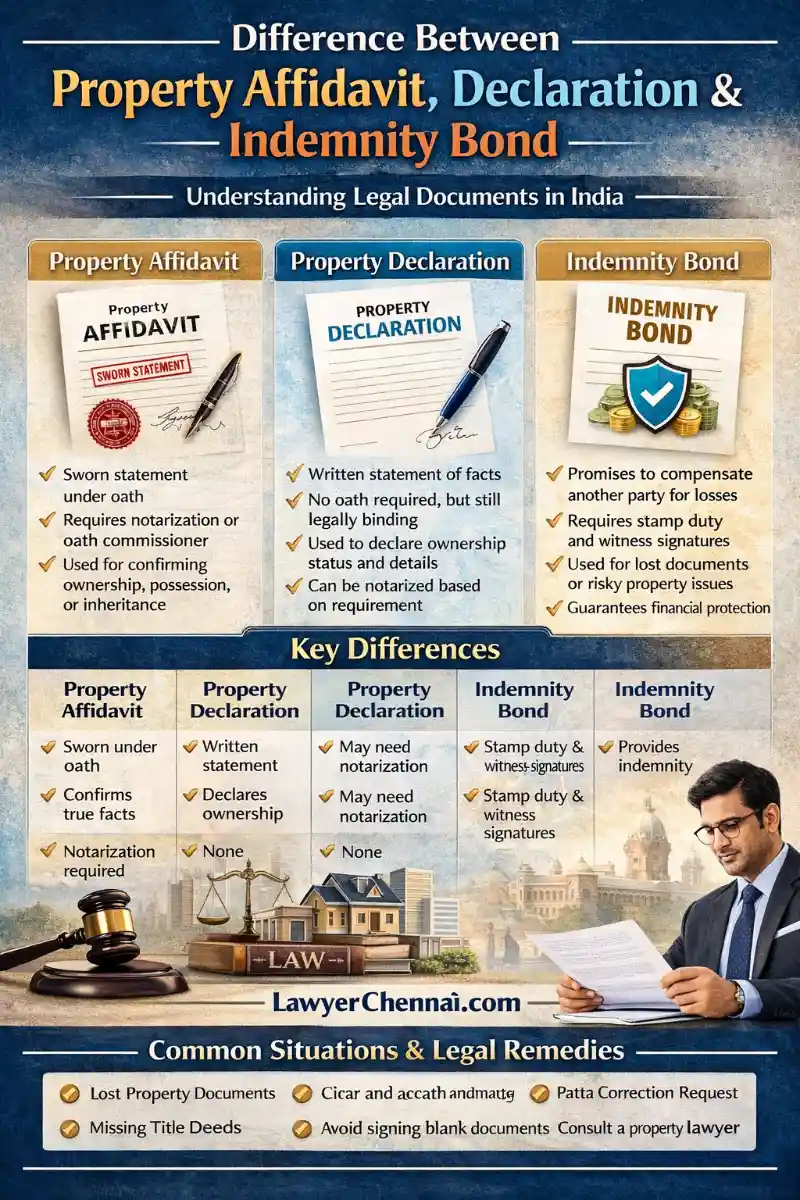
Key Differences Between Affidavit, Declaration, and Indemnity Bond
Understanding the distinction between these documents helps property owners avoid legal confusion.
Although they appear similar, their legal implications differ significantly.
Major differences include:
- Nature of Statement
- Affidavit contains sworn statements under oath.
- Declaration confirms facts without necessarily requiring an oath.
- Indemnity bond guarantees financial compensation for losses.
- Purpose
- Affidavit establishes truth of statements.
- Declaration confirms ownership or factual information.
- Indemnity bond protects another party from legal liability.
- Legal Liability
- False affidavit statements may attract criminal charges.
- Incorrect declarations may lead to legal consequences.
- Breach of indemnity bond creates financial liability.
- Authority Requirement
- Affidavits require notarization or oath commissioner.
- Declarations may not always require notarization.
- Indemnity bonds often require stamp duty and witnesses.
- Usage in Property Law
- Affidavits confirm property facts.
- Declarations confirm ownership status.
- Indemnity bonds protect institutions and buyers.
Understanding these differences ensures correct documentation during property transactions.
Legal Issues Arising from Incorrect Property Documentation
Improper documentation often leads to property disputes and litigation.
Many buyers unknowingly sign incorrect documents during transactions.
Common legal issues include:
- Title disputes
- Fraudulent property claims
- Registration delays
- Loan rejection by banks
- Municipal record inconsistencies
Incorrect affidavits may also trigger criminal prosecution for perjury.
Similarly, defective indemnity bonds may fail to protect financial interests.
Therefore, legal guidance becomes essential while preparing property documents.
Law firms often review such documents during property due diligence.
Proper legal drafting reduces risk and ensures smooth transactions.
Legal Remedies for Property Documentation Disputes
Several legal remedies exist for disputes involving affidavits, declarations, or indemnity bonds.
Property owners may approach courts or authorities depending on the issue.
Possible remedies include:
Civil Remedies
- Filing a civil suit for declaration of title
- Suit for injunction against property interference
- Suit for cancellation of fraudulent documents
- Suit for recovery of damages under indemnity bond
Criminal Remedies
Certain disputes involve fraud or misrepresentation.
In such cases, criminal complaints may be filed.
Relevant offences include:
- Cheating and fraud
- Forgery of documents
- Criminal breach of trust
Administrative Remedies
Government authorities may correct property records through administrative procedures.
Examples include:
- Patta correction requests
- Mutation corrections
- Encumbrance record updates
Property lawyers assist clients in selecting appropriate remedies based on facts.
Importance of Legal Due Diligence Before Signing Property Documents
Property buyers must conduct proper legal verification before signing documents.
Many disputes arise because buyers rely solely on brokers.
Legal due diligence ensures property safety.
Important checks include:
- Verification of title deeds
- Encumbrance certificate review
- Land classification verification
- Municipal approval confirmation
- Loan liability verification
Additionally, lawyers review affidavits, declarations, and indemnity bonds carefully.
Professional verification helps buyers avoid fraudulent transactions.
Therefore, legal consultation becomes essential before property registration.
Role of Property Lawyers in Drafting Legal Documents
Property lawyers play a critical role in preparing legally valid documentation.
They ensure compliance with registration laws and stamp duty requirements.
Lawyers also verify title history and ownership claims.
Key services provided by property lawyers include:
- Drafting affidavits and declarations
- Preparing indemnity bonds
- Title verification and legal opinion
- Property dispute litigation
- Registration guidance
Legal drafting ensures clarity and enforceability.
Consequently, property transactions become legally secure.
Best Practices for Preparing Property Affidavits, Declarations, and Indemnity Bonds
Following best practices helps prevent legal complications.
Property owners should follow these steps while preparing documents:
- Always verify property title details.
- Use clear and accurate language in documents.
- Ensure proper notarization where required.
- Avoid signing blank documents.
- Seek legal advice before submission.
These precautions protect property owners from future disputes.
Proper documentation also strengthens legal rights during litigation.
Conclusion
Affidavits, declarations, and indemnity bonds play crucial roles in property transactions. Each document serves a unique legal purpose.
Affidavits confirm facts under oath. Declarations state facts without oath. Indemnity bonds protect against financial liability.
Understanding these differences prevents documentation errors and legal disputes.
Property buyers and sellers should therefore consult experienced property lawyers before preparing such documents.
Legal guidance ensures that property transactions remain secure, compliant, and dispute-free.
Proper documentation ultimately safeguards ownership rights and financial interests.
Frequently Asked Questions (FAQs)
A property affidavit is a sworn statement confirming facts related to property ownership or status before a notary or oath authority.
A property declaration confirms factual information regarding property ownership or usage without necessarily requiring an oath.
An indemnity bond protects another party from financial loss arising from property disputes or missing documents.
Yes. Property affidavits generally require notarization or attestation before an oath commissioner.
Yes. False affidavits may lead to criminal prosecution for perjury and misrepresentation.
Indemnity bonds are required when risks exist, such as lost documents or potential third-party claims.
Yes. Declarations are legally binding statements, although they may not require an oath.
Property lawyers usually draft these documents to ensure legal accuracy and enforceability.
Banks require indemnity bonds to protect themselves from financial losses caused by property disputes.
Yes. Buyers must conduct legal due diligence before purchasing property to avoid disputes and f
Read More