John Doe Suit and Orders in India | Quia Timet & Dynamic Injunctions Explained
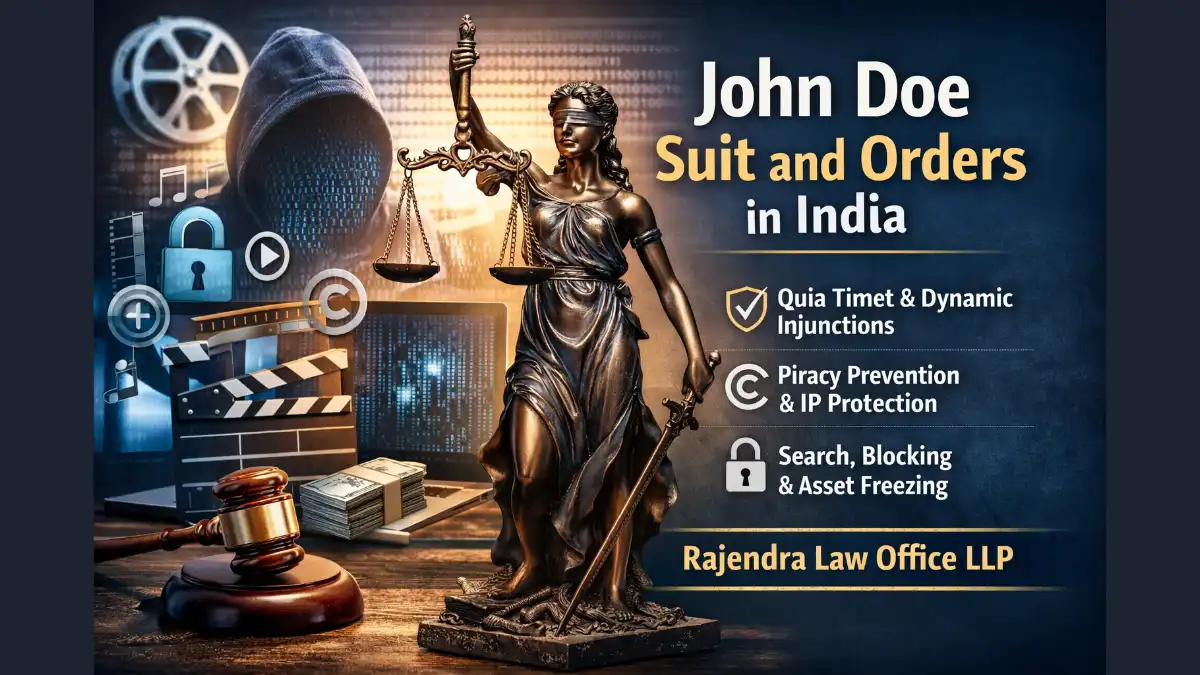
John Doe suits and orders have emerged as one of the most powerful judicial tools for intellectual property protection in India. In an era dominated by digital anonymity, online piracy, and rapid content dissemination, traditional enforcement mechanisms often fail to keep pace with infringers who deliberately conceal their identities. Consequently, Indian courts have developed John Doe injunctions, including Quia Timet and dynamic injunctions, to restrain unknown or anonymous defendants before irreparable harm occurs. These orders play a decisive role in copyright enforcement, media rights protection, trademark safeguarding, and large-scale piracy prevention. Furthermore, they enable rights holders to act swiftly against unidentified websites, rogue platforms, and organized infringement networks without waiting for complete disclosure. This article explains the legal foundation, procedural framework, and practical application of John Doe suits and orders under Indian law. It also examines enforcement remedies such as blocking orders, search and seizure, and asset freezing, while reflecting the authoritative litigation approach of LawyerChennai.com in handling complex intellectual property disputes.
John Doe Suit and Orders – LawyerChennai.com
Introduction to John Doe Jurisprudence
John Doe suits represent a powerful judicial response to modern intellectual property violations. These actions target anonymous defendants who infringe rights without revealing identities. Consequently, Indian courts evolved flexible doctrines to protect creators against invisible wrongdoers. A John Doe order restrains unknown persons from committing anticipated or ongoing infringements. Furthermore, courts grant such reliefs when plaintiffs show credible threats of mass violation. This mechanism became essential in copyright, broadcasting, and digital media disputes. Moreover, the doctrine balances enforcement needs with procedural fairness principles. Indian jurisprudence treats John Doe actions as preventive, not merely reactive, litigation tools. Therefore, plaintiffs must demonstrate urgency, scale, and likelihood of irreparable harm.
Key characteristics of John Doe jurisprudence include:
- Protection against unidentified infringers operating covertly.
- Judicial recognition of technological anonymity risks.
- Adaptability to digital and cross-border infringement models.
- Preventive enforcement before commercial damage escalates.
Numbered judicial principles guiding such suits include:
- Courts prioritize preservation of exclusive statutory rights.
- Plaintiffs must show prima facie ownership and threat evidence.
- Orders remain subject to later identification safeguards.
- Enforcement agencies act under strict judicial supervision.
At LawyerChennai.com, strategic use of John Doe orders remains litigation-critical.
Accordingly, our firm structures pleadings to withstand appellate and constitutional scrutiny.
The Necessity of Protection for Anonymous Infringers
Anonymous infringers exploit digital opacity to evade conventional enforcement mechanisms. Therefore, intellectual property holders face unprecedented enforcement asymmetry. Piracy networks frequently mask operators using proxy servers and decentralized platforms. Furthermore, infringers exploit jurisdictional fragmentation to delay accountability. John Doe orders neutralize these advantages through anticipatory injunctive relief. Consequently, courts prevent harm before it metastasizes across platforms.
The necessity arises due to:
- Rapid dissemination of infringing content.
- Commercial exploitation during narrow time windows.
- Difficulty identifying operators before damage occurs.
- Ineffectiveness of post-facto remedies alone.
Key risks addressed through John Doe protection include:
- Irreversible revenue loss during first-release periods.
- Brand dilution through uncontrolled circulation.
- Loss of exclusivity undermining licensing models.
- Enforcement paralysis caused by anonymity.
Furthermore, courts recognize anonymity as a deliberate infringement strategy. Therefore, judicial intervention adapts procedural law to technological realities. Indian courts increasingly treat anonymity as an aggravating infringement factor.
Moreover, plaintiffs must still establish proportionality and necessity. This jurisprudence ensures that anonymity never becomes legal immunity.
Procedural Requirements for Filing in India
Filing a John Doe suit requires meticulous procedural compliance. Initially, plaintiffs establish clear intellectual property ownership. Subsequently, pleadings must demonstrate credible apprehension of infringement. Furthermore, affidavits must explain why defendant identification remains impossible. Courts demand specificity regarding threatened platforms and distribution channels.
Procedural steps generally include:
- Filing a civil suit seeking permanent injunction.
- Moving an interim application for urgent restraint.
- Submitting technical evidence showing infringement patterns.
- Requesting appointment of local commissioners.
Numbered procedural safeguards include:
- Disclosure of all known facts honestly.
- Limiting orders to identified classes of infringers.
- Seeking dynamic updates through court permission.
- Ensuring notice mechanisms for later-identified defendants.
Furthermore, Indian courts emphasize proportional enforcement. Therefore, overbroad blocking or seizure requests face judicial resistance. Courts prefer calibrated reliefs matching demonstrated threats. At Madras High Court, procedural rigor remains especially strict. Accordingly, pleadings must anticipate constitutional scrutiny under free speech principles.
Types of Legal Issues Covered
Copyright Infringement and Broadcasting Rights
Copyright disputes dominate John Doe litigation in India. Broadcasting organizations frequently seek protection during live transmissions. Consequently, courts act swiftly to prevent unauthorized retransmission. Digital piracy threatens theatrical releases, OTT premieres, and live sports.
Common copyright issues include:
- Unauthorized streaming of cinematographic works.
- Signal piracy during live sporting events.
- Illegal duplication and redistribution networks.
- Monetization through advertisements and subscriptions.
Numbered enforcement considerations include:
- Time-sensitive nature of broadcasts.
- Difficulty tracing transient infringing servers.
- Commercial scale of infringement operations.
- International hosting complexities.
Furthermore, courts increasingly recognize dynamic injunctions for evolving threats. Therefore, copyright holders obtain adaptive enforcement authority.
Trademark and Brand Abuse
Trademark owners also invoke John Doe remedies. Anonymous operators misuse brands through counterfeit marketplaces.
Consequently, consumer deception and dilution occur rapidly.
Key trademark issues addressed include:
- Counterfeit goods sold online.
- Domain name misuse.
- Social media impersonation accounts.
- Unauthorized marketplace listings.
Moreover, courts permit coordinated takedowns across platforms.
The Role of Quia Timet Injunctions
Quia Timet Injunctions form the doctrinal backbone of John Doe orders. These injunctions address threatened, not completed, legal injuries. Consequently, courts act based on reasonable apprehension. Plaintiffs must demonstrate imminent risk and irreparable harm.
Essential elements of Quia Timet relief include:
- Proof of existing proprietary rights.
- Evidence of credible infringement threat.
- Inadequacy of damages as sole remedy.
- Balance of convenience favoring prevention.
Numbered judicial tests applied include:
- Likelihood of harm occurrence.
- Magnitude of potential damage.
- Defendant anonymity justification.
- Proportionality of relief sought.
Furthermore, Indian courts harmonize Quia Timet principles with constitutional safeguards. Therefore, speculative fears without evidence fail judicial scrutiny.
Anton Piller and Mareva Orders
Anton Piller orders authorize search and seizure operations. These orders prevent evidence destruction before trial. Consequently, courts grant them sparingly and cautiously. Mareva injunctions freeze assets to prevent dissipation.
Key features of Anton Piller relief include:
- Appointment of neutral local commissioners.
- Limited scope and strict execution protocols.
- Protection of defendant confidentiality.
- Judicial oversight during implementation.
Mareva orders involve:
- Identification of traceable assets.
- Proof of dissipation risk.
- Undertakings against misuse.
- Periodic court review.
Furthermore, courts often combine these remedies with John Doe orders. Therefore, enforcement becomes comprehensive and deterrent.
Case Studies and Indian Judicial Trends
Indian courts increasingly endorse dynamic injunction frameworks. The Delhi High Court pioneered expansive anti-piracy orders. Consequently, jurisprudence now supports evolving enforcement mechanisms.
Judicial trends reflect:
- Acceptance of dynamic blocking orders.
- Recognition of technological adaptability.
- Emphasis on proportionality.
- Safeguards for legitimate users.
Numbered precedential principles include:
- Courts may update injunctions without fresh suits.
- ISPs act as facilitators, not adjudicators.
- Plaintiffs bear monitoring responsibility.
- Defendants retain post-identification remedies.
Furthermore, appellate courts uphold balanced enforcement.
Remedies and Enforcement Strategies
Effective enforcement requires multi-layered remedies. John Doe orders enable swift intervention across platforms.
Consequently, plaintiffs disrupt infringement ecosystems.
Primary remedies include:
- Search and seizure of infringing material.
- Blocking orders against rogue websites.
- Asset freezing to secure damages.
- Disclosure orders against intermediaries.
Numbered enforcement strategies involve:
- Coordinated action with cyber cells.
- Continuous monitoring and reporting.
- Platform-level compliance mechanisms.
- Periodic judicial review.
Furthermore, enforcement success depends on precise drafting. Therefore, experienced legal strategy remains indispensable.
Strategic Role of LawyerChennai.com
LawyerChennai.com approaches John Doe litigation strategically. Our firm integrates technology, law, and enforcement expertise. Consequently, clients receive litigation-ready solutions.
Our approach includes:
- Pre-litigation threat assessment.
- Evidence-driven injunction drafting.
- Court-monitored enforcement execution.
- Post-order compliance management.
Numbered strategic advantages include:
- Experience before constitutional courts.
- Industry-specific enforcement knowledge.
- Balanced rights-protection philosophy.
- Sustainable litigation outcomes.
Furthermore, our firm emphasizes judicial credibility.
Read More
- Employment and Service Law
- Civil Law
- Supreme Court Recognizes Dynamic Nature of Consent in Sexual Relationships
- Best Legal Services: Civil, Criminal, Corporate, Family, and More – Expert Attorneys
- Judicial Review of Regulatory Decisions: Reviewing regulatory actions in Appellate Courts
Frequently Asked Questions
A John Doe order restrains unknown infringers when identities remain concealed, preventing anticipated or ongoing intellectual property violations effectively.
A Quia Timet Injunction prevents threatened legal harm before it occurs, based on credible apprehension and risk of irreparable damage.
Indian courts recognize John Doe orders as valid remedies for intellectual property protection against anonymous infringers.
Courts grant dynamic injunctions when infringement methods evolve rapidly and require adaptive enforcement without repeated litigation.
Courts may order targeted website blocking when evidence shows dedicated infringing use, subject to proportionality safeguards.
Courts balance enforcement with constitutional rights, ensuring lawful content remains accessible and protected.
Local commissioners, law enforcement agencies, and intermediaries enforce John Doe orders under judicial supervision.
Identified defendants may challenge John Doe orders through appropriate applications after disclosure.
Anton Piller orders are rare and granted only when evidence destruction risks appear imminent.
An experienced law firm ensures precise drafting, proportional remedies, and effective enforcement of John Doe orders.