Gift Deed in India: Legal Process, Registration, Remedies, and Property Transfer Laws
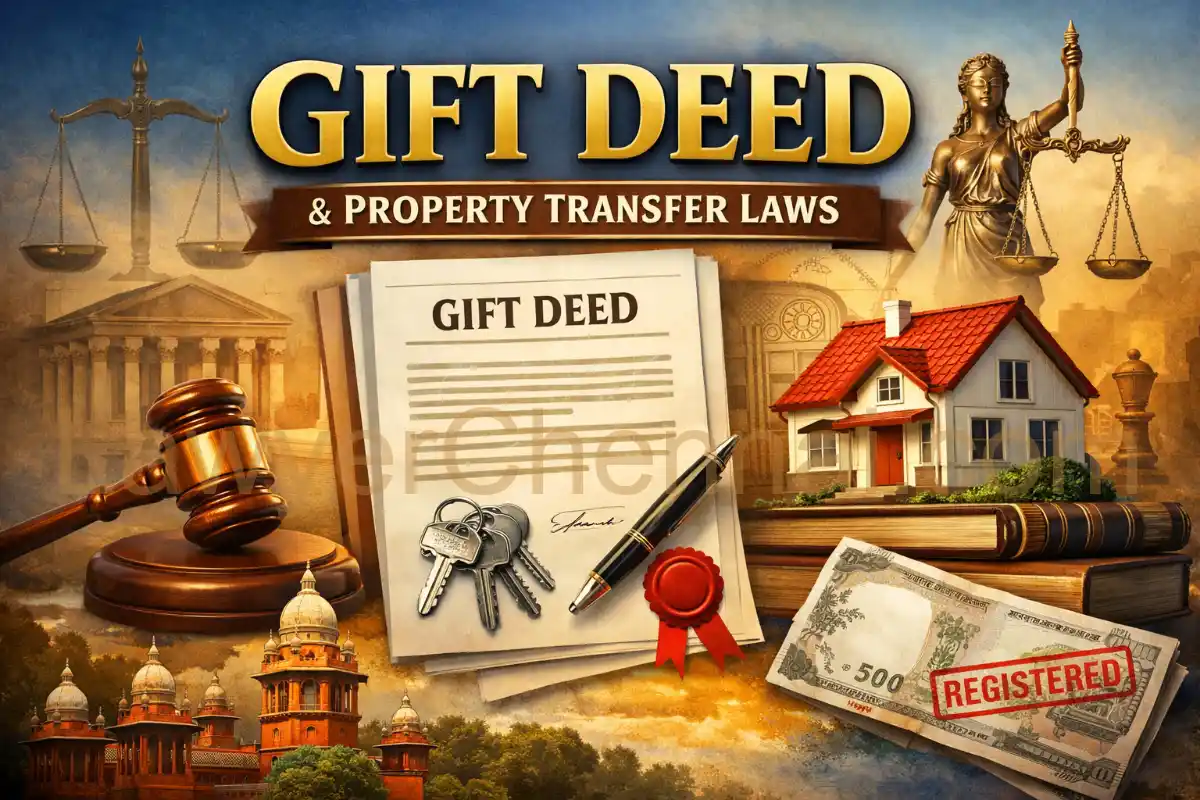
A gift deed legally transfers property ownership without monetary consideration. Indian property owners frequently use gift deeds for family property settlements. Moreover, this legal instrument avoids future inheritance disputes. Section 122 of the Transfer of Property Act governs gift transactions across India. The law defines a gift as voluntary property transfer accepted by the donee. Importantly, acceptance must occur during the donor’s lifetime. Therefore, the transfer becomes valid only after acceptance. Registration of gift deeds is mandatory for immovable property under the Registration Act, 1908. Additionally, stamp duty rules are determined by state governments. In Tamil Nadu, registration occurs through the Sub-Registrar Office under the Registration Department. Courts consistently uphold registered gift deeds as strong legal evidence. However, disputes arise regarding coercion, fraud, undue influence, and lack of acceptance. Consequently, legal intervention may become necessary. Civil courts, High Courts, and sometimes criminal courts examine these disputes. Property lawyers therefore guide donors and donees during drafting and registration. A properly executed gift deed protects ownership rights. Furthermore, it strengthens family property transfers while ensuring compliance with Indian property laws.
Introduction to Gift Deed in India
Legal Meaning and Importance of Gift Deeds in Property Transfers
A gift deed in India represents a legally recognized transfer of property without financial consideration. The Transfer of Property Act clearly defines conditions for valid gifts. First, voluntary intention must exist between donor and donee. Secondly, the property must be transferable under law. Additionally, the donee must accept the gift during the donor’s lifetime. Acceptance may occur through possession or written acknowledgment. Courts often examine surrounding circumstances when disputes arise. Consequently, documentation and witnesses become extremely important. Gift deeds are widely used for family property planning. Parents frequently transfer property to children through registered gifts. Moreover, elderly owners use gift deeds to distribute property before death. Such planning avoids succession disputes and lengthy probate proceedings. However, improper drafting may trigger litigation. Therefore, legal verification of title and encumbrances becomes essential. Property lawyers often review revenue records, patta details, and previous sale deeds. These checks confirm ownership authenticity. Moreover, registration strengthens legal validity. Once registered, the transfer becomes enforceable in law. Thus, a gift deed remains one of the safest methods for property transfer within families.
Essential Elements Required for a Valid Gift Deed
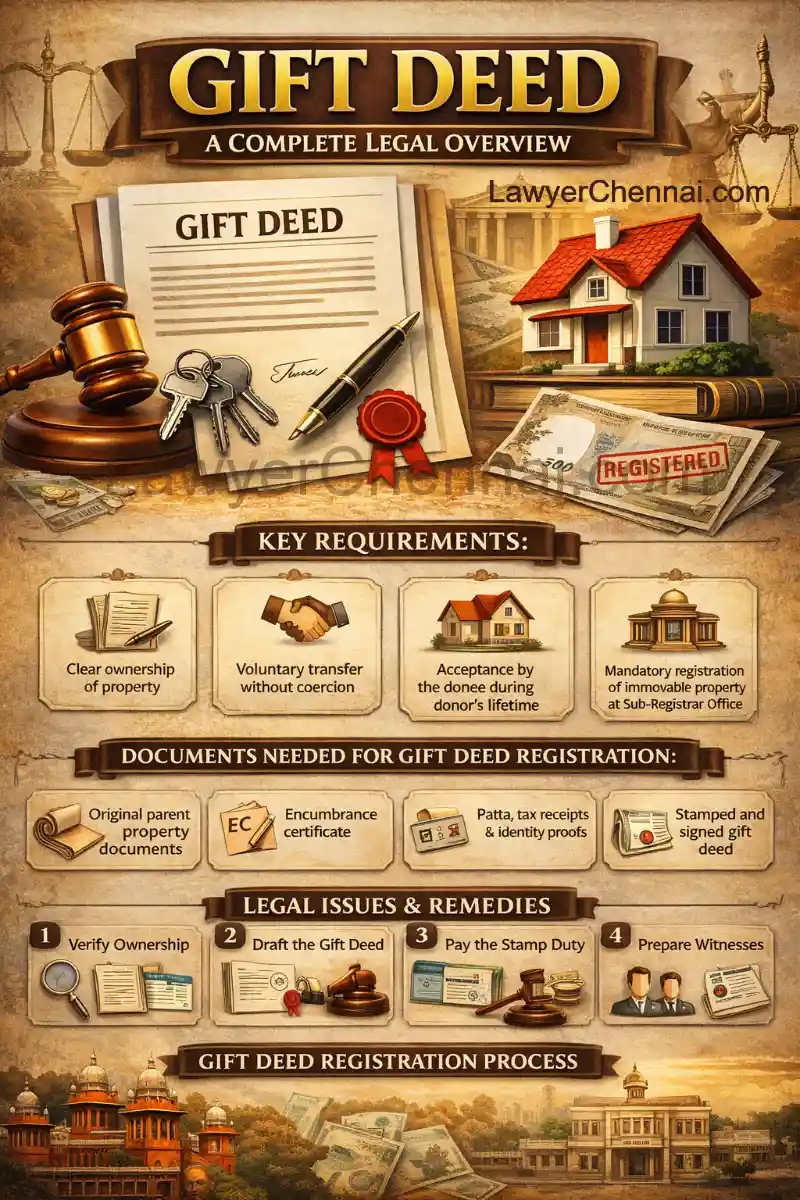
Certain legal elements must exist before a gift deed becomes valid in India. Courts carefully examine these conditions during disputes. Firstly, the donor must possess clear ownership rights. Secondly, the donor must act voluntarily without coercion or fraud. Moreover, the property must be transferable under Indian property law. Immovable properties like land, flats, and houses commonly appear in gift deeds. However, movable assets such as gold or vehicles may also be gifted. Acceptance by the donee represents another essential requirement. This acceptance must occur during the donor’s lifetime. Therefore, a gift cannot remain incomplete. Additionally, registration becomes mandatory for immovable property gifts. Section 17 of the Registration Act requires registration before the Sub-Registrar Office. Witness signatures also strengthen the document’s evidentiary value. Furthermore, stamp duty must be paid according to state rules. Failure to register invalidates the gift for immovable property. Consequently, proper drafting and legal review become essential. Lawyers ensure compliance with statutory requirements. Therefore, disputes regarding title, coercion, or fraud can be prevented through careful legal documentation.
Documents Required for Gift Deed Registration
Several documents must be submitted before gift deed registration occurs in India. These documents verify ownership and identity. Property registration authorities verify these records carefully. Missing documents often delay registration processes. Therefore, preparation before registration becomes necessary. Lawyers usually prepare a checklist for clients. Consequently, documentation errors can be avoided.
- Original parent property documents
- Encumbrance certificate from Sub-Registrar Office
- Patta and revenue records
- Identity proof of donor and donee
- Passport size photographs
- Property tax receipts
- Witness identity proofs
Legal Issues and Disputes Arising from Gift Deeds
Gift deed disputes frequently reach courts due to family conflicts. Many disputes involve allegations of coercion or undue influence. Elderly property owners sometimes face pressure during execution. Consequently, courts analyze mental capacity and surrounding circumstances. Fraudulent documents also create serious legal complications. Forged signatures or fabricated witnesses often trigger criminal investigations. Property encroachments may also arise after gifting property. Additionally, revenue record mutations sometimes create ownership confusion. Legal heirs occasionally challenge gift deeds after the donor’s death. Such disputes are usually filed in civil courts. However, criminal complaints may also arise when fraud appears. Police investigations may occur under the Bharatiya Nyaya Sanhita provisions. Moreover, courts examine evidence under the Bharatiya Sakshya Adhiniyam. Civil remedies may involve cancellation of gift deeds. Injunction orders may also be requested. Consequently, property lawyers play an important role in litigation strategy. Proper documentation therefore reduces litigation risks significantly.
Courts, Forums, and Authorities Handling Gift Deed Disputes
Multiple legal forums address disputes related to gift deeds in India. Civil courts usually handle property ownership disputes. District courts hear suits seeking cancellation or declaration of gift deeds. Appeals may later reach High Courts. Moreover, the Supreme Court examines complex property disputes. Revenue authorities may also become involved. Tahsildar offices handle patta mutation issues. Registration departments verify document authenticity. Additionally, police stations investigate forgery or fraud allegations. Criminal complaints may be registered under the Bharatiya Nyaya Sanhita. Evidence is evaluated using the Bharatiya Sakshya Adhiniyam. Procedural steps follow the Bharatiya Nagarik Suraksha Sanhita. Property disputes may also reach consumer forums in certain cases. Therefore, selecting the correct forum becomes crucial. Experienced property lawyers guide clients through jurisdictional complexities. Strategic filing strengthens the case outcome. Legal representation therefore becomes necessary when disputes escalate beyond administrative resolution.
Common Legal Remedies Available in Gift Deed Disputes
- Suit for cancellation of gift deed
- Declaration of ownership
- Permanent injunction against interference
- Criminal complaint for forgery
- Patta correction before revenue authorities
- Appeal before High Court
Role of Property Lawyers in Gift Deed Drafting and Litigation
Property lawyers perform critical roles during gift deed transactions. Legal drafting remains the first major responsibility. Lawyers ensure compliance with statutory requirements. Title verification also forms an important legal step. Property documents are carefully reviewed for ownership clarity. Encumbrance certificates are examined to detect pending liabilities. Lawyers also verify revenue records and municipal approvals. Moreover, legal advice helps clients understand tax implications. Gift transactions between relatives often receive stamp duty concessions. However, incorrect drafting may create future disputes. Therefore, legal professionals structure clauses carefully. Dispute resolution represents another major responsibility. Lawyers file suits seeking cancellation or declaration of gift deeds in India. They also represent clients before civil courts. Criminal complaints may also be pursued when fraud occurs. Strategic litigation strengthens client rights. Consequently, experienced advocates provide both preventive and remedial legal support.
Government Departments Involved in Gift Deed Transactions
| Department | Role |
|---|---|
| Registration Department | Registers gift deed documents |
| Revenue Department | Updates patta and land records |
| Municipal Authorities | Property tax ownership updates |
| Police Department | Investigates fraud or forgery complaints |
Step-by-Step Process for Registering a Gift Deed
- Verify property ownership documents
- Draft the gift deed with legal clauses
- Calculate applicable stamp duty
- Prepare witnesses and identity documents
- Visit Sub-Registrar Office for registration
- Complete biometric verification
- Receive registered gift deed copy
Frequently Asked Questions About Gift Deeds in India
A gift deed transfers property voluntarily without monetary consideration. The Transfer of Property Act governs such transfers.
Yes. Registration is mandatory for immovable property gifts under the Registration Act.
Cancellation is possible through civil court proceedings if fraud or coercion is proven.
Yes. Stamp duty varies by state. Tamil Nadu offers concessions for family transfers.
Yes. Agricultural land can be transferred through gift deeds if ownership rights exist.
The gift becomes invalid because acceptance forms a legal requirement.
Civil courts and High Courts generally handle such disputes.
Yes. Fraud or forgery may trigger criminal cases under Bharatiya Nyaya Sanhita.
Yes. Legal heirs may challenge gift deeds if coercion or fraud exists.
Legal drafting ensures compliance with statutory laws and reduces litigation risks.
Read More
- Real Estate & Property Law
- sale deed registration
- advocates for sale deed
- Law Firms in Chennai for Internship, Corporate Advisory & Litigation Excellence
- Real Estate Document Drafting: Exploring Expert Legal Terminology