Employee Rights in Unpaid Salary Cases in India – Complete Legal Guide
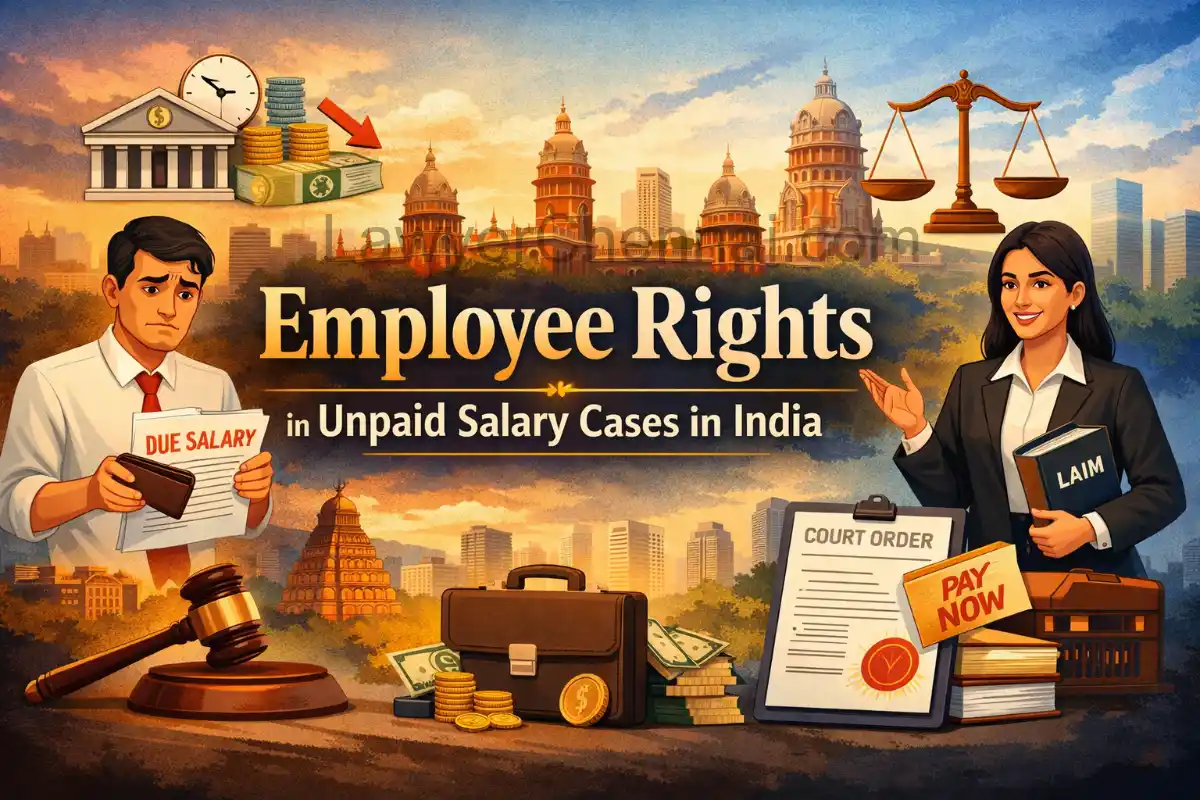
Understanding Unpaid Salary Under Indian Employment Law
Unpaid salary disputes create immediate financial stress and legal uncertainty for employees across India. However, Indian employment law firmly protects the right to receive earned wages without delay. Salary becomes a legally enforceable debt once an employee renders services according to contract terms. Therefore, employers cannot withhold monthly wages arbitrarily or indefinitely. Unpaid salary includes delayed wages, unpaid overtime, withheld incentives, and non-payment after resignation. Moreover, wage default frequently arises during financial instability, restructuring, or internal disputes. Nevertheless, financial hardship does not eliminate statutory wage obligations. Employees working in Chennai and across Tamil Nadu can initiate recovery through Labour Courts or civil forums. Consequently, early legal intervention strengthens recovery prospects significantly. Employment lawyers in Chennai regularly handle unpaid salary claims under labour and contract laws. Furthermore, long-tail search terms such as “how to recover unpaid salary in Chennai” now dominate employee legal queries. Understanding foundational rights empowers employees to act decisively and strategically.
What Constitutes Legally Recoverable Salary?
Legally recoverable salary extends beyond basic monthly pay alone. It includes fixed salary, variable incentives, overtime wages, performance bonuses, gratuity components, and statutory benefits. Therefore, employers must honour all contractual compensation elements. Unpaid salary claims often involve partial payments disguised as administrative adjustments. However, unauthorized deductions violate wage protection statutes directly. Additionally, employers sometimes withhold salary during notice periods without lawful justification. Such withholding becomes legally challengeable when services were rendered. Furthermore, commission-based employees can recover earned commissions once performance targets are met. Courts evaluate whether entitlement crystallized before payment refusal. Consequently, maintaining documented proof of performance and attendance becomes essential. Employment contracts, salary slips, and email confirmations serve as primary evidence. In Chennai labour litigation, documentary clarity determines procedural speed. Therefore, employees must preserve digital communications carefully. Legal professionals advising on unpaid wages in India emphasize structured documentation before initiating formal recovery proceedings.
Employer-Employee Relationship: The First Legal Threshold
Establishing the employer-employee relationship forms the backbone of any unpaid salary litigation. Courts first examine whether a genuine employment arrangement existed between the parties. Therefore, appointment letters, offer emails, and HR confirmations carry substantial evidentiary value. Even without formal contracts, conduct and salary payments can establish employment. Moreover, digital onboarding communications now serve as valid proof in many disputes. Employers sometimes argue consultancy arrangements to avoid labour liabilities. However, courts evaluate control, supervision, and integration within business operations. Consequently, substance prevails over contractual labels. Employees working under managerial direction generally qualify for wage protection statutes. Furthermore, labour authorities in Tamil Nadu examine functional control carefully during conciliation proceedings. Therefore, detailed employment history strengthens the claim significantly. Long-tail queries such as “prove employer employee relationship in salary dispute India” often arise in contested cases. Strategic documentation eliminates jurisdictional objections early and improves recovery prospects substantially.
Key Statutes Governing Unpaid Salary Recovery in India
Indian labour law provides multiple statutory frameworks for wage recovery claims. Therefore, selecting the correct statute determines procedural efficiency. The Payment of Wages Act, 1936 protects timely wage payment within prescribed salary limits. It prohibits unauthorized deductions and mandates statutory timelines. Additionally, the Industrial Disputes Act, 1947 enables workmen to raise industrial disputes for unpaid wages. Labour Courts adjudicate such disputes after conciliation attempts. Moreover, state-level Shops and Establishments Acts impose salary compliance obligations on commercial establishments. The Code on Wages, 2019 consolidates wage laws under a unified national framework. Consequently, employees enjoy expanded coverage regardless of salary threshold. Civil courts also entertain recovery suits based on breach of employment contracts. Therefore, strategic forum selection becomes critical. Employment lawyers in Chennai often evaluate salary quantum before choosing between labour or civil jurisdiction carefully.
Time Limits for Filing Unpaid Salary Claims
Limitation periods significantly impact wage recovery litigation success. Therefore, employees must act promptly after salary default occurs. Under wage statutes, claims often require filing within twelve months from the due date. However, authorities may condone delay upon showing sufficient cause. Civil recovery suits generally follow a three-year limitation from the date of default. Consequently, calculating limitation correctly prevents procedural dismissal. Employees sometimes delay action hoping for internal resolution. Nevertheless, prolonged inaction weakens negotiation leverage substantially. Courts examine delay explanations carefully during preliminary hearings. Furthermore, digital reminders and written demands demonstrate diligence in pursuing recovery. Long-tail searches such as “limitation period for unpaid salary claim India” frequently arise among affected employees. Legal advisors in Chennai recommend issuing a formal legal notice immediately after default. Early documentation establishes a clear timeline and strengthens evidentiary continuity before litigation begins.
Legal Notice for Unpaid Salary: Strategic First Step
Issuing a legal notice serves as a structured pre-litigation strategy in unpaid salary disputes. Therefore, employees should not underestimate its psychological and legal impact. A well-drafted notice outlines employment details, outstanding salary, and statutory violations clearly. Moreover, it sets a definite deadline for payment compliance. Employers often respond promptly to avoid formal proceedings. Additionally, legal notice establishes evidence of demand before approaching authorities. Courts examine whether prior demand was communicated before filing a claim. Consequently, notice drafting must remain precise and legally grounded. It should reference relevant wage statutes and contractual clauses accurately. Employment lawyers in Chennai typically include calculation tables for transparency. Long-tail keywords such as “legal notice format for unpaid salary in Tamil Nadu” guide many online searches. However, generic templates rarely address complex employment scenarios effectively. Professional drafting enhances credibility and increases voluntary settlement possibilities significantly.
Conciliation Proceedings Before Labour Authorities
After issuing a legal notice, employees may approach the Labour Commissioner for conciliation. Therefore, conciliation forms a crucial intermediary stage before adjudication. The authority invites both parties to attempt amicable settlement discussions. Moreover, conciliation proceedings often resolve disputes without prolonged litigation. Employers sometimes agree to structured payment schedules during this stage. However, failed conciliation leads to formal dispute reference before Labour Court. Proceedings remain relatively summary compared to civil suits. Consequently, workmen categories benefit from procedural efficiency under labour law. Documentation submitted during conciliation shapes subsequent adjudication significantly. Employment advocates in Chennai prepare detailed written representations before hearings. Long-tail queries such as “Labour Court procedure for unpaid salary Chennai” frequently emerge during this stage. Structured preparation ensures clarity during oral discussions. Therefore, conciliation should be treated strategically rather than casually by both parties.
Interest, Compensation, and Additional Damages
Unpaid salary litigation does not limit recovery to principal amounts alone. Courts may award interest for delayed payment periods. Therefore, employees should quantify interest claims precisely in pleadings. Interest discourages deliberate salary withholding by employers. Moreover, compensation may be granted for financial hardship or mental distress. In extreme cases, courts impose costs for vexatious conduct. Additionally, wrongful termination accompanying salary default may increase damages. Civil courts assess contractual breach consequences comprehensively. Labour Courts evaluate fairness and equity in awarding relief. Consequently, drafting pleadings with detailed calculation tables becomes essential. Employment lawyers frequently incorporate statutory interest rates in claim statements. Long-tail search terms like “interest on unpaid salary claim India” reflect growing awareness among employees. Proper quantification strengthens negotiation leverage during settlement discussions. Therefore, claim valuation should be prepared meticulously before initiating proceedings.
Importance of Documentation in Salary Recovery Cases
Strong documentation transforms unpaid salary claims from allegations into enforceable legal rights. Therefore, employees must preserve employment records systematically. Salary slips, bank statements, attendance logs, and HR emails carry decisive evidentiary weight. Moreover, resignation letters and relieving communications establish final settlement obligations. Courts rely heavily on documentary proof during adjudication. Additionally, digital communication under electronic evidence law remains admissible when properly authenticated. Employees should avoid relying solely on oral assurances from management. Consequently, written confirmation of salary dues becomes critical before separation. Employment lawyers in Chennai often conduct document audits before filing claims. Long-tail searches such as “documents required for salary recovery case in India” show practical employee concerns. Organized documentation accelerates proceedings and reduces evidentiary objections. Therefore, meticulous record keeping forms the strongest defence against employer denial strategies.
Civil Suit for Recovery of Unpaid Salary
When labour remedies appear unsuitable, employees may file a civil suit for salary recovery. Therefore, high-income employees often prefer civil jurisdiction over labour forums. Civil courts treat unpaid salary as a contractual debt arising from breach. Moreover, civil proceedings allow broader claims including damages and interest. Employees must establish contractual terms and unpaid amounts precisely. Consequently, appointment letters and salary structure documents become crucial evidence. Courts assess whether services were rendered during the disputed period. Additionally, civil suits enable attachment of employer assets upon decree. This strengthens enforcement prospects significantly. Long-tail keywords such as “civil suit for unpaid salary in Chennai” guide many professionals. However, civil litigation requires structured pleadings and court fee calculation. Employment lawyers draft detailed plaints incorporating contractual clauses carefully. Therefore, strategic drafting improves the chances of summary disposal where liability remains undisputed.
Summary Suit Under Order 37 of the Civil Procedure Code
Employees with clear documentary proof may initiate a summary suit under Order 37. Therefore, this procedure accelerates recovery in straightforward wage disputes. Courts restrict the defendant’s right to contest without obtaining leave. Consequently, employers must disclose substantial defence at the threshold stage. Summary suits reduce procedural delays common in ordinary civil trials. Moreover, salary slips and acknowledgment emails strengthen eligibility under this route. However, complex factual disputes may shift the matter to regular trial. Therefore, legal assessment becomes necessary before filing under Order 37. Employment advocates in Chennai frequently evaluate documentary sufficiency carefully. Long-tail searches such as “Order 37 summary suit unpaid salary India” continue to rise. Strategic forum selection prevents unnecessary litigation delay. Thus, summary suits often serve as powerful tools for professional employees facing clear salary default.
Criminal Remedies in Cases of Fraudulent Salary Withholding
In certain situations, salary non-payment involves fraudulent intention. Therefore, criminal law may supplement civil remedies. Sections relating to cheating and criminal breach of trust become relevant where deceit exists. Employers who induce work without intention to pay may attract criminal liability. Moreover, deliberate misrepresentation regarding salary disbursement strengthens criminal allegations. However, criminal proceedings require proof of dishonest intention at inception. Consequently, mere breach of contract does not automatically constitute a criminal offence. Courts examine evidence of deception carefully before registration of FIR. Employment lawyers advise caution before invoking criminal process. Long-tail keywords such as “file criminal case for unpaid salary in India” often surface online. Strategic use of criminal remedy increases negotiation pressure in appropriate cases. Nevertheless, legal prudence prevents misuse of penal provisions in purely contractual disputes.
Recovery of Salary After Termination or Resignation
Unpaid salary frequently arises during termination or resignation transitions. Therefore, employees must understand final settlement rights clearly. Employers must release earned salary, leave encashment, and incentives promptly. Moreover, withholding dues during notice period requires lawful contractual basis. Employees may claim notice pay if termination violates employment terms. Additionally, wrongful termination combined with salary default strengthens recovery claims. Courts assess whether termination complied with statutory procedure. Consequently, simultaneous challenge to termination may accompany wage recovery. Employment lawyers in Chennai structure combined pleadings strategically. Long-tail searches like “salary not paid after resignation India remedy” reflect growing awareness. Proper resignation documentation preserves evidentiary clarity. Therefore, employees should avoid informal exits without written confirmation of dues. Structured exit communication prevents future denial by employers.
Unpaid Salary in the IT and Corporate Sector
The IT and corporate sector witnesses rising unpaid salary disputes during restructuring phases. Therefore, professionals must act swiftly during financial instability of employers. Startups sometimes delay wages citing funding delays. However, operational challenges do not nullify wage liability. Employees in managerial roles may not qualify as workmen under labour law. Consequently, civil remedies often become primary recourse. Employment contracts in corporate environments contain detailed compensation clauses. Moreover, variable pay components require careful entitlement analysis. Courts examine performance metrics before awarding incentive claims. Long-tail keywords such as “IT employee unpaid salary legal remedy Chennai” dominate search queries. Corporate insolvency proceedings complicate direct recovery strategies. Therefore, employees must evaluate employer financial status before initiating litigation. Early legal notice increases pressure before insolvency proceedings begin formally.
Employee Rights During Employer Insolvency
When an employer enters insolvency, salary claims require strategic navigation. Therefore, employees must file claims promptly with the resolution professional. Under insolvency law, workmen dues receive priority in distribution waterfall. Moreover, unpaid wages up to specified periods enjoy statutory preference. However, delays in claim submission may affect admission. Employees must submit documentary proof including salary statements and employment contracts. Consequently, organized documentation becomes critical again. Insolvency proceedings follow strict procedural timelines. Employment lawyers assist in drafting formal claim forms accurately. Long-tail searches such as “file claim for unpaid salary during insolvency India” continue increasing. Employees should monitor public insolvency announcements regularly. Therefore, proactive engagement ensures recognition as operational creditors where applicable. Strategic filing safeguards entitlement even during corporate restructuring.
Role of Labour Court in Adjudicating Wage Disputes
Labour Courts serve as primary adjudicatory forums for workmen wage disputes. Therefore, understanding their procedure enhances litigation preparedness. Proceedings begin after failure of conciliation. Moreover, parties submit written statements and documentary evidence formally. Courts frame issues focusing on employment relationship and unpaid dues. Oral evidence may follow if factual disputes arise. However, documentary clarity often reduces evidentiary complexity. Labour Courts possess authority to award back wages with interest. Additionally, they may direct reinstatement in wrongful termination cases. Employment advocates in Chennai appear regularly before Labour Courts. Long-tail keywords like “Labour Court salary recovery procedure Tamil Nadu” attract significant traffic. Timely filing before correct territorial jurisdiction remains essential. Therefore, strategic representation ensures compliance with procedural requirements and maximizes relief potential.
Enforcement of Salary Recovery Decrees and Orders
Obtaining a favourable order marks only the beginning of recovery. Therefore, execution proceedings ensure practical enforcement. Civil courts allow attachment of movable and immovable property. Moreover, bank account garnishee orders compel payment directly from accounts. Employers who ignore court decrees risk coercive enforcement measures. Labour Court awards may also be executed through recovery certificates. Consequently, enforcement strategy should be planned during litigation itself. Employment lawyers calculate asset visibility before filing execution petitions. Long-tail searches such as “execute Labour Court award unpaid salary India” indicate growing enforcement awareness. Employees should avoid delay after decree issuance. Prompt execution prevents asset diversion by defaulting employers. Therefore, practical enforcement planning strengthens ultimate recovery success.
Settlement and Mediation in Salary Disputes
Litigation remains effective, yet negotiated settlement often provides faster relief. Therefore, mediation serves as a practical alternative in many cases. Structured mediation discussions may produce immediate payment schedules. Moreover, settlement agreements must clearly specify instalment timelines and default clauses. Employees should insist on post-dated cheques or bank guarantees when appropriate. However, poorly drafted settlements create fresh disputes. Consequently, legal supervision during negotiation becomes essential. Employment lawyers in Chennai frequently facilitate pre-litigation settlement discussions. Long-tail keywords such as “settle unpaid salary dispute without court India” reveal growing interest in mediation. Settlement saves litigation costs and time. Nevertheless, strategic negotiation must not compromise legitimate entitlement. Therefore, professional guidance ensures balanced and enforceable settlement outcomes.
Tax and Compliance Implications of Unpaid Salary
Unpaid salary disputes sometimes intersect with tax compliance issues. Therefore, employees must examine Form 16 and tax deduction records carefully. Employers may deduct tax without releasing net salary. Moreover, inaccurate reporting affects employee income tax returns. Employees can raise discrepancies before tax authorities if necessary. Consequently, maintaining payroll documentation remains crucial for compliance. Employment lawyers often coordinate with tax professionals in complex cases. Long-tail searches such as “TDS deducted but salary not paid legal remedy India” frequently arise. Employees should verify EPF and ESI contributions regularly. Therefore, wage disputes may also expose statutory compliance violations. Addressing these aspects strengthens overall legal leverage against defaulting employers.
Psychological and Financial Impact of Salary Default
Unpaid salary severely impacts financial stability and mental well-being. Therefore, legal intervention carries both economic and psychological significance. Employees rely on timely wages for essential obligations. Moreover, prolonged default disrupts credit commitments and family expenses. Courts increasingly recognize financial hardship during compensation assessment. Consequently, detailed pleadings describing impact strengthen equitable relief claims. Employment lawyers encourage clients to document financial distress systematically. Long-tail queries such as “compensation for mental harassment unpaid salary India” continue rising. However, emotional distress claims require evidentiary support. Therefore, employees should maintain records of communications and default duration. Legal action restores financial dignity and reinforces workplace accountability standards.
Strategic Case Assessment Before Initiating Legal Action
Before initiating proceedings, employees must evaluate their unpaid salary claim strategically and objectively. Therefore, a structured case assessment prevents procedural mistakes and wasted litigation costs. The first step involves calculating the exact outstanding salary with supporting documents. Moreover, employees should distinguish between fixed wages and variable incentive components. Courts require clarity in quantification before granting relief. Consequently, ambiguous or inflated claims weaken credibility during hearings. Employment lawyers in Chennai typically conduct a preliminary evidence audit before filing. Additionally, financial viability of the employer influences recovery strategy significantly. If the employer shows signs of insolvency, early filing becomes critical. Long-tail keywords such as “how to prepare unpaid salary case in India” reflect common concerns. However, emotional reaction should never replace legal preparation. Therefore, employees should approach litigation as a structured recovery mechanism rather than a personal confrontation.
Drafting an Effective Legal Notice for Maximum Impact
A well-drafted legal notice can significantly influence employer response and settlement probability. Therefore, precision and clarity remain essential while drafting the demand communication. The notice should state employment details, designation, salary structure, and duration of unpaid wages. Moreover, it must clearly quantify the exact outstanding amount with calculation breakdown. Courts later examine whether the employer received a specific demand before litigation. Consequently, vague notices reduce strategic leverage during proceedings. Employment lawyers incorporate statutory references under relevant wage laws. Additionally, notices often include a reasonable deadline for payment compliance. Long-tail searches such as “best legal notice format for unpaid salary Chennai” continue rising. However, copying online templates rarely addresses case-specific complexities. Therefore, professional drafting strengthens seriousness and signals readiness for formal legal escalation. A properly structured notice often triggers prompt employer response without further litigation.
Evidence Management in Unpaid Salary Litigation
Evidence determines the strength of any unpaid salary claim in court. Therefore, systematic evidence management should begin before filing proceedings. Employees must organize documents chronologically to establish consistent employment continuity. Moreover, salary slips, bank statements, and attendance logs create financial proof. Courts also consider internal email communications acknowledging pending dues. Consequently, digital preservation becomes equally important as physical documentation. Employees should avoid deleting WhatsApp messages related to salary discussions. Employment lawyers in Chennai frequently advise clients to secure backup copies of digital records. Long-tail keywords such as “documents needed for salary recovery case India” highlight practical concerns. Additionally, witness testimony may support employment relationship where documents remain limited. However, documentary evidence always carries greater evidentiary weight. Therefore, strategic evidence compilation reduces disputes during trial and accelerates adjudication.
Calculating Salary Arrears and Interest Accurately
Accurate financial calculation strengthens the credibility of salary recovery claims. Therefore, employees must compute arrears methodically before filing. The calculation should include unpaid basic salary, allowances, incentives, and overtime. Moreover, interest should be calculated from the date of default until filing. Courts prefer transparent calculation tables attached to pleadings. Consequently, mathematical clarity reduces judicial queries during hearings. Employment lawyers often include annexures showing monthly breakdown of dues. Long-tail searches such as “how to calculate unpaid salary with interest India” frequently arise among affected professionals. Additionally, tax deductions and statutory contributions should be reconciled properly. Errors in computation weaken negotiation leverage significantly. Therefore, precise quantification enhances both settlement discussions and formal adjudication outcomes.
Jurisdictional Strategy in Chennai and Tamil Nadu
Selecting correct jurisdiction significantly affects procedural speed and effectiveness. Therefore, employees working in Chennai must determine whether Labour Court or Civil Court holds jurisdiction. Workmen categories generally approach Labour Courts under industrial dispute mechanisms. However, managerial or supervisory employees often pursue civil remedies. Courts examine job role, salary threshold, and functional control before accepting jurisdiction. Consequently, misclassification may lead to dismissal or transfer of case. Employment lawyers in Chennai carefully analyze designation and job responsibilities before filing. Long-tail keywords such as “where to file unpaid salary case in Chennai” reflect frequent confusion. Additionally, territorial jurisdiction depends on place of employment or cause of action. Filing in the correct forum prevents procedural delay. Therefore, strategic jurisdiction analysis forms the backbone of efficient wage recovery litigation.
Handling Employer Defences in Salary Disputes
Employers frequently raise standard defences to resist unpaid salary claims. Therefore, anticipating these arguments strengthens litigation strategy. Common defences include allegations of poor performance or abandonment of employment. Moreover, employers sometimes claim financial crisis or restructuring constraints. However, financial hardship does not legally justify wage default. Courts require documentary evidence supporting employer defences. Consequently, employees must prepare counter-arguments supported by attendance records and performance evaluations. Employment lawyers structure rebuttals addressing each defence point individually. Long-tail searches such as “employer refusing salary due to poor performance India” indicate typical dispute patterns. Additionally, employers may challenge jurisdiction to delay proceedings. Therefore, anticipatory preparation prevents surprise during hearings. Strategic rebuttal planning enhances credibility before judicial authorities.
Role of Cross-Examination and Oral Evidence
While documents dominate salary disputes, oral evidence sometimes becomes necessary. Therefore, employees must prepare for cross-examination professionally and calmly. Courts assess consistency between pleadings and oral testimony carefully. Moreover, exaggerated statements during cross-examination damage credibility significantly. Employment lawyers conduct mock preparation sessions before witness examination. Consequently, clarity in dates, salary figures, and employment duration becomes essential. Long-tail keywords such as “how to face cross examination in Labour Court India” often appear in employee searches. Additionally, employer witnesses may attempt to contradict documentary records. Effective cross-examination by counsel exposes inconsistencies in defence narratives. Therefore, oral evidence must align seamlessly with documentary proof to secure favourable adjudication.
Combining Claims: Salary, Notice Pay, and Damages
Employees often face multiple violations alongside unpaid salary. Therefore, combining claims strategically increases litigation efficiency. For instance, wrongful termination may entitle the employee to notice pay. Moreover, mental harassment or reputational damage may justify compensation claims. Courts examine whether termination complied with statutory and contractual obligations. Consequently, a consolidated claim avoids fragmented proceedings across forums. Employment lawyers in Chennai draft comprehensive pleadings covering all entitlements. Long-tail searches such as “claim notice pay and unpaid salary together India” demonstrate growing awareness. Additionally, combining claims strengthens negotiation leverage during settlement. However, each component must remain legally sustainable. Therefore, careful legal analysis prevents overreach while maximizing recovery potential.
Digital Evidence and Electronic Records in Salary Disputes
Modern employment communication largely occurs through digital platforms. Therefore, electronic records play a critical role in unpaid salary cases. Emails acknowledging pending dues often become decisive evidence. Moreover, payroll software extracts provide authoritative financial data. Courts accept electronic evidence under statutory admissibility standards. Consequently, employees should preserve metadata and original communication formats carefully. Employment lawyers guide clients on maintaining digital chain of custody. Long-tail keywords such as “admissibility of WhatsApp chats in salary dispute India” frequently arise. Additionally, screenshots should be supported by device authentication when necessary. Digital payroll records strengthen calculation transparency significantly. Therefore, organized electronic documentation enhances evidentiary reliability in court proceedings.
Tactical Use of Interim Relief Applications
In prolonged salary disputes, employees may seek interim relief from courts. Therefore, interim applications request temporary financial assistance pending final adjudication. Labour Courts sometimes grant interim wages where prima facie entitlement exists. Moreover, civil courts may order deposit of admitted dues during trial. Interim relief protects employees from prolonged financial hardship. Consequently, strong documentary evidence becomes essential at preliminary stage. Employment lawyers in Chennai draft interim petitions highlighting urgency and hardship. Long-tail searches such as “interim relief for unpaid salary Labour Court India” reflect increasing legal awareness. However, courts grant interim orders cautiously. Therefore, strategic presentation of urgency strengthens chances of interim financial relief.
Ethical Considerations and Professional Conduct
While pursuing legal remedies, employees must maintain professional conduct. Therefore, public defamation or hostile social media posts may complicate litigation. Courts expect parties to act in good faith during proceedings. Moreover, retaliatory communication may weaken moral standing. Employment lawyers advise clients to communicate formally through legal channels. Long-tail keywords such as “can I complain publicly about unpaid salary India” frequently appear online. However, disciplined legal action produces better outcomes than emotional reaction. Therefore, professionalism during dispute enhances credibility before adjudicatory authorities.
Execution Proceedings After Obtaining a Decree or Award
Winning a salary recovery case represents progress, yet enforcement determines real success. Therefore, employees must initiate execution proceedings immediately after obtaining a favourable order. Civil courts permit attachment of movable and immovable assets belonging to the employer. Moreover, bank account garnishee proceedings compel direct transfer of funds toward outstanding dues. Employers sometimes ignore decrees expecting employee fatigue. However, timely execution prevents asset diversion or financial restructuring attempts. Labour Court awards can also be enforced through recovery certificates. Consequently, procedural knowledge becomes essential at this stage. Employment lawyers in Chennai routinely assess employer asset visibility before filing execution petitions. Long-tail keywords such as “how to execute Labour Court award for unpaid salary India” indicate rising awareness. Strategic enforcement planning ensures that favourable judgments translate into actual financial recovery rather than symbolic victory.
Attachment of Property and Bank Garnishee Orders
Attachment proceedings serve as powerful tools in unpaid salary enforcement. Therefore, employees should identify employer assets before initiating execution. Courts may attach office premises, vehicles, or other tangible property. Moreover, bank garnishee orders freeze employer accounts to secure payment. Financial institutions must comply with court directions promptly. Consequently, attachment creates immediate pressure on defaulting employers. Employment lawyers often conduct asset investigation before filing attachment petitions. Long-tail searches such as “attach employer property for unpaid salary Chennai” frequently appear among employees. However, courts require precise details regarding asset ownership. Therefore, documentary evidence linking assets to employer remains critical. Proper asset identification accelerates enforcement and deters further delay tactics by employers.
Recovery Certificate Proceedings Through Labour Authorities
In wage disputes adjudicated under labour law, recovery certificates streamline enforcement. Therefore, employees may request issuance of a recovery certificate after final award. The certificate authorizes revenue authorities to recover dues as arrears of land revenue. Moreover, this mechanism bypasses prolonged civil execution procedures. Revenue officials may attach employer assets under statutory authority. Consequently, the process carries significant enforcement strength. Employment lawyers in Tamil Nadu frequently use this route for efficient wage recovery. Long-tail keywords such as “recovery certificate unpaid salary Tamil Nadu” demonstrate increasing interest. However, timely application remains essential after award issuance. Delay may weaken urgency before revenue authorities. Therefore, strategic follow-up ensures practical enforcement of labour court decisions.
Salary Recovery in Cases of Corporate Restructuring
Corporate restructuring often complicates unpaid salary claims significantly. Therefore, employees must identify whether liability transfers to successor entities. Mergers and acquisitions may alter employer structure without eliminating wage obligations. Moreover, new management cannot evade accrued salary liabilities casually. Courts examine continuity of business operations carefully. Consequently, employees may pursue successor companies where business identity remains substantially unchanged. Employment lawyers in Chennai analyze corporate filings to trace liability chains. Long-tail searches such as “recover unpaid salary after company merger India” appear frequently in corporate disputes. However, restructuring documentation must be reviewed thoroughly before filing. Therefore, legal strategy must align with corporate transformation details to avoid jurisdictional complications.
Salary Claims During Company Closure or Shutdown
Company closure presents urgent challenges for employees seeking unpaid salary recovery. Therefore, employees should act promptly when closure appears imminent. Wage dues during closure periods often rank as statutory liabilities. Moreover, employees may approach labour authorities before assets dissipate. Courts examine whether closure complied with statutory notice requirements. Consequently, illegal closure strengthens employee recovery claims. Employment lawyers frequently seek interim relief to prevent asset disposal. Long-tail keywords such as “unpaid salary after company shutdown India remedy” reflect growing anxiety among employees. Additionally, collective action by multiple employees increases negotiation leverage. Therefore, coordinated legal response often produces stronger recovery outcomes than isolated individual claims.
Interaction Between Insolvency Law and Wage Claims
Insolvency proceedings significantly alter the landscape of unpaid salary recovery. Therefore, employees must understand the implications of insolvency initiation. Under the Insolvency and Bankruptcy Code, 2016, workmen dues enjoy statutory priority within the distribution waterfall. Moreover, employees must submit formal claims to the resolution professional within prescribed timelines. Failure to file claim may jeopardize recovery entitlement. Consequently, documentation becomes critical during insolvency admission stage. Employment lawyers assist in preparing claim forms with supporting salary records. Long-tail searches such as “how to file unpaid salary claim under IBC India” continue rising. Additionally, employees may attend creditor meetings to monitor proceedings. Therefore, active participation safeguards financial interests during corporate insolvency restructuring.
Operational Creditor Status for Employees
In insolvency contexts, employees may qualify as operational creditors. Therefore, understanding creditor classification enhances strategic positioning. Operational creditors possess rights to file claims and challenge resolution plans. Moreover, salary arrears arising before insolvency admission may be included in claims. However, post-admission wage claims follow different treatment under insolvency framework. Consequently, timing of default influences recovery pathway significantly. Employment lawyers in Chennai analyze insolvency commencement dates carefully. Long-tail keywords such as “employee operational creditor unpaid salary India” indicate complex legal interest. Employees must monitor public insolvency announcements regularly. Therefore, timely filing and participation increase the likelihood of recognition and proportional recovery under approved resolution plans.
Interim Measures to Prevent Asset Dissipation
In high-risk cases, employers may attempt to dissipate assets before final adjudication. Therefore, employees may seek interim injunctions restraining asset transfer. Civil courts possess authority to grant temporary injunctions upon showing prima facie case. Moreover, urgency and risk of irreparable harm strengthen interim applications. Labour forums may also recommend protective measures in appropriate cases. Consequently, early identification of asset risk becomes crucial. Employment lawyers often conduct preliminary financial assessment before filing injunction petitions. Long-tail searches such as “interim injunction to secure unpaid salary India” reflect increasing legal sophistication. However, courts require credible evidence demonstrating imminent risk. Therefore, strategic evidence collection supports effective interim protection against asset diversion.
Collective Wage Claims and Group Litigation
When multiple employees face unpaid salary, collective action enhances efficiency. Therefore, group litigation reduces duplication of legal proceedings. Labour disputes involving multiple workmen often proceed collectively before Labour Courts. Moreover, collective bargaining may increase settlement leverage. Courts may consider broader employment practices during adjudication. Consequently, coordinated representation strengthens evidentiary consistency. Employment lawyers frequently organize group claims for employees within the same establishment. Long-tail keywords such as “file joint unpaid salary case India” show growing collective awareness. However, individual salary calculations must remain distinct within group claims. Therefore, structured documentation ensures clarity while preserving collective strategic advantage.
Reputation Risk and Employer Compliance Pressure
Salary litigation often carries reputational implications for employers. Therefore, strategic communication through legal channels may influence settlement behaviour. Corporate entities typically prefer resolving disputes quietly to avoid adverse publicity. Moreover, judicial records become part of public domain. Consequently, employers may negotiate proactively upon receiving court summons. Employment lawyers leverage procedural seriousness to encourage compliance. Long-tail searches such as “employer reputation risk unpaid salary case India” reveal practical concerns. However, employees should avoid defamatory public statements during proceedings. Therefore, professional legal escalation often produces stronger compliance pressure than informal complaints.
Advanced Strategic Considerations in High-Value Claims
High-value salary claims require meticulous planning and precision. Therefore, employees with substantial arrears should evaluate multi-forum strategy carefully. Parallel civil and insolvency remedies may sometimes coexist. Moreover, jurisdictional clarity prevents duplication or dismissal. Courts discourage forum shopping without legal justification. Consequently, strategic sequencing of proceedings becomes essential. Employment lawyers in Chennai frequently design customized litigation roadmaps for complex claims. Long-tail keywords such as “high value unpaid salary recovery strategy India” indicate evolving sophistication among professionals. However, aggressive tactics must remain legally sustainable. Therefore, advanced strategy should balance procedural efficiency with statutory compliance to ensure durable and enforceable recovery outcomes.
Preventive Legal Strategies to Avoid Salary Disputes
Prevention always reduces litigation risk and financial disruption. Therefore, employees should negotiate clear written employment contracts before joining any organization. A properly drafted appointment letter must specify salary structure, payment date, incentive policy, and notice period terms. Moreover, employees should confirm whether performance incentives form part of guaranteed compensation. Ambiguity often becomes the root cause of unpaid salary disputes. Consequently, clarification at entry stage prevents future litigation complexity. Employees working in Chennai’s corporate and startup ecosystem frequently overlook documentation during onboarding. However, verbal assurances rarely withstand judicial scrutiny during disputes. Long-tail keywords such as “how to protect salary rights before joining company India” reflect growing awareness. Additionally, employees should insist on receiving monthly salary slips consistently. Structured compliance habits strengthen legal standing significantly. Therefore, preventive diligence remains the most cost-effective legal strategy.
Monthly Compliance Checklist for Employees
Consistent monitoring of payroll compliance safeguards employee financial security. Therefore, employees should maintain a structured monthly verification routine. First, verify that salary credit matches agreed gross compensation. Second, cross-check statutory deductions such as EPF and ESI contributions. Third, retain digital copies of salary slips and bank statements securely. Moreover, confirm tax deduction entries align with Form 16 records. Inconsistent payroll reporting may signal deeper compliance issues. Consequently, early detection prevents accumulation of unpaid arrears. Employment lawyers often advise clients to maintain a personal salary ledger. Long-tail searches such as “employee salary compliance checklist India” continue increasing. Additionally, employees should document any delayed payments through written reminders. Consistent documentation strengthens evidence if litigation becomes necessary. Therefore, disciplined financial recordkeeping protects long-term wage rights effectively.
When to Escalate a Salary Dispute Legally
Not every salary delay demands immediate litigation. However, repeated or unexplained non-payment requires decisive escalation. Therefore, employees should evaluate duration and frequency of default carefully. A single short delay may warrant informal clarification. Conversely, systematic non-payment indicates structural financial or managerial issues. Consequently, written demand communication should follow persistent delay. Employment lawyers in Chennai often recommend issuing a legal notice after one formal reminder fails. Long-tail keywords such as “when to file case for unpaid salary India” demonstrate common hesitation. However, excessive patience weakens legal leverage and evidentiary strength. Courts examine delay between default and legal action critically. Therefore, timely escalation reflects seriousness and preserves procedural advantage during adjudication.
Practical Litigation Roadmap for Unpaid Salary Recovery
A structured litigation roadmap simplifies complex wage recovery processes. Therefore, employees should follow a sequential strategy rather than reactive action. First, compile all employment and salary documents chronologically. Second, issue a formal legal notice specifying outstanding amount clearly. Third, evaluate appropriate jurisdiction between Labour Court or Civil Court. Fourth, file claim within limitation period diligently. Fifth, pursue interim relief if financial hardship persists. Moreover, prepare for execution proceedings immediately after obtaining favourable order. Employment lawyers coordinate each procedural stage systematically. Long-tail searches such as “step by step process to recover unpaid salary India” reflect strong demand for clarity. Strategic sequencing prevents procedural confusion and delays. Therefore, disciplined planning maximizes both efficiency and recovery prospects.
Corporate Governance and Employer Accountability
Unpaid salary disputes often expose deeper corporate governance weaknesses. Therefore, accountability mechanisms within organizations must function effectively. Directors bear fiduciary responsibilities toward statutory compliance. Moreover, repeated wage default may trigger regulatory scrutiny under corporate laws. Employees can raise complaints before appropriate authorities if systemic violations occur. Consequently, salary litigation sometimes intersects with corporate compliance enforcement. Employment lawyers analyze governance structures before initiating high-value claims. Long-tail keywords such as “director liability for unpaid salary India” appear increasingly in professional searches. However, liability determination depends on specific statutory framework and evidence. Therefore, understanding corporate accountability strengthens overall legal positioning during salary recovery disputes.
Protecting Professional Reputation During Litigation
Employees frequently worry about career impact during wage disputes. Therefore, maintaining professional conduct remains essential throughout proceedings. Litigation should proceed through formal legal channels rather than public confrontation. Moreover, confidential handling preserves future employment prospects. Courts evaluate conduct of parties during adjudication. Consequently, professionalism enhances credibility before judicial authorities. Employment lawyers advise clients to avoid defamatory online statements about employers. Long-tail searches such as “will filing unpaid salary case affect future job India” reveal genuine concern. However, legitimate legal action does not legally prejudice future employment opportunities. Therefore, disciplined litigation strategy protects both financial rights and professional dignity.
Role of Legal Representation in Complex Salary Cases
Professional legal representation significantly increases recovery efficiency and precision. Therefore, employees facing substantial arrears should consult experienced employment lawyers. Legal counsel evaluates jurisdiction, limitation, and evidentiary sufficiency comprehensively. Moreover, strategic drafting prevents procedural rejection at preliminary stages. Employment lawyers in Chennai possess familiarity with local Labour Courts and Civil Courts. Consequently, localized expertise enhances procedural navigation. Long-tail keywords such as “best lawyer for unpaid salary case Chennai” frequently appear online. However, selecting counsel based solely on cost may compromise strategic depth. Therefore, employees should prioritize experience, litigation history, and transparent fee structure when appointing representation.
Long-Term Legal Awareness for Sustainable Employment Security
Awareness remains the strongest defence against wage exploitation. Therefore, employees must educate themselves regarding statutory rights continuously. Understanding the Payment of Wages Act, 1936 and the Code on Wages, 2019 enhances confidence during disputes. Moreover, knowledge reduces vulnerability to misinformation from employers. Employment law evolves through judicial interpretation and legislative reform. Consequently, periodic consultation with employment lawyers ensures updated compliance understanding. Long-tail searches such as “employee salary rights under Indian labour law” reflect growing awareness culture. However, passive reliance on employer assurances remains risky. Therefore, proactive legal literacy strengthens both bargaining power and financial security in the workplace.
Final Strategic Takeaway for Employees in Chennai and Across India
Unpaid salary represents a legally enforceable debt, not a discretionary benefit. Therefore, employees must approach wage disputes with clarity and determination. Indian law provides structured remedies through labour forums, civil courts, and insolvency mechanisms. Moreover, strategic documentation and timely action significantly increase recovery probability. Employment lawyers in Chennai assist employees at every procedural stage, from notice to execution. Long-tail keywords such as “recover unpaid salary legally in Chennai” continue gaining search traction. However, success depends on preparation, jurisdiction selection, and evidentiary precision. Consequently, employees should treat salary protection as a core financial right. Legal enforcement restores both economic stability and professional dignity.
Frequently Asked Questions
Yes. You may initiate legal proceedings while continuing employment.
Generally twelve months under wage laws, three years in civil suits.
Yes. Courts may award statutory or reasonable interest.
Yes. A formal notice strengthens your procedural position.
Usually no, unless classified legally as workmen.
File claim promptly under insolvency proceedings framework.
Yes. Collective claims improve efficiency and leverage.
Yes, if authenticated under electronic evidence rules.
Yes. Combined claims often strengthen recovery strategy.
No. Legitimate enforcement of rights does not harm employability.
Read More
Estimated reading time: 29 minutes