Charity Dispute Appeals: Appealing charity-related disputes
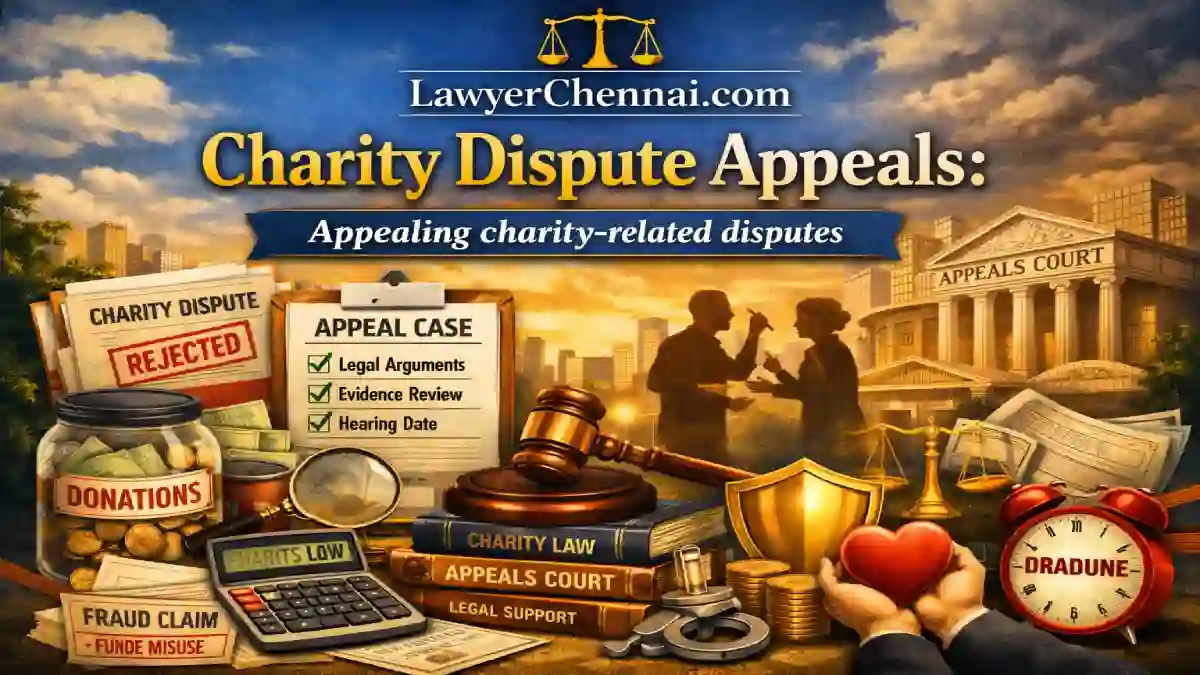
Charity Dispute Appeals: Appealing Charity-Related Disputes – LawyerChennai.com
Common Charity Disputes Requiring Appeals
Many charity disputes progress to appellate proceedings. Therefore, stakeholders should understand common grounds for appeals. Regulatory decisions sometimes affect registrations, governance structures, funding access, and charitable operations. Moreover, trustee disagreements often create operational disruptions. Courts and authorities evaluate evidence carefully before granting relief.
| Dispute Type | Common Issue |
|---|---|
| Trust Governance | Trustee conflicts |
| Property Matters | Ownership disputes |
| Registration Issues | Cancellation orders |
| Financial Matters | Fund utilization concerns |
Frequent appeal situations include:
- Registration cancellation.
- Trustee removal.
- Property disputes.
- Funding restrictions.
- Compliance findings.
- Governance challenges.
Strong documentation supports appellate success. Consequently, stakeholders can challenge adverse decisions effectively while protecting organizational objectives.
Legal Framework Governing Charity Appeals
Charitable entities operate under multiple legal frameworks. Therefore, appeals require careful legal analysis. Trust laws, society regulations, income tax provisions, and state-specific legislation often apply. Moreover, procedural requirements vary across jurisdictions and forums. Governing documents frequently influence dispute outcomes.
Important legal considerations include:
- Trust deeds.
- Society bylaws.
- Registration certificates.
- Financial statements.
- Compliance records.
- Regulatory communications.
The Code of Civil Procedure, 1908 may govern certain civil proceedings. Consequently, procedural compliance becomes essential. Experienced legal representation strengthens appellate arguments and protects organizational interests effectively.
Strategic Approaches to Charity Dispute Appeals
Evaluating Grounds for Appeal
A successful appeal begins with a detailed case assessment. Therefore, stakeholders should review orders and evidence carefully. Legal counsel identifies procedural errors, factual inaccuracies, and jurisdictional concerns. Moreover, appellate forums often examine whether authorities acted lawfully and fairly. Strong grounds increase the likelihood of relief.
Key evaluation factors include:
- Legal errors.
- Procedural irregularities.
- Evidence misinterpretation.
- Jurisdiction issues.
- Governance compliance.
- Regulatory overreach.
Every appeal should focus on relevant facts and law. Consequently, organizations can present persuasive arguments before appellate authorities and courts.
Evidence Collection and Documentation Strategy
Evidence plays a critical role in charity appeals. Therefore, organizations should preserve records systematically. Trust deeds, resolutions, audits, correspondence, and regulatory filings often support appellate claims. Moreover, digital records increasingly influence outcomes. Accurate documentation strengthens credibility before tribunals and courts.
| Evidence Category | Purpose |
|---|---|
| Trust Documents | Governance proof |
| Financial Records | Fund utilization evidence |
| Regulatory Filings | Compliance support |
| Meeting Minutes | Decision verification |
Effective evidence management improves case preparation. Consequently, stakeholders can address allegations and defend charitable operations more successfully.
Appeals Before Regulatory Authorities and Courts
Charity disputes may proceed through several appellate levels. Therefore, stakeholders should understand forum-specific procedures. Different authorities possess distinct powers and jurisdictional limits. Moreover, appellate timelines require strict compliance.
Common forums include:
- Charity Commissioner Appeals.
- Registrar Appeals.
- Civil Courts.
- Appellate Tribunals.
- High Courts.
- Supreme Court.
Each forum examines specific issues and remedies. Consequently, strategic forum selection improves litigation outcomes. Professional legal representation remains essential throughout appellate proceedings.
Charity Governance and Trustee Disputes
Trustee disputes often affect administration and decision-making. Therefore, timely legal intervention becomes necessary. Conflicts may involve appointments, removals, powers, financial decisions, or policy disagreements. Moreover, governance disputes can undermine charitable objectives.
Important governance concerns include:
- Trustee authority.
- Fiduciary obligations.
- Conflict management.
- Decision transparency.
- Record maintenance.
Courts frequently review governing documents and conduct standards. Consequently, strong legal arguments help protect institutional stability. Effective dispute resolution preserves organizational continuity and stakeholder trust.
Property and Asset-Related Charity Appeals
Many charities own valuable properties and assets. Therefore, ownership disputes frequently lead to appeals. Conflicts may involve title claims, encroachments, management rights, and beneficiary interests. Moreover, property litigation can affect long-term charitable activities.
Available remedies may include:
- Declaratory relief.
- Injunctions.
- Possession claims.
- Recovery proceedings.
- Appellate challenges.
Civil courts often exercise jurisdiction over property matters. Consequently, organizations should maintain complete ownership records. Strategic litigation helps safeguard charitable assets effectively.
Income Tax and Registration Appeal Proceedings
Tax exemptions and registrations remain critical for charitable entities. Therefore, adverse tax decisions require prompt review. Authorities may question charitable status, fund utilization, or compliance practices. Moreover, registration cancellations can affect funding opportunities.
Key dispute areas include:
- Tax exemption eligibility.
- Registration cancellation.
- Compliance findings.
- Audit objections.
- Financial reporting issues.
Appellate remedies often exist under relevant tax provisions. Consequently, organizations should seek legal advice immediately after receiving adverse orders. Strong representation protects operational sustainability.
Fraud Allegations and Criminal Proceedings
Certain charity disputes involve allegations of misappropriation, forgery, or fraud. Therefore, organizations should respond strategically. Regulatory inquiries may expand into criminal investigations. Moreover, law enforcement agencies may become involved.
Relevant legal frameworks include:
| Law | Application |
|---|---|
| BNS | Criminal offences |
| BNSS | Investigation procedures |
| BSA | Evidence standards |
| CPC | Related civil proceedings |
Nearby police stations may receive complaints concerning financial misconduct. Consequently, integrated legal defense strategies become essential. Early intervention protects reputational and legal interests effectively.
Alternative Dispute Resolution for Charities
Not every dispute requires prolonged litigation. Therefore, charities should consider alternative resolution methods. Mediation and negotiated settlements often preserve relationships and resources. Moreover, confidential discussions may resolve governance issues efficiently.
Common advantages include:
- Reduced costs.
- Faster outcomes.
- Greater flexibility.
- Relationship preservation.
- Confidential proceedings.
Alternative processes complement formal appeals effectively. Consequently, organizations can resolve disputes while focusing on charitable missions and community service objectives.
Protecting Donor and Beneficiary Interests
Charitable organizations must safeguard stakeholder interests consistently. Therefore, appeal strategies should address donor confidence and beneficiary welfare. Governance transparency supports organizational credibility. Moreover, compliance strengthens public trust.
Key protection measures include:
- Financial accountability.
- Regulatory compliance.
- Transparent reporting.
- Stakeholder communication.
- Policy reviews.
Strong governance reduces future disputes significantly. Consequently, charities can maintain operational effectiveness while meeting legal obligations.
Why Choose LawyerChennai.com – Best Lawyer Firm in Chennai India 24×7
LawyerChennai.com – Best Lawyer Firm in Chennai India 24×7 provides comprehensive legal support for charity disputes and appeals. The firm assists trusts, societies, NGOs, religious institutions, donors, and beneficiaries. Therefore, clients receive tailored legal strategies based on specific circumstances. Services include appeal drafting, governance advisory, property dispute representation, tax litigation support, and regulatory defense. Moreover, the firm represents clients before authorities, tribunals, and courts.
Core services include:
- Charity appeals.
- Trust litigation.
- Property disputes.
- Tax exemption matters.
- Governance advisory.
- Regulatory representation.
- Criminal defense support.
- High Court remedies.
Proactive legal strategies protect charitable objectives effectively. Consequently, organizations can continue serving communities while resolving disputes successfully.
Conclusion
Charity dispute appeals require careful planning, evidence management, and strategic advocacy. Therefore, organizations should act promptly after receiving adverse decisions. Strong legal representation improves prospects for successful outcomes. Moreover, appeals protect governance structures, charitable assets, registrations, and stakeholder interests. Courts, tribunals, and regulatory authorities offer important remedies for aggrieved parties. Effective legal strategies combine compliance, documentation, and procedural accuracy. LawyerChennai.com – Best Lawyer Firm in Chennai India 24×7 remains committed to helping charities navigate complex disputes while preserving their mission and public trust.
FAQs
Can a charity appeal cancellation of its registration?
Yes. Charities may challenge cancellation orders before appropriate appellate authorities or courts.
What documents support a charity appeal?
Trust deeds, financial records, meeting minutes, audits, regulatory filings, and correspondence often support appeals.
Which forum hears charity-related appeals?
Appeals may proceed before Charity Commissioners, tribunals, civil courts, High Courts, or the Supreme Court.
Can trustee removal decisions be challenged?
Yes. Trustees may challenge unlawful removals through statutory appeals or court proceedings.
What happens if fraud allegations arise against a charity?
Authorities may investigate. Legal counsel should respond promptly to protect organizational and stakeholder interests.
Is mediation useful in charity disputes?
Yes. Mediation often resolves governance and operational disputes faster while preserving institutional relationships.
Read More
- Regulatory Fines Appeals: Challenging fines imposed by regulators
- Tax Evasion Appeals: Handling appeals in tax evasion cases
- International Trade Disputes: Appealing trade-related disputes
- Civil Rights Litigation: Handling appeals in civil rights cases
- Legal Aid Appeals: Appealing decisions on legal aid
- NGO DARPAN Portal (NITI Aayog)