
Supreme Court Advocacy for Complex Criminal Appeal Cases
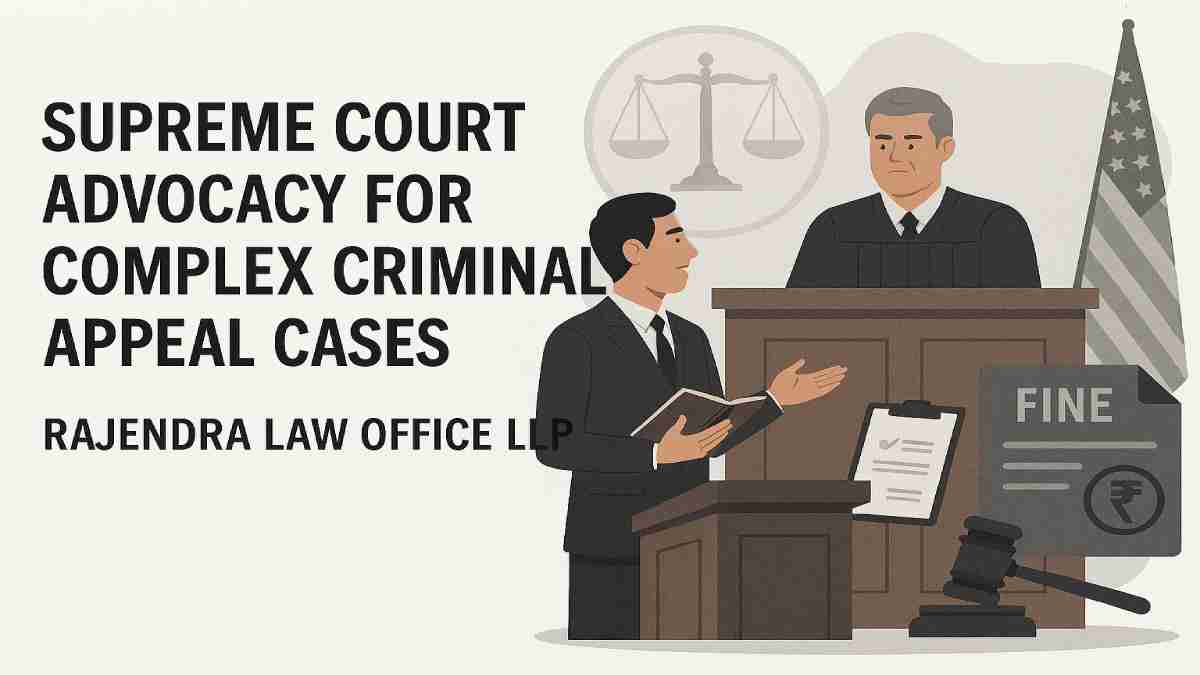
Criminal law in India can be highly complex, especially when cases reach the Supreme Court advocacy. For individuals, companies, and organizations, navigating a criminal appeal in the highest court requires both legal expertise and strategic thinking. Supreme Court advocacy is not just about filing petitions—it is about presenting arguments convincingly, interpreting precedents accurately, and protecting client rights effectively.
At LawyerChennai.com, we understand that complex criminal appeals involve multiple layers of law, procedural requirements, and high stakes. Our experienced advocates guide clients through every stage, ensuring that their cases are heard thoroughly and professionally.
Supreme Court Advocacy for Complex Criminal Appeal Cases – LawyerChennai.com
Understanding Complex Criminal Appeals
A criminal appeal becomes “complex” for several reasons. First, the nature of the offense might involve multiple charges or serious allegations such as financial fraud, corporate crime, or offenses with international implications. Second, procedural intricacies, conflicting lower court judgments, or ambiguous legal interpretations can complicate the appeal process.
Furthermore, the Supreme Court is a court of last resort, which means that decisions here are often final and binding. Therefore, preparing a criminal appeal requires careful analysis of facts, law, and prior judicial decisions.
Role of a Supreme Court Advocate
A Supreme Court advocate does more than simply argue a case. They perform multiple critical roles:
- Case Analysis: Reviewing records from lower courts, identifying errors or omissions, and assessing legal strategies.
- Drafting Petitions: Preparing accurate and persuasive criminal appeals, including special leave petitions (SLPs) and review petitions.
- Legal Research: Studying statutes, case law, and constitutional provisions relevant to the case.
- Oral Advocacy: Presenting arguments in court clearly and persuasively, addressing questions from judges, and responding to opposing counsel.
By combining analytical skills and courtroom expertise, advocates maximize the chances of a favorable outcome.
Types of Complex Criminal Appeals
Criminal appeals in the Supreme Court can vary widely, including:
1. Appeals Against Conviction
These appeals challenge wrongful convictions, procedural lapses, or misinterpretation of law by lower courts. Strong advocacy can result in acquittal, reduced sentences, or retrial orders.
2. Appeals Against Sentencing
Even if a conviction stands, sentences may be excessive or disproportionate. Advocates seek adjustments that are fair and just.
3. Appeals Involving Financial Crimes
Fraud, money laundering, and corporate offenses often involve complex documentation, forensic audits, and cross-border transactions. Presenting these cases requires meticulous preparation.
4. Appeals Involving Human Rights Issues
Cases that involve custodial matters, police excesses, or violations of fundamental rights require not only legal skill but also sensitivity toward constitutional principles.
Importance of Legal Strategy
A well-defined legal strategy is essential in Supreme Court appeals. The strategy involves:
- Prioritizing legal issues for argument
- Identifying relevant precedents and case law
- Anticipating counterarguments from prosecution or government
- Highlighting procedural or evidentiary flaws
Without a clear strategy, even strong cases can face challenges in getting noticed or heard effectively.
Preparing the Case Record
Supreme Court appeals require precise and complete documentation. Advocates must ensure that:
- All trial and appellate court records are included
- Evidence, exhibits, and witness statements are properly organized
- Legal citations and judgments are accurately referenced
- Petitions comply with procedural norms under Supreme Court Rules
Thorough preparation minimizes delays and strengthens credibility in court.
Oral Arguments and Courtroom Presence
Oral advocacy is a critical component of Supreme Court litigation. Judges often evaluate not only the legal merit but also the clarity, logic, and confidence of arguments presented.
Effective oral advocacy involves:
- Explaining complex legal points in simple language
- Responding confidently to judges’ questions
- Addressing procedural objections proactively
- Engaging with opposing counsel while maintaining professionalism
Our advocates at LawyerChennai.com are trained to maintain composure, clarity, and persuasion, even in high-pressure court sessions.
Handling Multi-Jurisdictional and Corporate Cases
Many criminal appeals today involve multi-jurisdictional or corporate matters. For instance:
- Cross-border financial fraud
- Corporate governance violations
- Environmental or regulatory offenses
These cases require not only criminal law expertise but also knowledge of corporate, economic, and international law. Supreme Court advocates must coordinate with experts, forensic accountants, and regulatory bodies to present a comprehensive case.
Challenges in Supreme Court Criminal Appeals
Supreme Court appeals face unique challenges:
- Strict timelines: Filing deadlines are critical, and delays can affect admissibility.
- Procedural compliance: Non-compliance with rules can lead to dismissal.
- Evidence limitations: New evidence is rarely allowed; focus is on reviewing prior records.
- High standards of proof: Convictions are often scrutinized under rigorous legal principles.
Overcoming these challenges requires meticulous planning and expert advocacy.
Role of Precedents and Legal Research
The Supreme Court heavily relies on precedents. Effective advocates research:
- Landmark judgments relevant to the case
- Interpretation of statutes in similar cases
- Constitutional provisions supporting client arguments
This research forms the backbone of persuasive petitions and oral arguments.
Interaction with Prosecutors and Government Counsel
Supreme Court cases often involve representation by government or public prosecutors. Successful advocacy requires professional interaction:
- Negotiating procedural matters
- Clarifying legal interpretations
- Presenting joint proposals where feasible
Maintaining professionalism ensures a credible and balanced presentation before the Court.
Post-Hearing Strategies
After arguments, Supreme Court may reserve judgment, require additional submissions, or order clarification. Advocates must:
- Respond promptly to court queries
- Submit required documents within deadlines
- Advise clients on interim relief, bail, or directions
- Plan for possible appeals or review petitions
Continuous monitoring ensures that clients’ interests are protected throughout the process.
Why Choose LawyerChennai.com
Clients choose LawyerChennai.com because we combine experience, legal knowledge, and strategic thinking. Our advantages include:
- Expertise in criminal law and Supreme Court advocacy
- Handling complex, multi-jurisdictional cases
- Comprehensive case preparation and legal research
- Skilled oral advocacy and courtroom representation
- Transparent communication and client-focused solutions
We aim not only to argue cases but also to protect rights, safeguard interests, and achieve fair outcomes.
Frequently Asked Questions
A criminal appeal becomes complex when it involves serious offences, multiple accused, large volumes of evidence, conflicting judgments, or important questions of law. Matters involving constitutional rights, financial crimes, or procedural errors from lower courts also add complexity and require experienced Supreme Court advocacy.
A criminal case can reach the Supreme Court through a Special Leave Petition, statutory appeal, or appeal against conviction or sentence. Generally, parties approach the Supreme Court after exhausting remedies before trial courts and High Courts, especially when there is a serious legal or procedural error.
A Supreme Court advocate analyses the complete case record, drafts persuasive petitions, researches precedents, and presents oral arguments before the Court. The advocate also responds to judges’ questions, addresses prosecution arguments, and protects the client’s constitutional and legal rights throughout the proceedings.
Yes, the Supreme Court can grant interim relief such as bail, suspension of sentence, or stay of proceedings while the appeal is pending. Such relief depends on the facts of the case, seriousness of the offence, and strength of the legal arguments presented.
LawyerChennai.com offers focused Supreme Court advocacy, strong legal research, and strategic case presentation. The firm handles complex criminal appeals with professionalism, clarity, and dedication, ensuring that every client receives careful attention and effective representation before India’s highest court. Clients benefit from transparent communication, timely updates, ethical practice, and committed advocacy at every stage of Supreme Court proceedings nationwide.
Conclusion: Excellence in Supreme Court Criminal Advocacy
Complex criminal appeals in the Supreme Court demand precision, skill, and strategic foresight. From careful case preparation to persuasive oral arguments, every stage matters. Supreme Court advocacy is not just a legal exercise—it is a responsibility to ensure justice, protect client rights, and uphold the integrity of the legal system.
At LawyerChennai.com, we understand the stakes and provide expert guidance for every criminal appeal. Whether it involves financial crimes, corporate offenses, or human rights issues, our dedicated team ensures that clients receive professional, thorough, and effective representation in the highest court of India.
Read More
- Navigating ESIC SPREE 2025: Compliance Opportunities Amid India’s New Criminal Laws
- How to File a Successful Criminal Appeal in the Supreme Court
- ODI Filing Experts in India – Overseas Investment Approval Services
- Expert Guidance for Criminal Appeals in the Supreme Court of India
- Chennai FEMA Advisory Services – RBI, FDI, ODI & Compliance
- Supreme Court of India – Official Website (English)