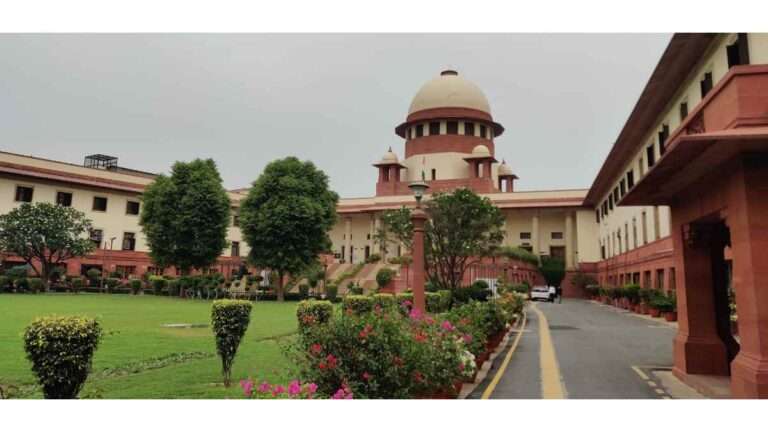
Public Interest Litigation (PIL) & Social Justice Matters in India – Complete Legal Guide for High Court Remedies
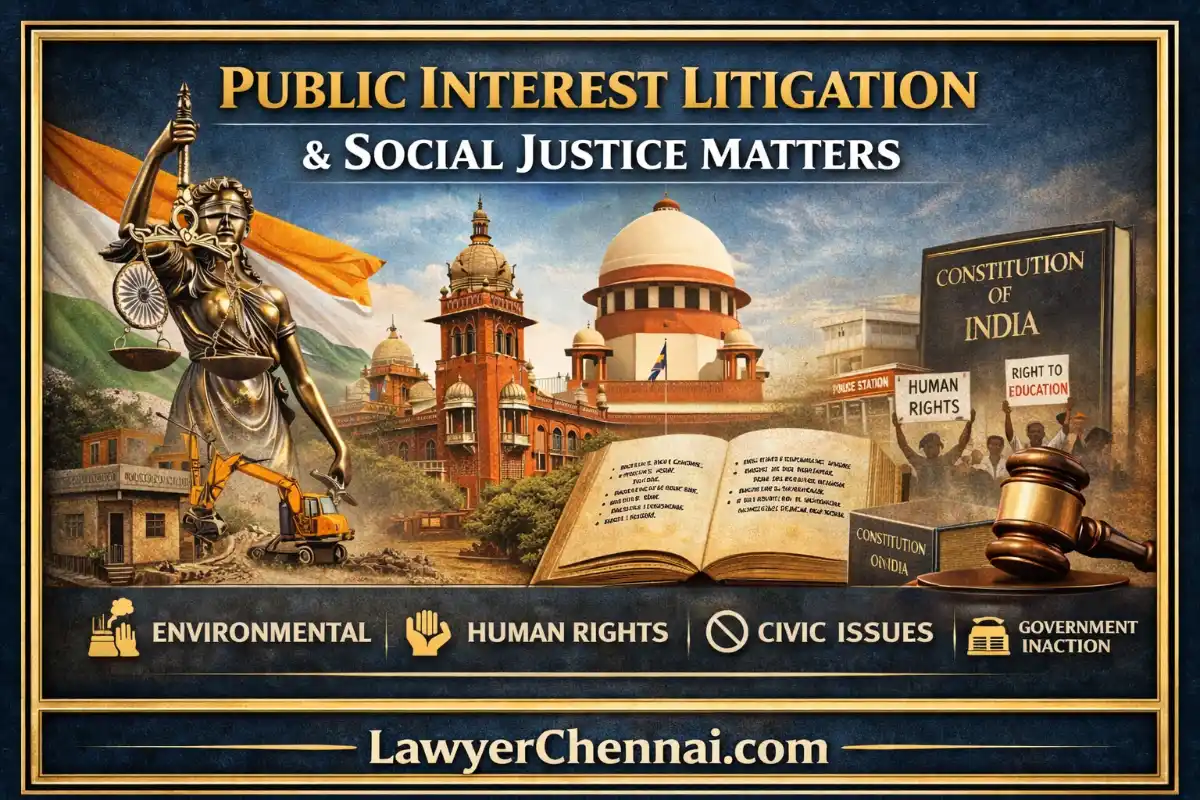
Public Interest Litigation has transformed India’s judicial landscape. Citizens can now challenge systemic injustices directly through constitutional courts. This powerful legal mechanism empowers ordinary individuals to seek remedies against governmental negligence, environmental degradation, and human rights violations. Moreover, PIL serves as a bridge between constitutional guarantees and ground realities. The Madras High Court and Supreme Court of India have consistently expanded PIL’s scope to address emerging social concerns. Through strategic litigation, public interest advocates ensure accountability and transparency in governance.
Understanding Public Interest Litigation in the Indian Constitutional Framework
The Indian Constitution provides robust mechanisms for protecting fundamental rights. Public Interest Litigation emerged as a judicial innovation in the 1980s. Justice P.N. Bhagwati pioneered this transformative approach to access justice. Traditionally, only aggrieved parties could approach courts under the principle of locus standi. However, PIL relaxed these stringent requirements significantly. Consequently, any concerned citizen can now file petitions addressing collective grievances. This democratization of legal remedies marks a watershed moment in Indian jurisprudence. Furthermore, PIL embodies the constitutional promise of social and economic justice enshrined in the Preamble.
Constitutional Basis Under Article 226 and Article 32
Article 226 of the Constitution empowers High Courts to issue writs for fundamental rights enforcement. Similarly, Article 32 grants the Supreme Court original jurisdiction in such matters. These constitutional provisions form the bedrock of PIL jurisprudence in India. The Madras High Court exercises its writ jurisdiction under Article 226 extensively. Additionally, Article 32 provides a fundamental right to constitutional remedies directly. Both provisions enable courts to issue writs including habeas corpus, mandamus, prohibition, certiorari, and quo warranto. Through these extraordinary remedies, courts ensure governmental accountability and protect citizen rights effectively.

Evolution of Judicial Activism Through PIL
The 1980s witnessed a paradigm shift in Indian judicial philosophy. Courts began accepting letters from ordinary citizens as writ petitions. Justice V.R. Krishna Iyer and Justice P.N. Bhagwati spearheaded this revolutionary approach. Landmark cases like Hussainara Khatoon expanded access to justice for marginalized communities. Consequently, PIL became a powerful tool against state inaction and bureaucratic apathy. The judiciary recognized that procedural technicalities should not obstruct substantive justice. Therefore, courts liberalized standing requirements to address widespread public grievances. This evolution reflects the Constitution’s commitment to social transformation and inclusive development.
Distinction Between Traditional Litigation and PIL
Traditional litigation focuses on individual rights and private disputes between parties. Conversely, PIL addresses collective rights affecting large segments of society. Private litigants seek personal remedies and compensation through conventional legal proceedings. However, public interest lawyers pursue systemic reforms and policy changes through PIL. The locus standi requirement differs fundamentally between these two approaches. Furthermore, PIL petitioners need not demonstrate direct personal injury or loss. Courts accept PIL petitions filed by social activists, NGOs, and concerned citizens. This distinction enables broader access to justice and promotes public accountability effectively.
Fundamental Rights Protection Through Writ Jurisdiction
The Constitution guarantees fundamental rights under Articles 14 through 35. Writ jurisdiction serves as the enforcement mechanism for these constitutional guarantees. Citizens can approach the Madras High Court when authorities violate fundamental rights. Article 14 ensures equality before law and equal protection of laws. Article 21 protects life and personal liberty with expansive judicial interpretation. Courts have read various unenumerated rights into Article 21 through progressive jurisprudence. These include the right to clean environment, livelihood, shelter, and health. Through PIL, courts ensure effective implementation of these fundamental rights across society.
Scope of Article 21 and Expansive Interpretation
Article 21 states that no person shall be deprived of life or personal liberty. The Supreme Court has interpreted “life” to mean dignified and meaningful existence. This expansive interpretation covers diverse aspects including environmental protection and healthcare access. In Bandhua Mukti Morcha, the Court recognized the right to live with human dignity. Similarly, the right to pollution-free environment emerged through judicial interpretation of Article 21. Courts have mandated government action on air quality, water pollution, and waste management. This progressive approach makes Article 21 the most potent constitutional provision for PIL.
Maintainability and Locus Standi Requirements in Public Interest Litigation
Locus standi refers to the legal standing required to approach courts. Traditional jurisprudence demanded direct personal injury for filing petitions. PIL revolutionized this doctrine by permitting representative standing for public causes. However, courts have established guidelines to prevent abuse of PIL jurisdiction. The petition must raise genuine public interest concerns affecting community welfare. Furthermore, petitioners must demonstrate bona fide intentions rather than personal vendetta or publicity. The Madras High Court scrutinizes PIL petitions to filter frivolous or motivated litigation. Consequently, petitioners must present credible evidence supporting allegations of public harm.
Who Can File Public Interest Litigation
Any citizen concerned about public welfare can initiate PIL proceedings. Social activists frequently file PILs addressing governmental negligence and policy failures. Non-governmental organizations with established track records possess strong locus standi. Lawyers and advocates can file PIL petitions as concerned citizens. Additionally, courts accept epistolary jurisdiction where letters become writ petitions. However, business competitors and political rivals cannot misuse PIL for ulterior motives. The judiciary examines the petitioner’s background and motivation carefully before admission. Therefore, credibility and genuine public concern determine standing rather than formal legal qualification.
Role of NGOs and Social Organizations
Registered NGOs working in specific domains possess enhanced credibility for PIL. Environmental organizations can challenge projects violating ecological norms effectively. Human rights groups represent marginalized communities unable to access legal remedies independently. Consumer protection associations file PILs against unfair trade practices and public safety violations. These organizations bring expertise, resources, and sustained engagement to public interest litigation. Courts recognize their contribution to social justice and governance accountability. Consequently, NGOs with proven track records receive favorable consideration in maintainability hearings.
Grounds for Rejection and Dismissal
Courts dismiss PIL petitions lacking bona fide public interest concerns. Personal grievances disguised as public interest matters face summary rejection. Petitions motivated by political rivalry or business competition are not entertained. Vague allegations without supporting evidence fail to meet maintainability standards. Furthermore, courts reject PILs interfering with policy decisions within governmental discretion. Trivial matters and publicity-seeking litigation waste judicial time and resources unnecessarily. The Supreme Court has repeatedly cautioned against PIL abuse in landmark judgments. Therefore, petitioners must demonstrate genuine public concern with credible factual foundation.
Guidelines Against Abuse of Process
The judiciary has evolved strict guidelines preventing frivolous PIL litigation. Courts impose costs on petitioners filing motivated or publicity-oriented petitions. Repeat litigants with history of frivolous cases face enhanced scrutiny. Additionally, courts verify the petitioner’s background and previous litigation history. Anonymous petitions and those with concealed authorship are rejected outright. The Madras High Court requires detailed affidavits explaining the public interest involved. These safeguards maintain PIL’s credibility as a tool for genuine social reform.
Types of Public Interest Litigation Matters in Madras High Court
PIL encompasses diverse issues affecting public welfare and fundamental rights. Environmental degradation constitutes a significant category of PIL matters. Illegal construction and encroachment cases frequently reach the Madras High Court. Municipal governance failures including waste management attract PIL intervention regularly. Government inaction on infrastructure development and public amenities triggers judicial scrutiny. Human rights violations in prisons, mental health institutions, and shelter homes require PIL remedies. Consumer protection issues involving public safety and health also fall under PIL jurisdiction. Each category requires specific legal approach and evidentiary foundation for successful litigation.
Environmental Protection and Pollution Control
Environmental PIL addresses air pollution, water contamination, and illegal dumping. Chennai faces severe challenges regarding Buckingham Canal pollution and Cooum River degradation. Illegal sand mining in coastal areas threatens ecological balance and community livelihoods. Industrial effluent discharge into water bodies violates environmental laws and public health standards. Solid waste management failures in Chennai Corporation areas generate PIL petitions regularly. The Tamil Nadu Pollution Control Board’s inaction attracts judicial intervention through PIL. Courts direct authorities to implement pollution control measures and monitor compliance effectively. Therefore, environmental PIL serves as a crucial enforcement mechanism for ecological protection.
Air Quality and Vehicle Emission Standards
Chennai’s air quality frequently violates National Ambient Air Quality Standards. Vehicular emissions contribute significantly to urban air pollution levels. PIL petitions have challenged inadequate public transport and traffic management policies. Courts mandate pollution under control (PUC) certificate enforcement rigorously. Additionally, judicial directions address industrial emissions from Manali and Ennore industrial zones. The Madras High Court monitors government compliance with emission control directives. These PIL interventions protect public health and ensure environmental law enforcement effectively. Consequently, citizens can seek legal remedies against deteriorating air quality through PIL.
Water Pollution and River Rejuvenation
Water pollution PIL addresses sewage discharge, industrial effluents, and garbage dumping. The Cooum River and Adyar River face severe pollution threatening public health. Encroachments on water bodies reduce flood management capacity and ecological balance. PIL petitions seek removal of unauthorized structures and pollution source control. Courts direct the Corporation of Chennai to implement sewage treatment infrastructure. Additionally, judicial monitoring ensures compliance with water quality standards and restoration timelines. These interventions protect Chennai’s water resources and promote sustainable urban development effectively.
Municipal Governance and Civic Amenities
Solid waste management failures generate frequent PIL petitions in Chennai. Garbage dumping in unauthorized locations creates health hazards and environmental degradation. The Corporation of Chennai faces judicial scrutiny regarding waste collection and disposal systems. Road maintenance, streetlight provision, and drainage infrastructure fall under municipal PIL jurisdiction. Encroachment removal and footpath clearance require consistent judicial monitoring for compliance. Public park maintenance and playground development involve civic amenity litigation. These PIL matters ensure municipal accountability and improve urban governance standards significantly.
Illegal Construction and Unauthorized Buildings
Unauthorized constructions violating approved building plans attract PIL intervention regularly. Chennai Metropolitan Development Authority (CMDA) approval violations constitute planning law breaches. Constructions exceeding permissible Floor Space Index (FSI) threaten structural safety. Residential buildings converted to commercial use without permission violate zoning regulations. PIL petitions seek demolition of illegal structures and strict enforcement of building codes. Courts direct authorities to conduct surveys and take appropriate enforcement action. These judicial interventions maintain urban planning integrity and prevent unauthorized development effectively.
Human Rights and Social Justice Matters
Prison conditions and undertrial detention attract significant PIL attention. Bonded labor and child labor violations require immediate judicial intervention. Police custody deaths and human rights violations demand accountability through PIL. Shelter home conditions for women, children, and Older people require monitoring and improvement. Mental health institution standards and patient rights protection involve PIL remedies. Discrimination against marginalized communities triggers constitutional litigation under equality provisions. These PIL matters ensure dignity, liberty, and equality for vulnerable populations effectively.
Police Accountability and Custodial Violence
Custodial deaths and torture violate fundamental rights protected under Article 21. PIL petitions seek investigation, prosecution, and compensation for custodial violence victims. The Bharatiya Nagarik Suraksha Sanhita (BNSS) provides procedural safeguards against arbitrary detention. Courts mandate compliance with Supreme Court guidelines on arrest and interrogation procedures. Additionally, PIL ensures police station infrastructure meets prescribed standards for detainee welfare. These interventions promote accountability and prevent abuse of state power effectively. Therefore, PIL serves as a crucial check on police excesses and human rights violations.
Procedure for Filing PIL in Madras High Court and Supreme Court
Filing PIL requires careful preparation of factual foundation and legal grounds. The petition must clearly articulate the public interest concern and relief sought. Supporting documents including photographs, reports, and official correspondence strengthen the petition. Additionally, the petitioner must file a detailed affidavit verifying facts and declarations. Court fees for PIL petitions are nominal to ensure access to justice. The petition should cite relevant constitutional provisions, statutes, and judicial precedents. Legal representation by an advocate experienced in PIL matters enhances petition quality. Therefore, thorough preparation increases the likelihood of admission and favorable outcomes significantly.
Essential Documents and Evidentiary Requirements
PIL petitions require comprehensive documentation supporting factual allegations. Photographs showing illegal construction, pollution, or environmental degradation constitute crucial evidence. Official correspondence with authorities demonstrating inaction or inadequate response strengthens the case. Expert reports from environmental scientists, engineers, or medical professionals add credibility. News articles and media reports documenting the public concern provide additional support. Additionally, statutory notices issued to authorities before filing PIL demonstrate bona fide efforts. These documents collectively establish the petition’s factual foundation and public interest dimension effectively.
Drafting the Petition and Grounds
The petition must clearly identify the public interest issue and affected community. Constitutional provisions and statutory violations require precise citation and articulation. Relief sought should be specific, practical, and within judicial competence to grant. The grounds must demonstrate how governmental action or inaction violates fundamental rights. Additionally, the petition should propose concrete remedial measures for court consideration. Legal precedents supporting the relief sought strengthen the petition’s persuasive value. Therefore, meticulous drafting combining legal rigor with factual detail ensures effective PIL litigation.
Court Fees and Financial Requirements
The Madras High Court prescribes minimal court fees for PIL petitions. This nominal fee structure ensures financial barriers do not prevent access to justice. Petitioners claiming poverty can seek fee exemption through appropriate applications. However, courts impose substantial costs on frivolous or motivated PIL petitions. These cost orders deter abuse while maintaining accessibility for genuine public interest concerns. Additionally, legal representation costs vary depending on case complexity and advocate’s experience. Many social activists and NGOs receive pro bono legal assistance for PIL matters.
Timeline and Expected Duration
PIL proceedings typically commence with an admission hearing before a Division Bench. Initial consideration may occur within two to four weeks of filing. Urgent matters receive expedited hearing and interim relief consideration. The complete resolution depends on case complexity and compliance monitoring requirements. Simple matters may conclude within six months with appropriate court directions. Complex environmental or infrastructure cases often require years of judicial monitoring. The Madras High Court maintains PIL registers for tracking compliance and implementation. Therefore, petitioners should anticipate sustained engagement rather than immediate final resolution.
Interim Relief and Urgent Hearings
Courts grant interim relief preventing irreversible harm during pending PIL proceedings. Environmental damage, illegal demolitions, and health hazards justify urgent interim orders. The petitioner must demonstrate prima facie case, balance of convenience, and irreparable injury. Additionally, undertakings regarding damages may be required for interim injunctions. The Madras High Court conducts urgent mentioning for time-sensitive PIL matters. Interim orders include stay of impugned actions, status quo directions, and positive mandates. These provisional remedies protect public interest while final adjudication proceeds through regular hearings.
Compliance Monitoring and Implementation
Judicial directions in PIL require systematic monitoring for effective implementation. Courts appoint monitoring committees including domain experts and retired officers. Regular compliance reports from government authorities ensure accountability and transparency. Additionally, amicus curiae assist courts in complex technical or environmental matters. The Madras High Court conducts periodic review hearings tracking directive implementation. Non-compliance attracts contempt proceedings and coercive measures against erring officials. Therefore, PIL extends beyond mere judgment to ensure actual ground-level transformation.
| PIL Category | Common Issues | Primary Relief | Relevant Authority |
|---|---|---|---|
| Environmental Protection | Air/water pollution, illegal mining, waste dumping | Pollution control, restoration, compensation | TN Pollution Control Board |
| Municipal Governance | Garbage management, encroachment, infrastructure failure | Removal, infrastructure development, accountability | Corporation of Chennai |
| Illegal Construction | Unauthorized buildings, zoning violations, FSI excess | Demolition, enforcement, penalty | CMDA, Local Bodies |
| Human Rights | Custodial violence, prison conditions, discrimination | Investigation, compensation, policy reform | Police, Prison Authorities |
| Government Inaction | Infrastructure delay, policy non-implementation | Mandamus, timeline compliance, monitoring | Concerned Department |
| Jurisdiction | Constitutional Provision | Geographic Scope | Appeal Forum |
|---|---|---|---|
| Madras High Court | Article 226 | Tamil Nadu, Puducherry | Supreme Court |
| Supreme Court | Article 32 | Entire India | Review Petition |
Role of Public Interest Litigation Lawyers in Chennai
Experienced PIL advocates provide strategic guidance on maintainability and litigation approach. They assess the public interest dimension and potential for judicial intervention. Additionally, skilled lawyers draft comprehensive petitions with strong legal and factual foundations. Public interest litigation lawyers in Chennai possess expertise in environmental, municipal, and constitutional law. They represent clients before the Madras High Court with knowledge of local governance structures. Furthermore, established PIL practitioners maintain relationships with expert witnesses and monitoring agencies. Therefore, engaging competent legal counsel significantly enhances PIL effectiveness and success prospects.
Selecting the Right PIL Advocate
Choose advocates with demonstrated experience in constitutional and public interest litigation. Track record in environmental law, human rights, or municipal governance matters indicates relevant expertise. Additionally, verify the advocate’s standing before the Madras High Court and familiarity with PIL procedures. Successful PIL lawyers combine legal knowledge with strategic thinking and persistence. They understand judicial expectations regarding maintainability, evidence, and relief sought. Furthermore, experienced advocates navigate compliance monitoring and implementation phases effectively. Therefore, thorough research and consultation ensure selection of appropriate legal representation for PIL matters.
Relevant Legal Frameworks and Statutory Provisions
PIL litigation involves multiple statutory frameworks beyond constitutional provisions. The Code of Civil Procedure (CPC) governs procedural aspects of writ petitions. Environmental laws including the Environment Protection Act and Water/Air Acts provide substantive basis. The Bharatiya Nyaya Sanhita (BNS) addresses criminal violations relevant to PIL matters. Similarly, the Bharatiya Nagarik Suraksha Sanhita (BNSS) governs criminal procedure and police accountability. The Bharatiya Sakshya Adhiniyam (BSA) determines evidentiary standards and admissibility. Municipal laws, building regulations, and planning statutes provide additional legal foundations. Therefore, comprehensive PIL litigation requires multi-layered legal analysis and strategic application.
Application of Bharatiya Nyaya Sanhita in PIL
The Bharatiya Nyaya Sanhita replaced the Indian Penal Code in 2023. PIL petitions addressing criminal violations cite relevant BNS provisions for accountability. Environmental offenses, public nuisance, and endangering human life invoke BNS sections. Additionally, corruption and misconduct by public servants attract BNS application in PIL. Courts direct investigation and prosecution based on BNS provisions through PIL directions. The substantive criminal law framework supports PIL remedies seeking deterrence and punishment. Therefore, understanding BNS provisions strengthens PIL petitions addressing criminal wrongdoing by authorities.
Procedural Safeguards Under BNSS
The Bharatiya Nagarik Suraksha Sanhita governs criminal procedure including arrest and detention. PIL concerning police accountability relies heavily on BNSS safeguards and requirements. Mandatory medical examination of arrested persons prevents custodial violence and torture. Recording of arrest details and informing relatives constitute fundamental BNSS protections. Additionally, judicial oversight of detention and regular production before magistrates ensures accountability. PIL petitions enforce these procedural requirements through judicial monitoring and compliance directions. Therefore, BNSS provisions form the backbone of human rights PIL concerning police conduct.
Practical Remedies and Common Legal Scenarios
Citizens discovering illegal construction in residential areas can file PIL seeking demolition. Pollution from nearby industries affecting health justifies environmental PIL intervention. Garbage dumping by municipal authorities in unauthorized locations warrants civic amenity litigation. Encroachment on public parks, playgrounds, or water bodies requires judicial intervention through PIL. Government failure to implement infrastructure projects despite budget allocation attracts PIL scrutiny. Each scenario requires specific evidence, legal grounds, and targeted relief for effective resolution. Therefore, understanding common PIL scenarios helps citizens identify actionable public interest concerns.
Addressing Illegal Construction Complaints
Document unauthorized construction through photographs showing violations of approved plans. Obtain building plan copies from CMDA or local body demonstrating regulatory breaches. Additionally, collect neighborhood statements regarding construction violations and public safety concerns. File complaints with municipal authorities and document their response or inaction. Subsequently, file PIL in Madras High Court citing planning law violations and public safety risks. Courts typically direct authorities to inspect, report, and take appropriate demolition action. Therefore, systematic documentation and administrative complaint strengthen PIL against illegal construction effectively.
Seeking Remedies for Water Pollution Issues
Identify pollution sources including industrial discharge, sewage outlets, or waste dumping locations. Collect water samples through authorized laboratories for quality testing and documentation. File complaints with Tamil Nadu Pollution Control Board detailing violations and health impacts. Additionally, document affected communities and health problems attributable to water contamination. PIL petition should cite environmental laws, pollution control standards, and fundamental right violations. Courts direct pollution control authorities to investigate, enforce standards, and implement remedial measures. Therefore, scientific evidence combined with legal grounds ensures effective water pollution PIL litigation.
Local Authorities and Enforcement Mechanisms in Chennai
The Corporation of Chennai manages municipal governance including waste management and civic amenities. Chennai Metropolitan Development Authority (CMDA) regulates urban planning and building approvals. Tamil Nadu Pollution Control Board enforces environmental laws and pollution control standards. Revenue departments address land encroachment, unauthorized occupation, and property disputes. Additionally, various police stations across Chennai zones handle law and order matters. PIL petitions target these authorities for enforcement failures and accountability. Understanding jurisdictional distribution ensures correct respondent identification and effective relief implementation.
Corporation of Chennai Zones and Jurisdictions
Chennai Corporation divides the city into fifteen zones for administrative efficiency. Each zone has designated officers responsible for municipal services and complaint redressal. PIL concerning garbage management, road maintenance, or drainage identifies specific zone numbers. Additionally, ward-level grievances require identification of concerned ward and local councilor. Zonal health officers address sanitation and public health complaints within their jurisdiction. PIL petitions citing specific zones and officers ensure targeted accountability and monitoring. Therefore, understanding Chennai’s administrative geography strengthens municipal governance PIL litigation effectively.
Why Choose LawyerChennai.com for PIL Matters
LawyerChennai.com specializes in constitutional litigation and public interest matters. Experienced Advocate Saravvanan R brings extensive experience in Madras High Court PIL proceedings. The firm handles environmental protection, municipal governance, and human rights PIL cases. Additionally, LawyerChennai.com maintains strong relationships with monitoring agencies and expert witnesses. Clients benefit from strategic litigation planning, comprehensive documentation, and persistent advocacy. The firm’s track record demonstrates successful PIL outcomes and effective implementation monitoring. Therefore, engaging experienced PIL lawyers ensures professional representation and maximized impact for public interest causes.
Located at accessible Chennai addresses including West Mogappair and George Town, the firm serves clients across Tamil Nadu. Comprehensive legal consultation helps assess PIL maintainability and litigation prospects. Additionally, the firm guides clients through documentation, filing, and compliance monitoring phases. For expert PIL representation and social justice advocacy, contact LawyerChennai.com at 044-26533389 or visit LawyerChennai.com for detailed consultation and case evaluation.
Frequently Asked Questions About Public Interest Litigation
Read More
- Public Interest Litigation (PIL): Addressing public issues in SC
- PUBLIC INTEREST LITIGATION
- Constitutional & Public Law
- Environmental Attorney
- Home | Department of Social Justice and Empowerment …
- Environmental Law Appeals: Challenging environmental regulations
- APAR SPARROW CBIC 2025-26: Guidelines, Common Mistakes & Legal Remedies for Adverse Entries
Conclusion: Public Interest Litigation empowers citizens to demand accountability and justice through constitutional courts. The Madras High Court provides accessible remedies for environmental protection, municipal governance, and human rights violations. Understanding PIL procedures, maintainability requirements, and evidentiary standards enables effective public interest advocacy. For expert legal assistance in PIL matters, contact Public Interest Litigation Lawyers in Chennai at LawyerChennai.com. Visit LawyerChennai.com for comprehensive consultation on filing PIL in Madras High Court and protecting constitutional rights through strategic litigation.