
Bar Council rules on fee sharing and referrals explained

Bar Council rules on fee sharing – Professional ethics form the foundation of legal practice in India. LawyerChennai.com – Best Lawyer Firm in Chennai India 24×7 explains Bar Council rules regarding fee sharing and client referrals. Advocates must follow ethical standards prescribed under the Advocates Act, 1961 and Bar Council of India Rules. Moreover, advocates cannot engage in improper commercial arrangements that affect professional independence. Fee sharing between advocates and non-lawyers requires careful legal evaluation. Referral practices must also protect client interests and maintain dignity of the legal profession. Furthermore, the Bar Council regulates professional misconduct through disciplinary mechanisms. Advocates appearing before Courts, Tribunals, Consumer Forums, NCLT, High Courts, and the Supreme Court must maintain ethical obligations. Legal professionals should understand permissible arrangements before accepting referrals, collaboration, or professional fees from other practitioners.
Bar Council Rules on Fee Sharing and Referrals Explained – LawyerChennai.com
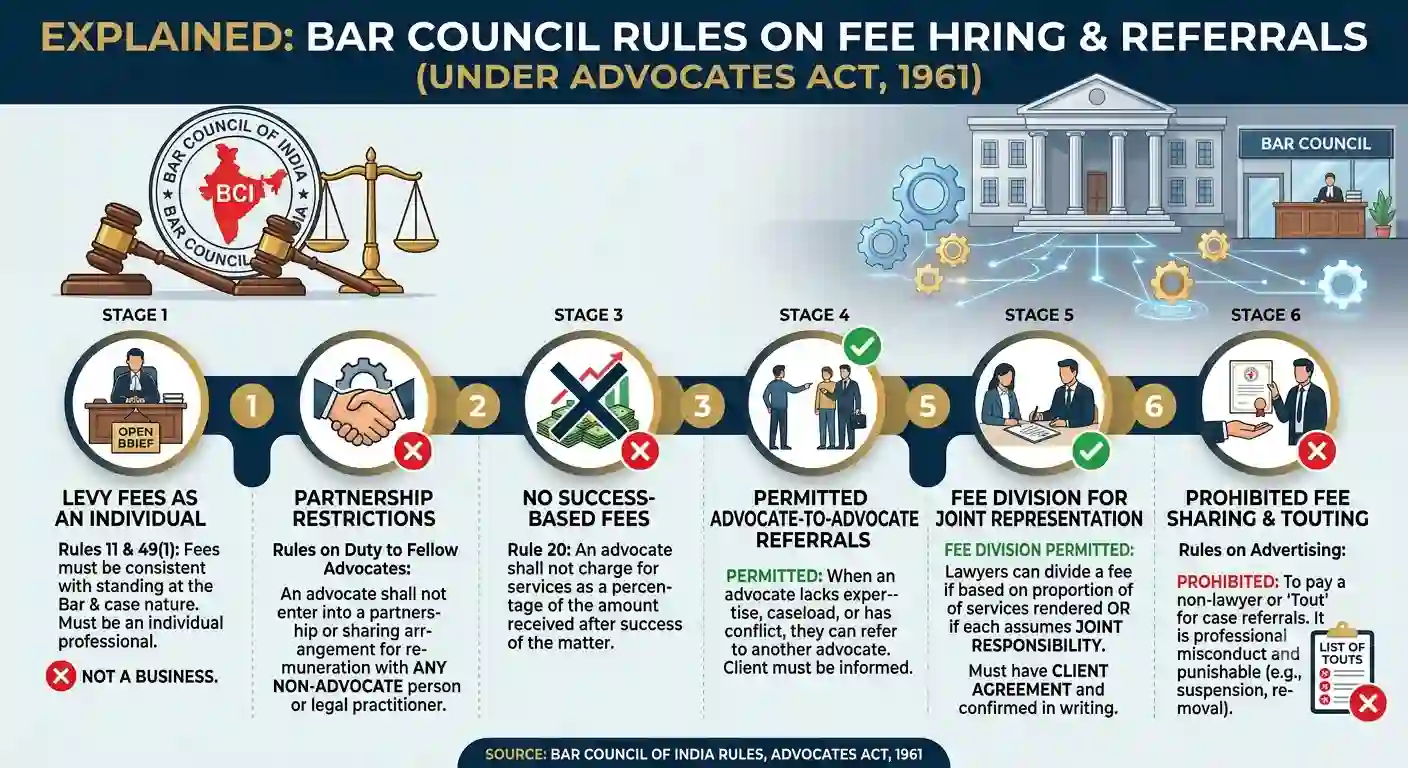
Legal Framework Governing Advocate Fee Arrangements
Indian advocates operate under strict professional conduct rules created to preserve public confidence. Therefore, understanding statutory obligations prevents disciplinary consequences. The Advocates Act, 1961 authorises the Bar Council of India to regulate professional standards. Additionally, State Bar Councils monitor advocate conduct within their jurisdictions. Relevant legal frameworks include:
- Advocates Act, 1961
- Bar Council of India Rules
- Professional Ethics Regulations
- Code of Civil Procedure, 1908
- Bharatiya Nyaya Sanhita, 2023
- Bharatiya Nagarik Suraksha Sanhita, 2023
- Bharatiya Sakshya Adhiniyam, 2023
Fee arrangements must remain transparent and reasonable. Moreover, advocates should avoid agreements that compromise independent legal judgment. Courts may examine professional conduct issues when disputes arise. Ethical compliance strengthens trust between advocates, clients, and judicial institutions.
Importance of Professional Independence in Legal Services
Advocates provide legal representation based on expertise, responsibility, and independent judgment. Therefore, financial arrangements should never influence legal advice. LawyerChennai.com assists individuals, companies, NGOs, and NRIs requiring ethical legal representation. Professional independence applies across various forums, including:
- District Courts
- High Courts
- Supreme Court
- Tribunals
- Consumer Commissions
- NCLT
- Arbitration Forums
- Government Authorities
Furthermore, advocates must avoid relationships creating conflicts of interest. Referral agreements involving improper financial benefits may raise ethical concerns. Consequently, lawyers should carefully structure professional collaborations. Transparent fee practices protect clients while maintaining the reputation of the legal profession. Ethical advocacy supports fair justice delivery throughout Chennai and India.
Bar Council Rules on Sharing Fees Between Advocates
Fee sharing between advocates requires compliance with professional conduct principles. Generally, advocates may share fees with other advocates under permitted professional arrangements. However, agreements with non-advocates require greater caution. The purpose remains protecting professional independence and preventing commercial exploitation of legal services.
| Arrangement | Legal Position |
|---|---|
| Advocate sharing fees with advocate | Permitted subject to ethical rules |
| Advocate sharing fees with non-lawyer | Generally restricted |
| Client referral commission | Professionally restricted |
| Joint legal representation | Allowed with proper consent |
| Advocate partnership arrangements | Subject to legal compliance |
Moreover, advocates should document professional arrangements clearly. Proper documentation prevents misunderstandings and disciplinary complaints. Fee structures must remain fair, transparent, and consistent with professional obligations.
Referral Practices and Advocate Professional Responsibility
Client referrals require careful consideration under Bar Council ethical standards. Advocates may receive professional references from other advocates through legitimate professional relationships. However, referral arrangements should not become commercial commission systems. Furthermore, advocates must prioritise client welfare over personal financial benefits. Referral decisions should consider:
- Advocate expertise
- Case requirements
- Client consent
- Conflict checks
- Professional competence
Additionally, lawyers should maintain confidentiality while transferring client matters. Improper referral practices may create disciplinary issues before State Bar Councils. Therefore, advocates should follow ethical principles while collaborating with colleagues. Professional referrals improve legal service quality when they focus on client benefit rather than financial incentives.
Ethical Legal Practice and Client Protection
Legal services require honesty, competence, confidentiality, and professional responsibility. LawyerChennai.com provides ethical representation across Chennai courts and legal forums. Moreover, advocates must ensure clients understand fee arrangements before engagement. Written agreements help clarify professional responsibilities, payment structures, and representation scope. Furthermore, advocates should avoid misleading statements regarding success guarantees, influence, or referral advantages. Professional conduct rules protect clients from unethical practices while preserving judicial integrity. Legal support involving criminal cases, civil disputes, family matters, corporate issues, taxation, consumer disputes, and property litigation requires responsible advocacy. Therefore, ethical fee practices remain essential for maintaining confidence between lawyers and clients throughout the legal process.
Legal Restrictions on Referral Fees and Client Commissions
Advocate referral practices remain subject to strict professional responsibility standards in India. LawyerChennai.com explains that legal services cannot operate like ordinary commercial businesses. Therefore, advocates must avoid arrangements involving improper commissions, incentives, or client procurement payments. The Bar Council of India Rules require advocates to maintain dignity and independence throughout professional relationships. Moreover, lawyers cannot allow financial interests to influence legal advice or representation. Referral relationships between advocates should focus on professional competence and client convenience. Additionally, advocates must protect confidential information while transferring matters. Ethical collaboration improves access to justice without compromising professional standards. Any violation may lead to disciplinary proceedings before State Bar Councils or the Bar Council of India. Responsible referral practices protect advocates, clients, and the judicial system.
Professional Misconduct Related to Fee Sharing
Professional misconduct occurs when advocates violate ethical obligations established under legal regulations. Consequently, improper fee arrangements may attract disciplinary action. State Bar Councils investigate complaints regarding unethical conduct. Common concerns include:
- Sharing fees with unauthorised persons
- Paying client acquisition commissions
- Misleading advertisements
- Promising guaranteed results
- Hiding fee arrangements
- Breaching confidentiality
- Creating conflicts of interest
Furthermore, disciplinary authorities may impose penalties depending upon violation seriousness. Possible consequences include reprimands, suspension from practice, or other statutory actions. Advocates should maintain proper records of agreements, payments, and client communications. Ethical compliance reduces disputes while protecting professional reputation. Therefore, lawyers must review every financial arrangement before accepting referrals or collaborative assignments.
Role of State Bar Councils and Bar Council of India
The Bar Council system supervises advocate conduct throughout India. State Bar Councils register advocates, handle complaints, and conduct disciplinary proceedings. The Bar Council of India establishes nationwide professional standards and regulations. Moreover, disciplinary committees examine allegations involving professional misconduct. Their functions include:
| Authority | Main Responsibility |
|---|---|
| Bar Council of India | Professional standards and regulations |
| State Bar Councils | Advocate registration and discipline |
| Disciplinary Committees | Complaint examination |
| Courts | Judicial review and legal interpretation |
Additionally, advocates appearing before High Courts, District Courts, Tribunals, and specialised forums must follow these ethical requirements. Professional discipline maintains public confidence in the justice system. Therefore, advocates should understand regulatory obligations before entering fee-sharing or referral arrangements.
Advocate Fees, Agreements, and Client Transparency
Transparent fee arrangements strengthen professional relationships between advocates and clients. Therefore, lawyers should clearly explain fees, expenses, and representation scope before accepting matters. Written engagement terms reduce future misunderstandings. Proper fee agreements should include:
- Professional service description.
- Applicable court expenses.
- Payment schedule.
- Additional litigation costs.
- Representation limitations.
- Communication expectations.
Moreover, advocates should avoid unclear financial commitments that may create disputes. Clients should receive accurate information regarding legal procedures, possible outcomes, and expenses. Ethical fee management applies to criminal cases, civil litigation, family disputes, corporate matters, taxation disputes, and property proceedings. Transparent practices protect both advocates and clients while supporting efficient legal representation.
Fee Sharing Between Law Firms and Legal Professionals
Modern legal practice often involves collaboration between advocates and law firms. However, every collaboration must respect professional ethics. LawyerChennai.com assists clients through coordinated legal services while maintaining independent advocacy standards. Law firms may collaborate through legitimate professional arrangements involving multiple advocates. Furthermore, advocates handling different aspects of litigation should maintain transparency regarding responsibilities. Fee arrangements must avoid prohibited commercial practices. Appropriate collaboration includes:
- Joint representation
- Specialist legal assistance
- Advocate consultations
- Legal research support
- Court appearance coordination
Additionally, advocates must preserve client confidentiality during professional cooperation. Proper internal arrangements improve legal service quality while maintaining ethical obligations. Courts and tribunals expect advocates to uphold professional integrity during every proceeding.
Remedies and Actions Against Unethical Fee Practices
Clients and advocates have legal remedies when unethical fee-sharing practices occur. Therefore, affected persons may approach appropriate authorities for resolution. State Bar Councils receive complaints regarding professional misconduct by advocates. Additionally, courts may examine ethical issues during proceedings when relevant. Available remedies include:
- Filing disciplinary complaints before State Bar Councils.
- Seeking review before competent appellate authorities.
- Approaching courts for appropriate legal relief.
- Reporting fraudulent activities before Police Stations.
- Pursuing civil remedies for financial losses.
Furthermore, complaints involving cheating, fraud, or document manipulation may attract criminal investigation under applicable provisions of the Bharatiya Nyaya Sanhita. The Bharatiya Nagarik Suraksha Sanhita governs investigation procedures, while the Bharatiya Sakshya Adhiniyam regulates evidence requirements. Proper legal advice helps clients choose suitable remedies while protecting professional rights.
Best Practices for Ethical Advocate Referrals
Ethical referrals improve legal accessibility while preserving professional standards. Therefore, advocates should follow responsible practices before recommending another lawyer. LawyerChennai.com follows professional principles while assisting clients across Chennai and India.
- Verify advocate expertise and experience.
- Obtain client consent before referrals.
- Maintain confidentiality throughout transfer.
- Avoid prohibited commission arrangements.
- Document professional communications.
- Consider client interests first.
- Disclose relevant conflicts.
- Maintain professional courtesy.
Moreover, ethical referrals encourage specialised representation for complex disputes. Proper collaboration benefits clients requiring assistance before courts, tribunals, government departments, and regulatory authorities. Professional responsibility remains the foundation of trustworthy legal services.
Why Choose LawyerChennai.com for Ethical Legal Representation
LawyerChennai.com provides professional legal support based on transparency, experience, and ethical advocacy. Our advocates handle civil disputes, criminal matters, corporate issues, family litigation, consumer cases, property disputes, taxation matters, and tribunal proceedings. Moreover, we maintain clear communication regarding legal fees, procedures, and representation strategies. Every client receives guidance according to applicable laws and individual circumstances. Furthermore, our legal team appears before District Courts, High Court of Madras, Supreme Court matters, Consumer Forums, Tribunals, and government authorities. Ethical practices remain central to our professional approach. We believe responsible advocacy strengthens trust between lawyers and clients. Therefore, our legal services focus on quality representation, confidentiality, and compliance with Bar Council standards across Chennai and India.
Conclusion: Maintaining Integrity in Legal Fee Sharing and Referrals
Bar Council rules on fee sharing and referrals protect the independence and dignity of the legal profession. Advocates must ensure that financial arrangements never compromise professional judgment. Therefore, lawyers should follow ethical standards established under the Advocates Act, 1961 and Bar Council of India Rules. Transparent fee agreements, responsible referrals, and client-focused representation strengthen public confidence. Moreover, proper compliance prevents disciplinary issues before State Bar Councils and courts. LawyerChennai.com – Best Lawyer Firm in Chennai India 24×7 provides ethical legal assistance for individuals, companies, NGOs, and NRIs. Our advocates follow professional standards while representing clients before courts, tribunals, and legal authorities. Responsible legal practice ensures justice delivery remains fair, independent, and accessible throughout India.
Frequently Asked Questions
1. Can advocates share fees with other advocates in India?
Yes, advocates may share professional fees with other advocates when arrangements comply with Bar Council rules and maintain professional independence.
2. Are referral commissions allowed for advocates?
Advocates should not provide or receive improper referral commissions because such practices may violate professional conduct standards.
3. Can a lawyer share fees with a non-lawyer?
Fee sharing with non-lawyers is generally restricted because it may compromise legal independence and professional ethics.
4. Where can I complain about unethical advocate fee practices?
Complaints may be filed before the concerned State Bar Council, which investigates professional misconduct through disciplinary procedures.
5. Are written fee agreements important between lawyers and clients?
Yes, written agreements clarify services, fees, expenses, responsibilities, and expectations while reducing future disputes.
6. How do Bar Council rules protect legal clients?
Bar Council rules ensure ethical advocacy, transparent practices, confidentiality, professional independence, and accountability among advocates providing legal services.
Read More
- Legal Support and Professional Collaboration Programme for Consultants, Auditors and Business Advisors in Chennai
- High Court Habeas Corpus Petitions: Filing habeas corpus in HC
- Appeals in Environmental Impact Cases: Handling environmental impact disputes
- Charitable Trust Appeals: Appealing charitable trust issues
- High Court Orders Review: Seeking review of HC orders
- Bar Council of India (BCI) – Official Website